How to Grill Pizza on a Wood-Fired Stone With Precise Zone Management
Use a thick cordierite stone-at least ¾ inch-for superior thermal shock resistance and heat retention. Set up a two-zone fire with coals on one side, letting you sear the crust directly and finish with indirect heat. Preheat the stone to 700°F+ for 45 minutes, verifying temperature with an infrared thermometer. Launch your dough quickly on a floured peel, rotate early for even browning, and choose low-moisture toppings to prevent sogginess. Adjust airflow via vents to stabilize heat, mirroring professional wood-fired results. Precision in stone choice and fire control gets you closer to authentic pizzeria quality every time.
Notable Insights
- Use a thick cordierite stone (at least ¾ inch) for superior heat retention and resistance to thermal shock.
- Set up a two-zone fire by concentrating coals on one side to enable precise cooking control.
- Preheat the stone to 700°F or higher for at least 45 minutes, verifying temperature with an infrared thermometer.
- Launch pizza swiftly on a floured peel and rotate every 30–60 seconds for even charring and browning.
- Limit high-moisture toppings like fresh tomatoes and use pre-dried cheese to prevent soggy crust.
Choose the Right Stone for Wood-Fired Grilling
A good cooking stone can make or break your wood-fired pizza game, so picking the right one matters. You’ll want to evaluate stone type carefully-cordierite is top-tier, resisting thermal shock better than ceramic or standard stone. It holds up under intense, uneven heat, which your grill dishes out frequently. Plus, its heat retention is exceptional, delivering consistent baking even when cold dough hits the surface. Cordierite heats evenly and stays hot, ensuring a crisp crust without burnt spots. Thickness matters too; aim for at least ¾ inch to boost heat retention without cracking. Thinner stones heat faster but struggle with temperature stability. You’re grilling outdoors, where conditions vary, so durability and performance under stress are key. Avoid soapstone here-it retains heat well but responds too slowly for dynamic wood-fired cooking. Pick the right stone type, and you’ll set the foundation for repeatable, professional-quality results every time.
Build a Two-Zone Fire for Pizza Perfection
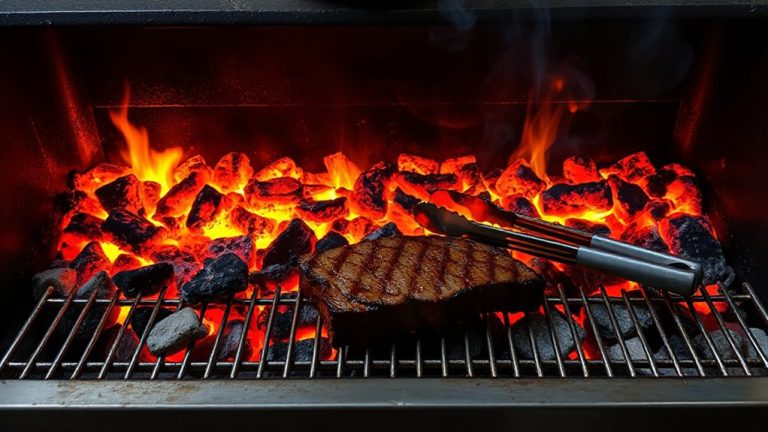
While you’re aiming for that ideal wood-fired pizza, setting up a two-zone fire is one of the smartest moves you can make on the grill. This setup gives you precise fire control and better airflow management, letting you cook with both intensity and finesse. You’ll sear the crust over direct heat, then shift to the cooler side to finish without burning toppings. Mastering this balance means fewer mistakes and repeatable results. Top-rated outdoor models often feature built-in zone management for consistent performance, making outdoor pizza ovens a smart investment for backyard chefs.
| Zone | Function |
|---|---|
| Direct | Sear crust, create char |
| Indirect | Even cooking, prevent hotspots |
| Coals | Concentrated on one side |
| Airflow | Adjust vents for steady burn |
With proper airflow management, you maintain consistent temps, while fire control guarantees your stone doesn’t overheat. This method outperforms single-zone setups every time.
Preheat Your Stone to Pizzeria Temperatures
Your pizza’s success hinges on the stone’s temperature, so don’t skimp on preheating-it needs to hit 700°F or higher, just like a traditional pizzeria oven. Achieving that heat guarantees a crisp, blistered crust in minutes. The stone composition matters: thicker ceramic or cordierite stones handle thermal shock better and offer superior heat retention, essential for consistent cooking. Thin stones may crack or fail to store enough energy. You’ll need at least 45 minutes of steady heating over your two-zone fire to reach peak temperature. Use an infrared thermometer to verify-guessing won’t cut it. Proper heat retention means the stone rebounds quickly after a cold dough touches it, preventing soggy centers. Stone composition directly affects performance, so invest in quality. A well-preheated stone doesn’t just cook; it transforms, delivering pizzeria-grade results through precision and physics, not luck.
Launch and Rotate for Even, Fast Cooking
Once the stone’s screaming hot, launching the dough requires confidence and the right tools-don’t dawdle, as hesitation leads to sticking and uneven puff. Your launch technique matters: use a quick, smooth motion with a floured peel to slide the dough cleanly onto the stone. A jerky movement risks tearing or misplacement, undermining crust development from the start. Within 30 seconds, rotation timing becomes critical-rotate the pizza 180 degrees to counteract hot spots and guarantee even char. High heat demands constant attention; after another 60 seconds, rotate again if needed. These micro-adjustments prevent one side from overcooking while the other lags. Proper rotation timing promotes uniform browning and crispness, hallmarks of a well-grilled pizza. Combined, precise launch technique and disciplined rotation deliver speed, balance, and restaurant-quality results you can consistently replicate.
Pick Toppings That Won’t Burn or Sog the Crust
Because the intense heat of a wood-fired stone can reach well over 700°F, choosing toppings wisely isn’t just a matter of flavor-it’s essential to structural integrity and even cooking. You need to manage topping moisture and prioritize burn prevention to avoid a soggy or scorched result. Wet ingredients release steam too quickly, weakening the crust, while delicate greens or thin meats can blacken in seconds. Precook watery vegetables or meats to reduce moisture. Use cheeses that melt smoothly without separating. Here’s a quick guide:
| Topping | Advice for Wood-Fired Use |
|---|---|
| Fresh tomatoes | Use sparingly; high moisture |
| Mozzarella | Opt for low-moisture, pre-dried |
| Arugula | Add after cooking; prevents burn |
| Mushrooms | Pre-sauté to reduce moisture |
| Pepperoni | Thin slices resist burning |
Balance guarantees crispness and flavor.
Shift Pizza and Flame for Crispy, Charred Results
While the heat of a wood-fired oven delivers unmatched intensity, mastering its uneven zones is key to achieving that ideal balance of crisp crust and controlled char. You’ll need precise flame control to avoid scorching-keep the fire to one side so radiant heat gently kisses the stone without direct exposure. As the base cooks, shift the pizza frequently using a peel, rotating it toward hotter or cooler spots depending on browning progress. Proper pizza alignment guarantees even cooking; start near the embers for rise, then move to moderate zones for finish. Watch for golden edges with leopard spotting-signs of ideal heat transfer. Don’t let flames lap the toppings; that leads to ash and bitterness. Instead, use steady airflow and log placement to regulate temperature. This methodical movement, paired with awareness of thermal gradients, gives you a perfectly crisp, smoky result every time. A reliable wooden peel ensures smooth handling and transfer, especially when using a best wood pizza peel for optimal performance.
On a final note
You’ve mastered zone control, stone selection, and premium topping balance. Grilling pizza on a wood-fired stone delivers pizzeria-quality results when heat management is precise. The stone’s thermal mass guarantees even baking, while shifting between direct and indirect zones prevents scorching. Though it demands attention to flame and timing, the crispy crust and smoky char are worth it. This method outperforms standard grills, blending tradition with backyard practicality for exceptional outdoor cooking.