Combining Rocket Stove and Open Pit Techniques for Hybrid Outdoor Cooking
You get the best of both worlds when you combine rocket stove and open pit techniques-efficient, clean heat from the stove pairs with the smoky depth of a traditional fire. Use firebrick or refractory cement to build a durable hybrid, with distinct zones for searing, simmering, and smoking. Position the rocket chamber to feed heat into the pit, maximizing fuel efficiency with dry hardwoods and precise airflow. A blue flame at the base means you’ve nailed the burn. Control smoke by avoiding damp wood, and design separate zones for steak, stews, or slow-roasted ribs. This system outperforms standard grills with better heat management and flavor complexity-there’s more to discover about optimizing each zone for your favorite dishes.
Notable Insights
- Combine a vertical rocket stove with an adjacent open pit to merge efficient combustion and smoky flavor.
- Use firebrick or refractory cement to withstand thermal stress and retain consistent cooking heat.
- Position searing, simmering, and smoking zones to leverage direct flame and retained radiant heat.
- Optimize fuel efficiency by burning dry hardwoods and maintaining a blue flame at the burn base.
- Adapt design for backyard permanence or campsite portability while meeting safety and environmental standards.
Build Your Rocket Stove and Open Pit Hybrid
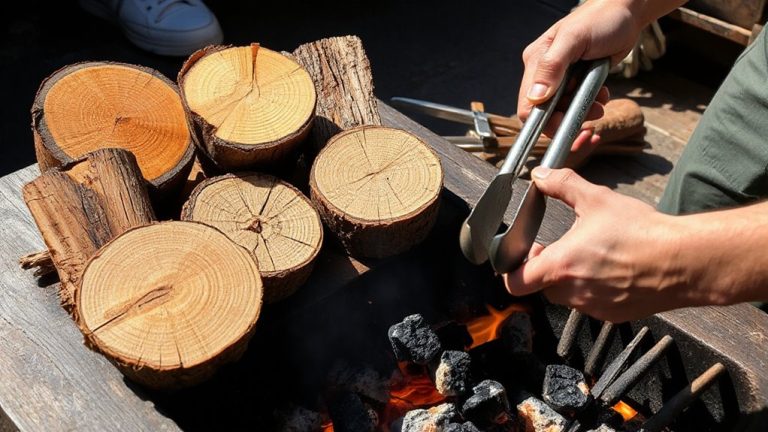
How do you get the clean, efficient burn of a rocket stove while still enjoying the smoky depth of an open fire? You build a hybrid. By combining a rocket stove core with a traditional fire pit, you gain precise control and rich flavor. Your material selection is critical-use firebrick or refractory cement for heat retention and durability. Avoid standard concrete blocks; they crack under thermal stress. The rocket stove’s vertical chamber needs tight airflow design to pull oxygen efficiently, creating a lean, hot burn. Position it adjacent to the open pit, so exhaust gases pass under your grilling area, boosting heat transfer. This setup means you conserve fuel while still searing over flame or smoking with wood embers. It’s not just practical-it’s smarter cooking. With thoughtful airflow design and durable materials, your hybrid performs reliably, season after season.
Create Searing, Simmering, and Smoking Zones
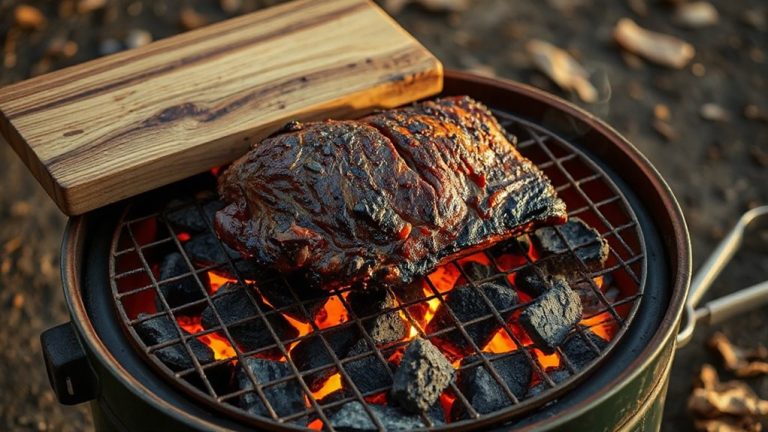
While you’ll want intense heat for searing, maintaining distinct cooking zones in your hybrid setup actually makes for smarter, more flexible outdoor cooking. Position your rocket stove’s output for a high-heat searing zone, where direct flames deliver quick caramelization and crust formation. Just beyond, create a simmering zone using retained warmth from stones or a cast-iron surface-this area leverages heat retention to gently cook delicate items without scorching. Farther still, set up a smoking zone near the open pit’s edge, where indirect, low heat and wood smoke slowly coax out depth and aroma. This gradation enhances flavor infusion while giving you full control. You’ll notice better performance when zones are spaced thoughtfully, allowing real-time adjustments. Unlike single-method setups, this hybrid approach balances efficiency with versatility, making temperature management intuitive and cooking outcomes more consistent, whether you’re working with steaks, stews, or slow-smoked vegetables.
Best Foods for Hybrid Cooking
You’ve already set up your searing, simmering, and smoking zones to take full advantage of your hybrid rocket stove and open pit system, so now it’s time to match the right foods to each area. Grilling pizza works best over the intense heat of the rocket stove, where the concentrated flames deliver a crisp, blistered crust in minutes. Roasting vegetables excels in the steady, radiant heat of the open pit’s edges, allowing caramelization without scorching. Delicate proteins like fish benefit from indirect heat, while sausages shine when slowly smoked. A well-chosen campfire grill can enhance heat distribution and simplify cooking across all zones. Use the table below for ideal food placements:
| Cooking Zone | Recommended Foods |
|---|---|
| Searing (rocket) | Grilling pizza, steaks |
| High heat (pit) | Chicken pieces, kebabs |
| Simmering | Stews, beans |
| Smoking | Pork shoulder, ribs |
| Roasting vegetables | Root veggies, peppers |
Maximize Fuel Efficiency and Control Smoke
Since efficient combustion directly affects both heat output and smoke levels, getting the airflow right in your hybrid system is essential. You’ll notice a big difference when you balance fuel types with smart airflow management-dry hardwoods burn hotter and cleaner, while softwoods or damp materials increase smoke and residue. Proper airflow management isn’t just about opening vents wide; it’s about regulating oxygen flow to sustain steady combustion without overfeeding the fire. Too much air cools the burn chamber, while too little creates thick smoke and wasted fuel. Position your fuel in a way that allows draft through the rocket stove’s chimney, then modulate intake to maintain a blue flame at the base. You’ll maximize heat where it’s needed and reduce particulate emissions. This approach makes your cooking more consistent and environmentally considerate, giving you control that open pits alone rarely offer.
Backyard and Campsite Setup Ideas
A well-designed cooking setup starts with smart planning, whether you’re working in a fixed backyard space or adapting to the limitations of a campsite. Fire safety and material sourcing play key roles in choosing your location and build. Use durable, non-flammable surfaces like stone or metal in backyards, and keep clear zones around open flames. At campsites, leverage natural windbreaks but avoid restricted areas. Below are setup ideas for both environments:
| Location | Key Feature | Consideration |
|---|---|---|
| Backyard | Permanent rocket stove | Use recycled brick for cost-effective material sourcing |
| Campsite | Portable rocket insert | Lightweight metal for easy carry |
| Backyard | Pit lined with stone | Enhances heat retention, improves fire safety |
| Campsite | Dug earth pit with ring | Minimizes impact, meets regulations |
| Shared | Dual cooking zones | Combine direct flame and indirect heat efficiently |
Why This Combo Beats Standard Grilling
While traditional grilling relies heavily on direct heat and preset configurations, combining a rocket stove with open pit techniques gives you far greater control over temperature and cooking methods. You can sear over intense flame or slow-cook using residual heat-thanks to superior heat retention in the rocket stove’s insulated chamber. This setup allows precise adjustments, reducing flare-ups and uneven cooking. The open pit element enhances flavor infusion, exposing food to aromatic wood smoke in a way gas or charcoal grills can’t replicate. You’re not just grilling; you’re layering taste through controlled combustion and airflow. Plus, the hybrid system uses less fuel and sustains consistent temps longer. Whether you’re roasting, smoking, or baking, this combo offers versatility and efficiency standard setups lack. It’s a smarter, more responsive way to cook outdoors-predictable when you need it, adaptable when you don’t.
On a final note
You’ve built a hybrid that outperforms standard grills. This combo gives precise heat control-searing flames from the rocket stove, steady smoke from the pit. It’s efficient, using less fuel while handling everything from steaks to slow-smoked ribs. Once set up, it’s easy to maintain and adapts to backyard or campsite use. The design balances performance, practicality, and versatility, making it a smart upgrade for serious outdoor cooking.