Smoking Cheese: Temperature Control and Short Smoke Sessions
Keep your smoker between 60°F and 90°F to infuse cheese with smoky flavor without melting or oil separation. Use cold smoking for best results, especially with hard, low-moisture cheeses like cheddar or gouda. Limit sessions to 90 minutes-less for mozzarella-and rely on mild woods like apple or cherry to avoid overpowering the dairy. Maintain thin, blue smoke and consistent airflow. You’ll get cleaner flavor and better texture control. There’s more to mastering the details for consistently great results.
Notable Insights
- Maintain smoker temperature between 55°F and 80°F to prevent melting while allowing smoke absorption.
- Use indirect heat and calibrated thermometers to ensure accurate, consistent low-temperature control.
- Smoke cheese for 45 to 90 minutes, depending on type, to develop flavor without overheating.
- Choose mild woods like apple or cherry to enhance flavor without overpowering the cheese.
- Select low-moisture cheeses such as cheddar, gouda, or mozzarella for best results in short smoke sessions.
Control Temperature to Avoid Melting Smoked Cheese
You’ll want to keep the smoker temperature between 60°F and 90°F when smoking cheese, since going much higher risks softening or even melting your blocks. Maintaining this range preserves the cheese texture, ensuring it holds its shape while still absorbing flavor. Cold smoking is ideal, as it allows steady smoke penetration without heat damage. You’ll notice firmer cheeses like cheddar respond best, accepting smoke slowly for even flavor distribution. If the temperature creeps too high, the fats begin to separate, leading to a greasy surface and ruined consistency. Consistent airflow and a reliable thermometer are essential for monitoring conditions. You’re not cooking the cheese-you’re enhancing it. Effective smoke penetration depends on time and temperature control, not intensity. Aim for 1 to 4 hours, depending on density. This method delivers rich, smoky depth while protecting structural integrity, giving you quality results every time. A dedicated cold smoker setup can provide optimal conditions for maintaining these low temperatures consistently.
Choose the Best (and Worst) Cheeses to Smoke
A well-chosen cheese can transform a simple smoke session into a standout culinary result, but not all varieties hold up equally under exposure to smoke and low heat. Your cheese selection matters-semi-hard and hard cheeses like cheddar, gouda, and mozzarella hold their structure well and absorb smoke smoothly. These cheeses have low moisture and high fat content, helping them resist melting while still gaining rich, smoky depth. Avoid soft cheeses like brie or ricotta; they tend to melt or turn oily. When considering flavor pairing, match mild woods like apple or cherry with creamy cheeses to avoid overpowering them. Stronger cheeses, such as aged cheddar, can handle hickory or oak. Success hinges on balancing texture, smoke intensity, and intended use-whether for snacking, grilling, or charcuterie. Smart cheese selection elevates your final product, turning basic smoking into a refined technique.
Set Up Your Smoker for Perfect Smoke
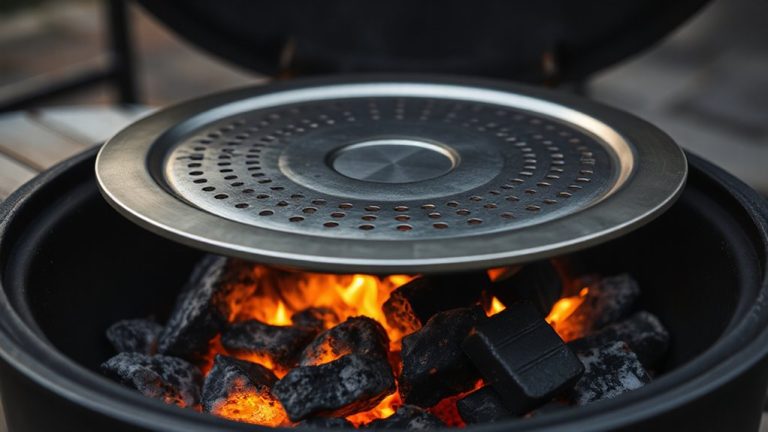
Though temperature control is central to successful cheese smoking, setting up your smoker properly guarantees consistent, clean smoke without scorching or melting your cheese. Start with smoker calibration-verify your thermometer’s accuracy using an ice bath or boiling water test, then adjust accordingly. An off reading can ruin delicate dairy. Position your cheese on the grate with ample space between blocks for even exposure. Use indirect heat; you’re smoking, not cooking. Maintain airflow balance by adjusting dampers to keep smoke thin and blue, not thick and white. Excess smoke creates bitterness, while too little defeats the purpose. A well-balanced chamber makes certain efficient combustion and steady, low heat. Opt for pre-soaked wood chips or small chunks that smolder slowly. Avoid flare-ups by keeping the firebox clean. With precise setup, your smoker becomes a reliable tool for nuanced, flavorful smoked cheese-every time. For beginners, choosing the right equipment can make all the difference, and a reliable best beginner electric smoker ensures consistent results with minimal guesswork.
Smoke Cheese in 90 Minutes or Less
Most smoked cheeses need no more than 60 to 90 minutes to absorb rich, aromatic smoke without risking structural breakdown. Cold smoking is key here-keeping temps below 90°F prevents melting while allowing deep flavor development. You’re not cooking the cheese; you’re enhancing it. This method pairs perfectly with quick aging, especially for cheeses like cheddar or gouda, which develop complexity faster when smoked first. Short sessions also reduce moisture loss, preserving texture. Below are ideal smoking times and temps by cheese type:
| Cheese Type | Smoke Time (min) | Temp (°F) |
|---|---|---|
| Cheddar | 60–75 | 60–80 |
| Gouda | 70–90 | 65–80 |
| Mozzarella | 45–60 | 55–75 |
| Colby Jack | 60–80 | 60–78 |
| Swiss | 70–90 | 65–82 |
Cold smoking in this window delivers bold flavor and supports efficient, high-quality quick aging.
Pick the Best Wood for Smoked Cheese Flavor
You’ve kept the temperature low and the timing tight to preserve texture while building flavor in under 90 minutes-now it’s time to pick the wood that’ll define the character of your smoked cheese. Choose mild woods like apple, cherry, or alder; they offer a subtle sweetness that complements, not overwhelms, the dairy. Stronger woods like hickory or mesquite can dominate, disrupting the flavor intensity balance essential for delicate cheeses. Aim for wood pairing synergy-match creamy cheddar with fruitwood smoke, or pair tangy goat cheese with light cherry smoke. Each wood imparts distinct phenols and lignins, altering the final taste. Avoid resinous hardwoods; they create bitter notes. Consistency matters: use dry, food-grade chunks or chips for steady smoke. Your wood choice isn’t just fuel-it’s a flavor agent. Get it right, and you elevate the cheese. Get it wrong, and even perfect timing won’t save it. For reliable performance, consider top-rated options from the best wood chips for smoking list to match ideal flavor profiles and quality standards.
Store and Serve Smoked Cheese Right
After smoking, let the cheese rest for at least 24 hours in the refrigerator, because that short cure allows the smoke flavor to fully settle and mellow into the fat. You’re not rushing cheese aging here-this isn’t a long-term process-but that brief rest improves depth and balance. Wrap the cheese in parchment first, then loosely in plastic; this lets it breathe while preventing drying or odor absorption. Store it in the warmest part of your fridge, usually the back of the bottom shelf, to minimize temperature swings. When you’re ready to serve, mind the serving temperature-pull it out 30 to 45 minutes early. Cold dulls flavor, but a slightly cool-to-room temp cheese reveals the smoke’s nuance. Serve with crusty bread or tart apples to contrast the richness. Smart storage and timing make all the difference.
On a final note
You’ve got to keep temps low-below 90°F-when smoking cheese, or it’ll melt and ruin the texture. Stick to firm cheeses like cheddar or gouda; avoid soft ones. Use a cold smoker or offset setup with smoldering wood chips for clean, steady smoke. Limit sessions to 90 minutes for balanced flavor without bitterness. Hickory or applewood work best, lending depth without overpowering. Store smoked cheese wrapped in parchment, then in a container, to preserve quality.