Using Wood Chips on a Gas Grill for Authentic Smoky Flavor
You can get authentic smoky flavor on your gas grill by using wood chips correctly. Skip soaking them-dry chips smoke faster and taste better. Use a smoker box placed over the burner for consistent, rich smoke. Hickory or oak work great for beef and pork, while cherry adds a sweet touch to poultry. Add chips after preheating, early in the cook for maximum flavor impact. Timing and wood choice make all the difference-get it right, and you’ll taste the results. There’s more to mastering grill-smoked flavor where technique meets heat control.
Notable Insights
- Use a smoker box or foil pouch to hold wood chips directly over the burner for consistent smoke.
- Choose wood types like hickory for bold flavor or cherry for sweetness, matching the meat type.
- Add wood chips after preheating the grill to ensure proper smoldering and clean smoke.
- Skip soaking chips to get faster, more flavorful smoke without cooling the grill.
- Focus smoke application in the first 30–60 minutes for maximum flavor absorption.
Do Wood Chips Work on Gas Grills?
Ever wonder if you can actually get real smoky force on your gas grill? Yes, you can-wood chips work, but success hinges on proper technique. The key lies in wood chip placement and flavor infusion timing. You’ll need to soak chips for at least 30 minutes, then place them directly over the burner or in a foil pouch on the heat diffuser. This spot guarantees they smolder, not burn. Timing matters: add them when preheating or at the start of cooking to maximize smoke exposure. Too late, and you’ll miss the window for deep flavor infusion. While gas grills lack the natural smoke of charcoal, strategic placement and precise timing let you achieve surprisingly rich results. With patience and attention, your gas grill can deliver genuinely smoky, restaurant-quality BBQ-not just a hint, but a credible depth of flavor. For best results, choose best wood chips for smoking based on the type of meat and desired flavor profile.
How to Use a Smoker Box on a Gas Grill
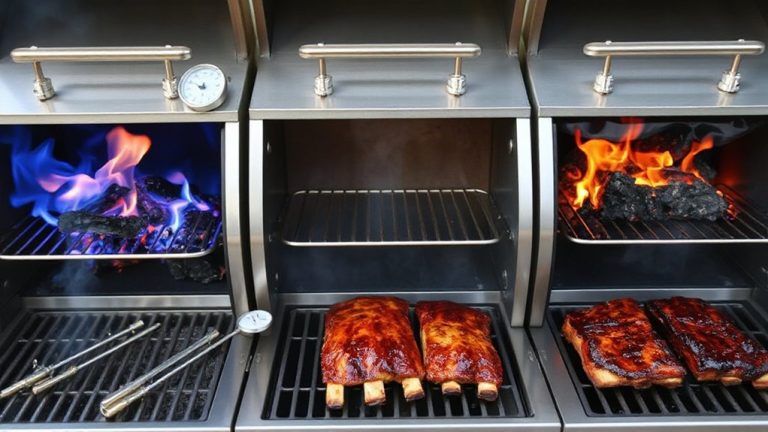
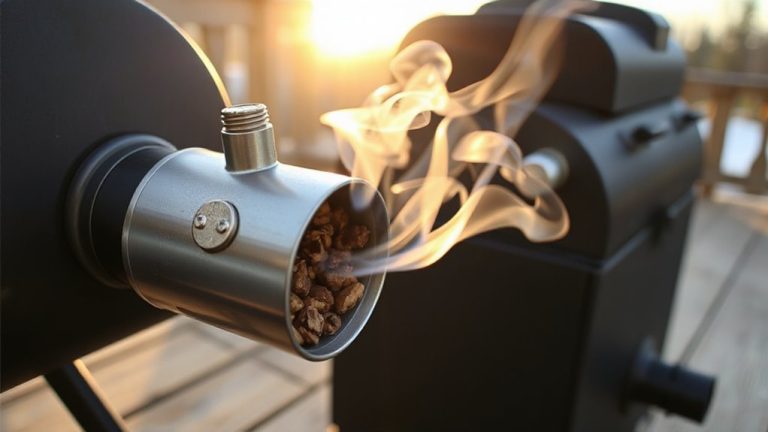
You can skip the hassle of foil pouches and inconsistent smoke by using a smoker box designed specifically for gas grills. These metal boxes, typically made of stainless steel or cast iron, fit directly over your burners and hold wood chips securely. Proper smoker box placement is critical-position it directly above the primary burner to guarantee even heat distribution timing. This placement allows the box to heat gradually and release smoke steadily, rather than burning up too fast. Most models feature perforated lids that control smoke output while protecting chips from direct flame. Pre-soak isn’t necessary, as prolonged damp chips can stall heat transfer. For best results, preheat the box for 5–10 minutes until smoke becomes thin and blue, signaling ideal combustion. With consistent performance and easy cleanup, a smoker box offers a reliable upgrade for authentic wood-smoked flavor. For even greater smoke consistency, consider choosing one of the best smoker boxes based on design, durability, and grill compatibility.
Best Wood Types for Gas Grill Smoke
While some wood types deliver overpowering bitterness or burn too quickly for controlled grilling, others strike the ideal balance between aroma, burn rate, and flavor compatibility. You’ll want to choose woods that offer moderate smoke intensity to avoid overwhelming your food. Hickory provides strong, bold flavor-perfect for beef and pork-but can be too harsh if overused. Mesquite burns hot and fast, best for short grilling sessions and hearty meats. For a sweeter, milder touch, cherry and apple woods are excellent, especially with poultry, pork, and even fish. These fruitwoods also add pleasant color. Your wood pairings should match the meat and desired outcome-delicate fish doesn’t need heavy smoke, while brisket thrives with it. Oak is a versatile middle ground, clean-burning with consistent smoke output. Each type influences flavor differently, so understanding smoke intensity and pairing logic guarantees better, more predictable results on your gas grill. For reliable options, consider checking the best smoking wood picks based on performance and flavor profiles.
Soaking Wood Chips: Myths vs. Facts
Though commonly practiced, soaking wood chips before using them on a gas grill often fails to deliver the benefits many assume. You might think waterlogged chips produce more smoke, but in reality, they first need to evaporate moisture before smoldering-delaying smoke onset and shortening overall smoke duration. Most experts agree this delay doesn’t enhance flavor and may even cool your grill. Fresh wood chips-dry and aromatic-ignite faster and deliver consistent, flavorful smoke from the start. Wood chip freshness matters more than pre-soaking; stale or overly moist chips generate weak, uneven smoke. While soaked chips technically smolder longer due to wetness, the trade-off in delayed ignition and steam-heavy output isn’t worth it for most grillers. For reliable results, skip the soak. Use dry, high-quality chips directly on the heat source to maximize flavor impact and maintain better control over smoke duration.
Smoking vs. Grilling on a Gas Grill
What really sets smoking apart from grilling on a gas grill? It’s all about heat control and cooking time. Grilling uses direct heat for quick searing-perfect for burgers or steaks. Smoking relies on indirect smoking, where food cooks slowly at lower temps, absorbing that rich, smoky flavor from wood chips. You’re not just cooking; you’re transforming texture and taste.
| Method | Heat Approach | Best For | Time Required |
|---|---|---|---|
| Grilling | Direct heat, high temp | Quick-cook items | 10–30 minutes |
| Smoking | Indirect smoking, low | Tough cuts, flavor depth | 2–6 hours |
Indirect smoking demands patience, but the payoff in tenderness and flavor complexity beats grilling for certain dishes. Direct heat delivers speed; indirect smoking delivers character. Choose based on your meal-and your mood.
When to Add Wood Chips for Best Flavor
You’ve already seen how indirect smoking transforms tough cuts into tender, flavorful meals by using low heat over time, but getting that rich smokiness starts with knowing when to introduce the wood chips. Timing placement is critical-add them only after the grill reaches the desired temperature, usually 225°F to 250°F, so they smolder rather than burn. For best flavor intensity, place soaked wood chips directly over the heat source or in a smoker box above the burner. Smoke most effectively during the first 30 to 60 minutes, especially with longer cooks. After that, additional chips contribute less to taste and more to aroma. You’ll notice heavier smoke early on produces deeper color and stronger flavor, but too much late in the process can overwhelm. Balance is key. Proper timing placement guarantees clean smoke and maximum flavor intensity without bitterness. Skip the guesswork-use a consistent schedule based on cook time and doneness goals.
Mistakes That Ruin Gas Grill Smoke
Often, backyard grillers overlook simple missteps that dramatically weaken smoke quality when using wood chips on a gas grill. You might toss handfuls of dry chips directly onto the flames, but that causes flare ups and burns off smoke too fast. Soaking wood chips helps, but don’t overdo it-soggy chips release steam, delaying smoke production. Using the wrong chip size or type also leads to uneven heating; chunks burn longer and more steadily than fine chips. Position your wood in a smoker box or foil pouch directly over the burner for consistent results. And don’t crank the heat too high-excessive temperatures won’t add more flavor but will fuel flare ups and char food instead of smoking it. Proper setup and attention to heat distribution guarantee clean, aromatic smoke. Avoid these errors, and you’ll get richer, authentic results every time.
On a final note
You get real smoky flavor on a gas grill using wood chips, especially with a quality smoker box. Hardwood types like hickory, apple, and mesquite deliver distinct, rich notes without overpowering. Skip soaking-it delays smoke and risks steam. Add chips over medium heat when grilling slow, like with ribs or chicken. Timing and wood choice matter most. Done right, your gas grill performs closer to a smoker, blending convenience with authentic taste.