How to Achieve Perfect Temperature Control While Grilling
You should set up two heat zones-direct for searing and indirect for slower cooking-to manage different foods effectively. Preheat your grill 15–20 minutes to stabilize temperatures, especially on charcoal. Keep the lid closed to maintain steady, oven-like heat, only opening briefly when needed. Use a reliable thermometer to check doneness accurately, and adjust timing for weather conditions. You’ll find even better results by fine-tuning these steps based on your grill’s unique response.
Notable Insights
- Set up two heat zones by configuring one side for direct heat and the other for indirect cooking.
- Preheat the grill 10–20 minutes to stabilize temperature and ensure even heat distribution.
- Keep the lid closed to maintain consistent heat and control airflow through vents.
- Use a reliable meat thermometer to monitor internal temperatures for precise doneness.
- Adjust cooking time and position based on weather conditions like wind and ambient temperature.
Know Your Grill’s Heat Zones
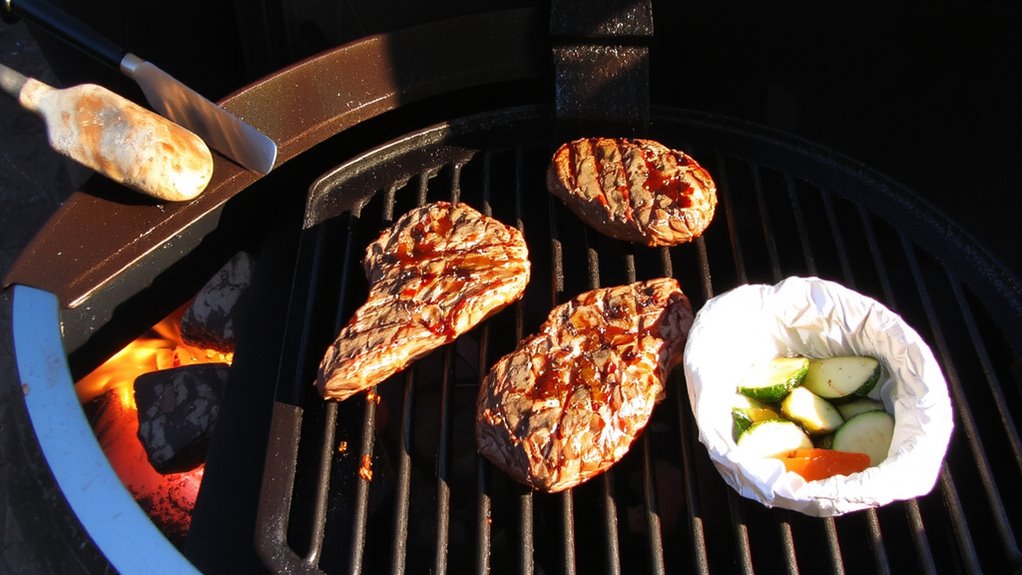
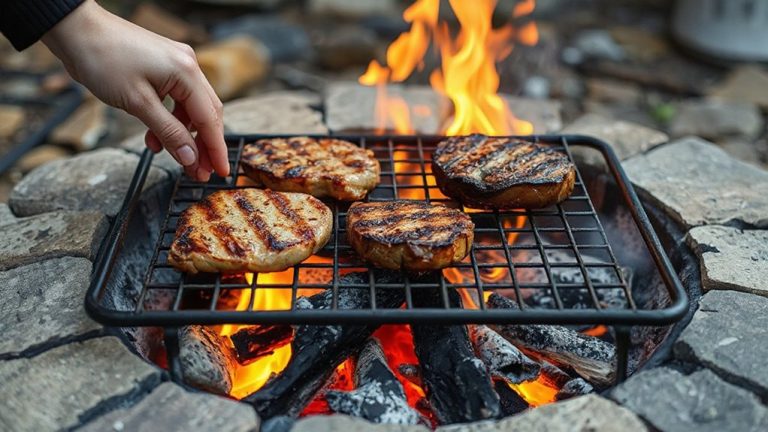
A well-managed grill has distinct heat zones, and knowing how to set them up makes all the difference in achieving evenly cooked food. You control these zones by adjusting burner settings or coal placement, creating areas of direct flame and lower ambient heat. Direct flame is ideal for searing steaks or vegetables quickly, giving them color and flavor while locking in juices. Ambient heat, found in cooler zones, allows thicker meats like chicken or roasts to finish cooking evenly without burning. Most grills perform best when you use a two-zone setup-one side hot, one side warm. This configuration gives you flexibility and control, letting you move food as needed. Without heat zones, you risk undercooking or charring. Managing them well reflects solid technique and improves results every time you grill. Charcoal grill smokers excel at maintaining consistent heat zones due to their dual-chamber design.
Preheat for Even Heat Distribution
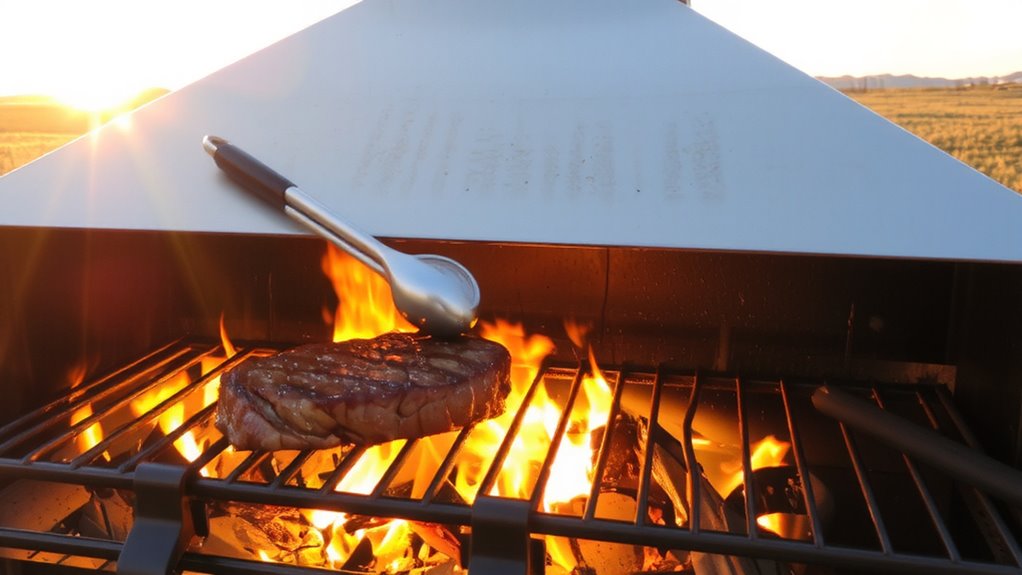
Even when you’ve set up perfect heat zones, skipping the preheat step means your grill won’t deliver consistent results. You need time for the metal grates and chamber to absorb heat, stabilizing the internal environment. For charcoal grills, this means allowing 15–20 minutes for coals to reach an even glow after proper charcoal placement. If the coals are clustered unevenly, you’ll get spotty heat, undermining your zones. Equally important is airflow balance-adjust dampers to regulate oxygen flow, which influences combustion temperature. A well-ventilated grill heats more evenly and sustains stable conditions once cooking starts. Gas grills also benefit from preheating, as burners and flavorizer bars need time to radiate uniform heat. Skipping this phase risks uneven searing, sticking food, and longer cook times. Preheating isn’t just about temperature-it’s about thermal equilibrium. You’re setting the stage for control, consistency, and better-tasting results.
Control Heat by Managing the Lid
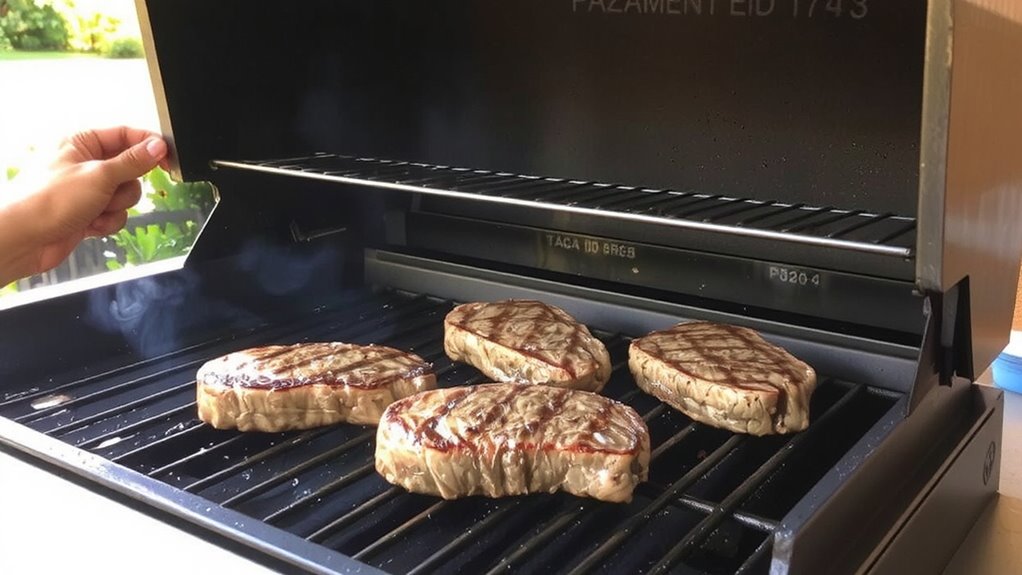
Because the lid plays a crucial role in regulating temperature and airflow, leaving it open during cooking disrupts the grill’s ability to maintain consistent heat. Your lid position directly influences cooking performance-closed, it traps heat and creates an oven-like environment ideal for even cooking; open, it releases heat and slows the process. Managing airflow balance is key: too much oxygen and flames spike, too little and combustion suffers. You control this balance through vents, but the lid acts as the primary regulator. For thicker cuts, keep it shut to retain steady temperatures. Quick sears or flare-up management may require brief openings, but minimize them. Seasoned grillers know that discipline with the lid separates good results from great ones. Consistent lid use enhances flavor, texture, and doneness-critical elements in mastering outdoor cooking.
Use a Thermometer for Perfect Doneness
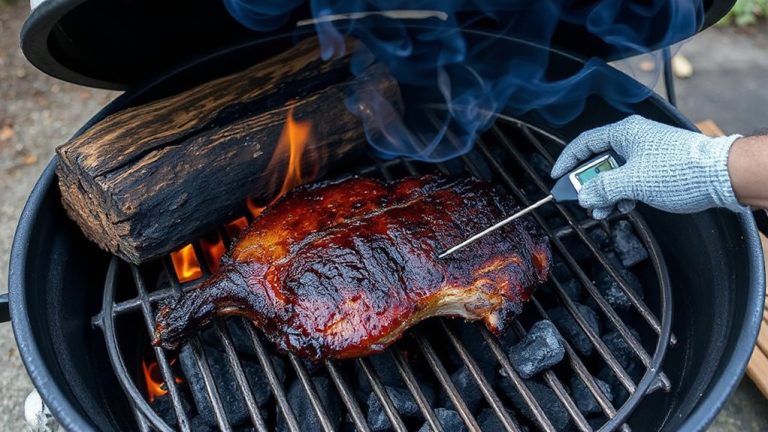
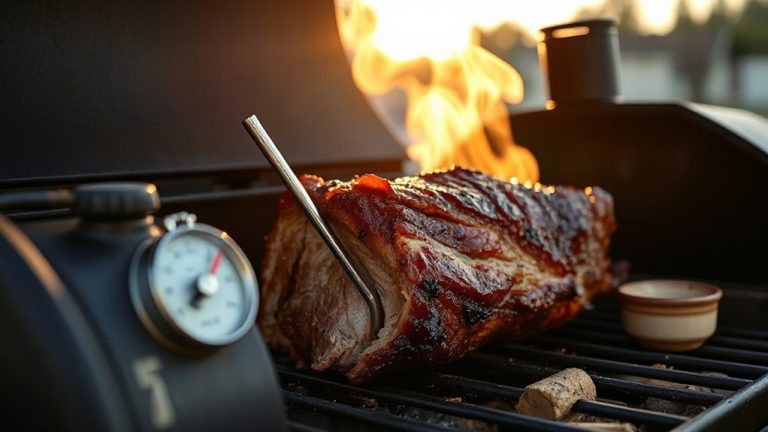
Precision is the game-changer when it comes to nailing perfect doneness on the grill, and that starts with trusting a thermometer over guesswork. You can’t rely on poking or visual cues alone-calibration accuracy guarantees your readings are trustworthy every time. A poorly calibrated thermometer could mean undercooked chicken or dried-out steak, so test it regularly in ice water or boiling water. Probe placement matters just as much; insert it into the thickest part of the meat, avoiding bone or fat, where temperatures don’t reflect true doneness. Instant-read models offer quick feedback, while leave-in probes let you monitor without lifting the lid. High-end models boast better calibration accuracy and durable sensors, worth the investment if you grill often. With correct probe placement and a reliable tool, you’ll consistently hit target temps-medium-rare burgers, juicy pork at 145°F, or poultry at a safe 165°F. It’s not just science-it’s confidence. For consistent results, choose one of the best meat thermometers based on performance and reliability.
Adjust Time Based on Heat Intensity
You’ve got the thermometer in hand and know your target temperature, but that’s only half the battle-how long the food stays over the heat matters just as much. Grilling isn’t just about flame and food; it’s about reading the environment. Ambient temperature plays a bigger role than most realize-on colder days, heat escapes faster, requiring longer cook times even at the same grill setting. Wind conditions can drastically alter heat intensity, cooling the grill surface and creating uneven zones. A steady breeze might force you to extend cooking time by 15 to 20%. In response, use indirect heat zones and rotate items often. Smart timing isn’t fixed-it’s adaptive. Monitoring both internal doneness and external variables guarantees consistent results. Adjusting time based on heat intensity isn’t guesswork; it’s the difference between good and flawless grilling. For precise readings that adapt to these changing conditions, consider using one of the best thermometers for consistent accuracy.
On a final note
You’ve learned how heat zones, preheating, lid control, thermometers, and timing shape your grilling success. These techniques aren’t just theory-they’re proven methods that elevate consistency and flavor. Mastering them means juicier meats, better sears, and fewer mistakes. While gear matters, skill comes from practice and observation. With attention to temperature dynamics, you turn unpredictable grilling into a repeatable, reliable process that performs under real cooking conditions.