Designing Stack Height and Diameter Ratios for Efficient Convection in Upright Smokers
You’ll get the best convection in your upright smoker with a stack height-to-diameter ratio between 8:1 and 12:1, like a 56-inch chimney with a 7-inch diameter. This balance strengthens draft without cooling smoke too fast. Too narrow or short, and you’ll get turbulence and hot spots; too wide, and draft weakens, causing smoke to linger. Match the stack to your chamber size-8” for 13–18 cu ft-and keep interiors smooth and clean. Tuning dampers or adding intake can fine-tune flow, showing how design directly shapes cooking performance. You’ll see why material thickness and welds matter when optimizing for consistency.
Notable Insights
- Maintain an 8:1 to 12:1 height-to-diameter ratio for optimal draft and efficient convection flow.
- Match stack diameter exactly to the exhaust opening to prevent airflow turbulence.
- Taller stacks enhance draft but may cool smoke excessively if not proportionally sized.
- Select stack size based on chamber volume: larger chambers require wider, taller stacks.
- Use smooth, welded interiors and regular cleaning to minimize creosote and maintain laminar flow.
How Stack Height and Diameter Shape Smoke Flow
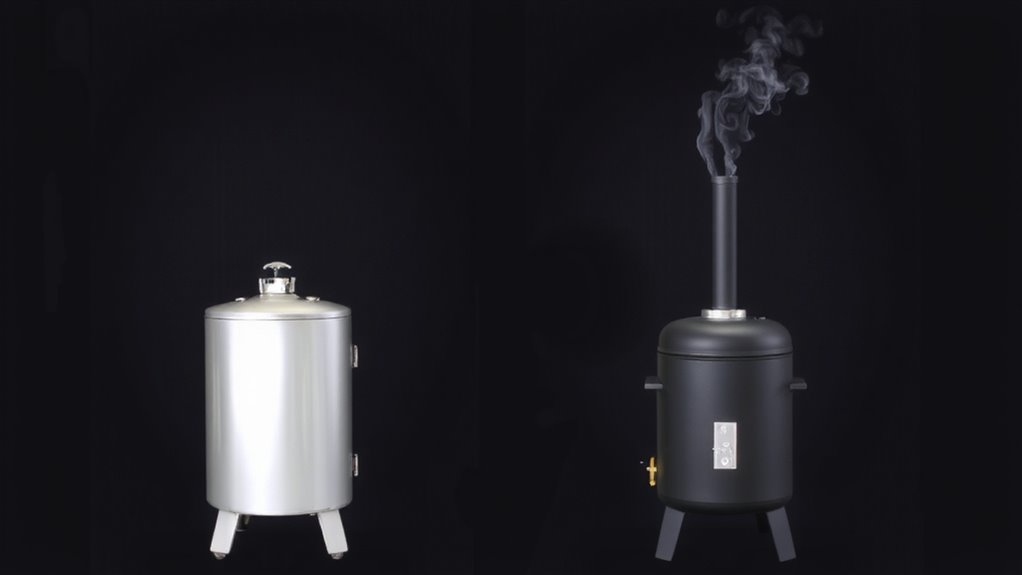
While you might assume smoke simply rises on its own, the reality inside an upright smoker is more nuanced-stack height and diameter directly influence how steadily and efficiently that smoke moves through the cook chamber. If the stack’s too narrow, you’ll get excessive pressure drop, slowing exhaust flow and stifling convection. Too wide, and the draft weakens, leading to inconsistent temperatures. Height impacts draft strength; taller stacks enhance pull but can cool smoke too quickly if unbalanced. Poor proportions often create turbulent flow, scattering heat and causing hot spots. You’ll notice this when ribs cook uneven mealy or the fire struggles to stabilize. In practice, maintaining smooth, laminar exhaust flow guarantees better flavor and fuel efficiency. You’re not just venting smoke-you’re managing airflow dynamics critical to low-and-slow success. Smart design prevents turbulence and optimizes pressure drop, giving you control without constant tweaking.
The Ideal Stack Height and Diameter Ratio
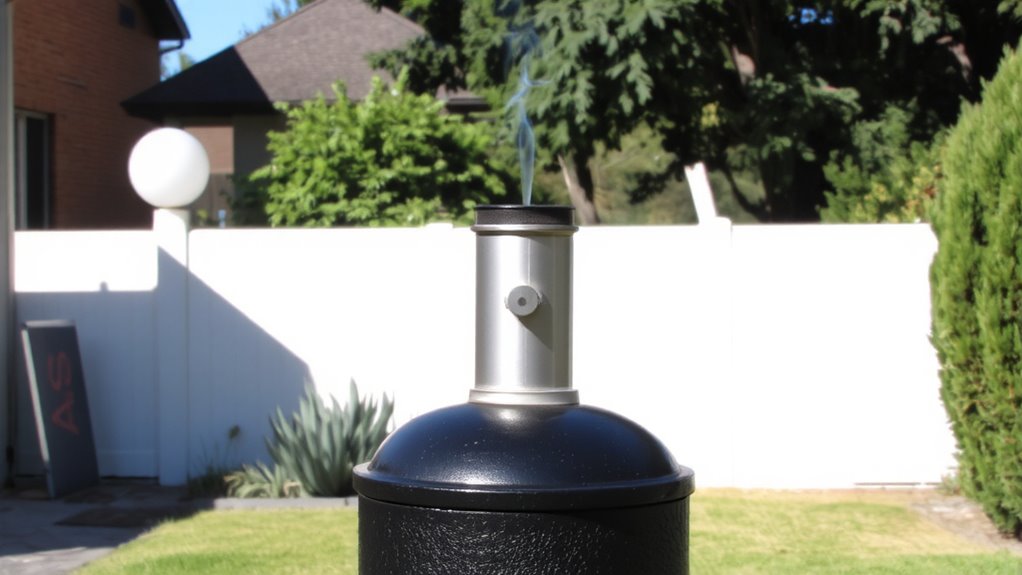
You’ve seen how stack dimensions affect airflow, but getting the balance right means understanding the relationship between height and diameter more precisely. The ideal ratio typically falls between 8:1 and 12:1 (height to diameter), promoting strong draft without cooling smoke too quickly. Material conductivity plays a key role-thicker steel retains heat better, stabilizing convection. Yet, even with high conductivity, poor proportions can disrupt flow. Stack aesthetics matter too; a well-proportioned stack doesn’t just look balanced-it performs better. Consider these common configurations:
| Height (in) | Diameter (in) |
|---|---|
| 24 | 3 |
| 32 | 4 |
| 40 | 5 |
| 48 | 6 |
| 56 | 7 |
Optimal ratios enhance draw, aid consistent temperatures, and reduce stagnation. When material conductivity and stack aesthetics align with correct proportions, your smoker runs smoother from startup to pull time.
Common Stack Sizing Mistakes (And How to Fix Them)
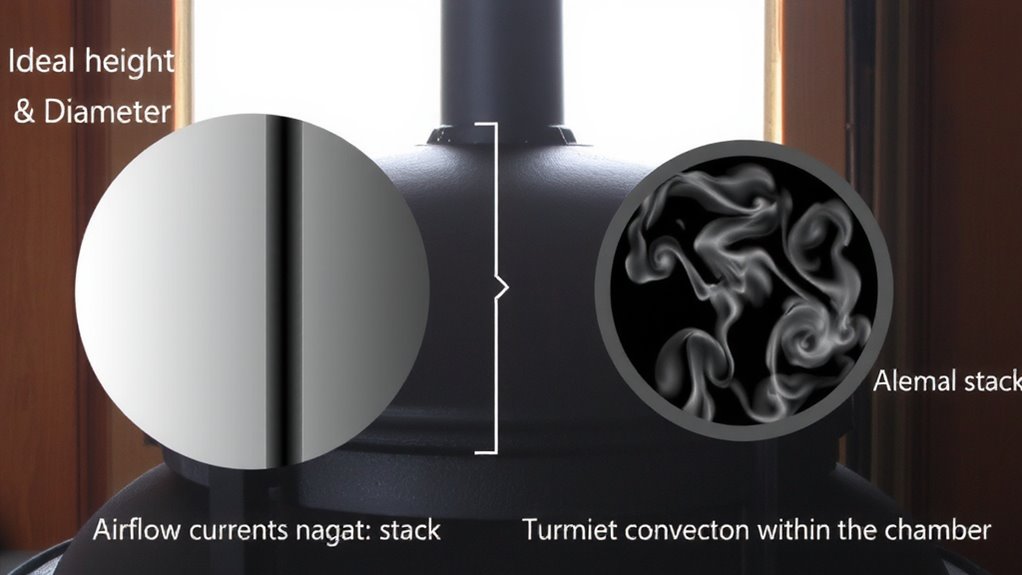
Because stack performance hinges on more than just raw dimensions, many builders overlook critical sizing pitfalls that undermine draft efficiency and temperature control. If your stack’s too narrow, you’re likely dealing with restricted exhaust, which suffocates airflow and creates frustrating hot spots-especially near the firebox. That leads to uneven cooking and stubborn overheating zones in the upper chamber. On the flip side, an oversized stack kills draft velocity, letting smoke linger and cooling too quickly. You’ll notice sluggish startup and poor smoke draw. The fix? Stick to the 8:1 to 12:1 stack height-to-diameter ratio sweet spot based on your smoker’s volume. Guarantee the stack’s interior diameter matches the exhaust opening precisely-no reductions. Smooth, unobstructed connections prevent turbulence. Regularly check for creosote buildup too, since even a well-sized stack can develop restricted exhaust over time.
How Convection Powers Clean Smoke Draw
Though often overlooked, convection is the invisible engine behind a clean, efficient smoke draw in upright smokers, and understanding how it works can make or break your cook. You rely on rising hot air to pull fresh oxygen in and push smoke out, but without proper chimney suction, that flow stalls. Strong suction depends on stack height and heat-taller stacks create a more consistent draft, helping maintain steady temperatures. If your stack’s too short or narrow, you’ll face airflow turbulence, especially near bends or shifts, disrupting smoke evacuation. That turbulence can cause smoke to swirl back into the chamber, leading to soot buildup and bitter flavors. A smooth, laminar flow-achieved through balanced design-ensures clean combustion and even cooking. You want smoke moving steadily upward, not swirling or lingering. Effective convection isn’t luck; it’s physics working in your favor, and mastering it means better BBQ every time.
Match Stack Size to Chamber Size
When designing an upright smoker, aligning the stack size with the cooking chamber volume isn’t just good practice-it’s essential for maintaining balanced airflow and consistent temperatures. If your stack’s too narrow, you’ll choke the draw; too wide, and you’ll lose heat retention, especially if your chamber insulation is insufficient. The stack material also influences thermal stability-stainless steel holds heat better than mild steel, reducing fluctuation. Proper sizing guarantees smoke exits efficiently without cooling too fast. Consider this guide:
| Chamber Volume (cu ft) | Stack Diameter (in) |
|---|---|
| 8–12 | 6 |
| 13–18 | 8 |
| 19–24 | 10 |
Larger chambers need wider stacks to maintain draw, but only if your chamber insulation supports stable internal temps. Pair the right stack material with appropriately sized dimensions, and you’ll maintain clean combustion and even cooking-no guesswork needed.
Real-World Stack Designs That Work
While theory guides the basics, real-world performance separates functional stack designs from the truly effective ones, and your smoker’s efficiency often hinges on how well the stack integrates with the entire system. You’ll find that proven designs typically use 304 stainless steel-it resists warping, handles thermal cycling, and offers strong finish durability. Thicker gauges, around 16 to 18, improve heat retention and longevity, especially when paired with welded seams. Some builders opt for aluminized steel to cut costs, but over time, you’ll notice faster degradation, particularly in wet climates. Material selection directly affects how consistently your stack pulls smoke. Well-finished interiors reduce creosote buildup, making cleaning easier and airflow smoother. Tapered stacks, though less common, enhance draft without needing extreme height. The best performers balance diameter and height based on actual cook-chamber volume, not guesswork. When built right, they require minimal tuning and deliver steady convection through dozens of cooks.
Test and Tune for Better Draft
You’ve picked a solid material and sized the stack to match your cook chamber, but even the best-built system won’t reach peak performance without hands-on testing and fine-tuning. Start a fire and observe the smoke exiting the stack-clean, steady flow means your draft is working. If it’s sluggish or puffing, check for air leakage around gaskets, welds, or access doors; even small gaps disrupt airflow and reduce efficiency. Adjust the stack’s dampers or add secondary intake near the firebox to balance oxygen. Fuel quality plays a role, too-wet or inconsistent wood creates uneven heat and smoke, masking draft issues. Hardwood that’s properly seasoned burns hotter and steadier, letting you assess true airflow. Re-test after each modification. A well-tuned smoker shows consistent temperatures, minimal smoke turbulence, and even cook results. Draft isn’t just about height or diameter-it’s precision work.
On a final note
You’ve seen how stack height and diameter affect convection, but getting the ratio right is key to a clean, steady draw. Match your stack to the cook chamber size, avoid common sizing errors, and prioritize smooth airflow. Real-world designs prove efficiency comes from balance, not guesswork. Test, tweak, and tune-small adjustments improve smoke quality and temperature control. A well-designed stack doesn’t just vent smoke; it drives consistent performance essential for great BBQ.