Understanding the Science Behind Char-Grilling Vegetables to Perfection
Pick dense, low-moisture veggies like zucchini, bell peppers, or sweet potatoes-they hold up well under high heat. Always dry them thoroughly after washing, since surface water steams instead of chars. Crank your grill to at least 450°F to trigger Maillard browning and get that smoky depth, especially with charcoal. Let them sear undisturbed until they release naturally for clean grill marks. Salt after searing or before, but not during, to avoid weeping. Proper prep and heat control make all the difference-and there’s more to mastering the details just ahead.
Notable Insights
- Choose firm, low-moisture vegetables like bell peppers, zucchini, and sweet potatoes for even charring and structural integrity.
- Dry vegetables thoroughly before grilling to eliminate surface water, ensuring efficient Maillard browning and distinct sear marks.
- Use high heat (450°F or higher) to rapidly sear the exterior, triggering Maillard reactions and infusing smoky flavor.
- Allow vegetables to remain undisturbed on the grates to develop proper grill marks through consistent contact and caramelization.
- Avoid overcrowding and early salting to prevent steaming, and preheat the grill to prevent sticking and ensure even cooking.
Choose the Best Veggies for Char-Grilling
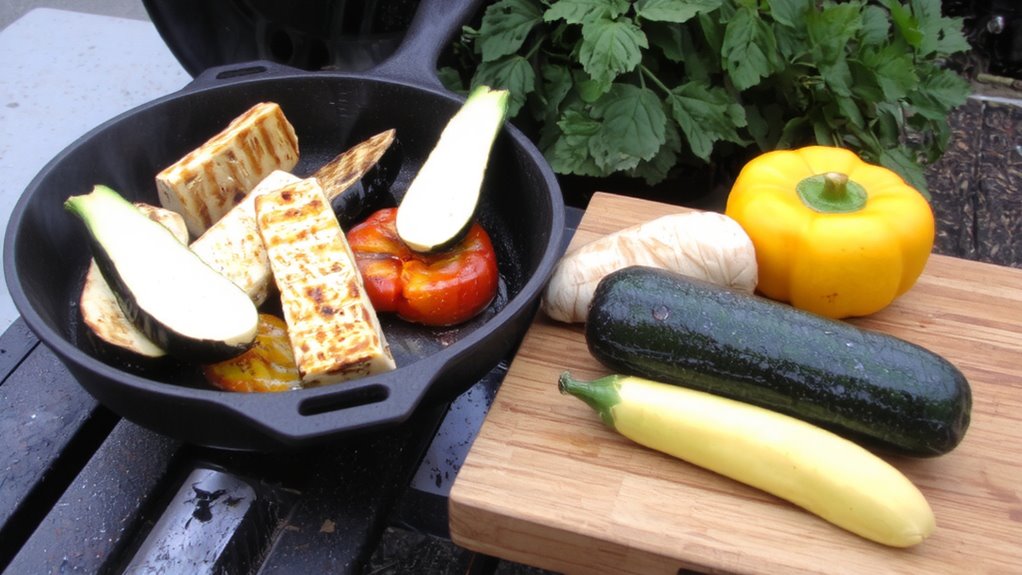
Root vegetables and dense summer produce top the list when it comes to holding up on the grill, and your best bets are those with low moisture and firm flesh. You’ll want the best varieties-think bell peppers, zucchini, eggplant, and carrots-since they char evenly without falling apart. Sweet potatoes and beets also perform well due to their structural integrity. Ideal ripeness matters: slightly underripe produce grills better because it’s less watery and more resilient under high heat. Overripe veggies tend to turn mushy or stick aggressively to the grates. Firmness is key-press gently; if it yields too much, it’s past ideal. Dense cell walls prevent collapse during searing, giving you those clean grill marks and a smoky depth. Choosing the right vegetables isn’t just preference-it’s a move that directly affects texture, flavor development, and ease of handling. Get this step right, and you’re set for success.
Dry Veggies Right for Better Char
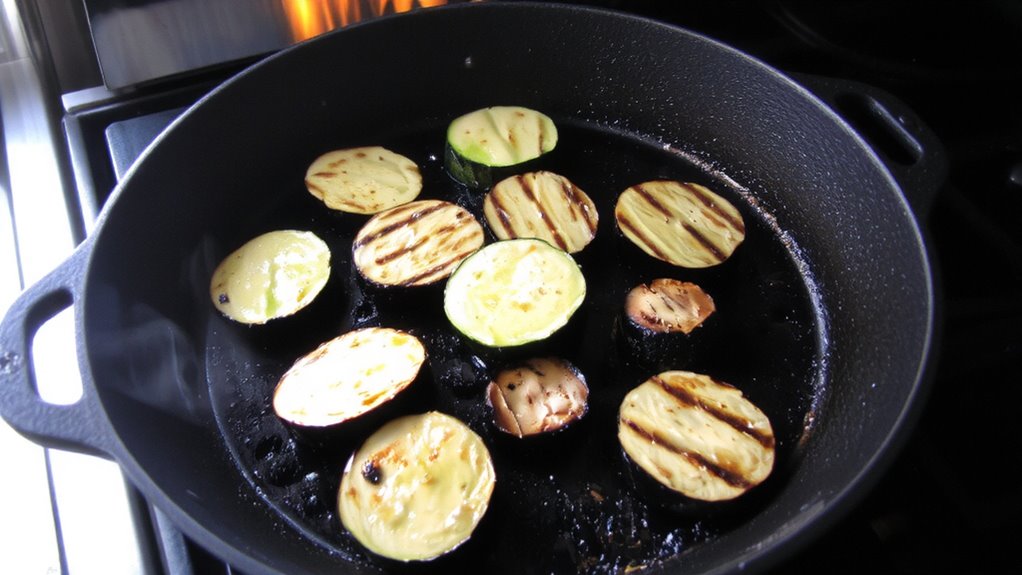
You’ve picked the sturdiest vegetables-those dense, low-moisture varieties that can take the heat-but now comes a step that’ll make or break the sear: drying them properly. Even veggies with naturally low moisture content can carry surface water after washing, and that’s a problem. Water prevents direct contact between the grill grates and the vegetable, inhibiting caramelization and encouraging steaming instead of charring. For ideal surface texture, pat each piece dry with a clean towel. This simple step guarantees better heat transfer and promotes those distinct, restaurant-quality grill marks. Think of it as prepping a canvas-smooth, dry, and ready to react. Skipping this might seem harmless, but the difference in browning and flavor development is noticeable. A dry exterior doesn’t just improve appearance; it intensifies taste by allowing Maillard reactions to occur efficiently. So don’t rush it-take the time to dry your vegetables thoroughly. It’s a small action with big payoffs in texture and taste.
Use High Heat to Build Smoky Flavor
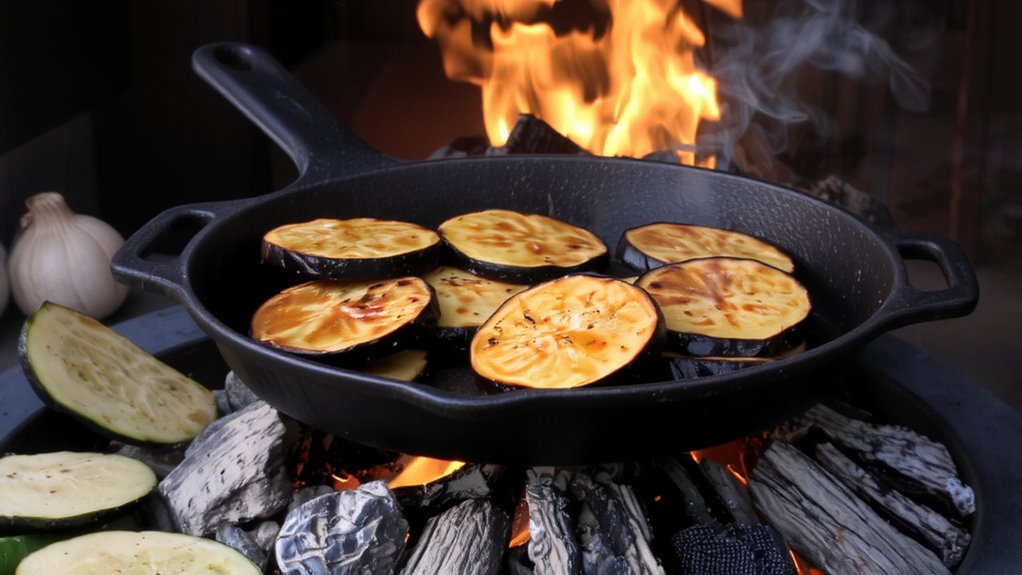
When grilling vegetables, cranking the heat up high isn’t just an option-it’s essential for developing that deep, smoky flavor you can’t get any other way. High heat triggers the Maillard reaction, the chemical process that browns the surface and builds complex, savory notes. Without it, veggies steam instead of char, losing both texture and taste. You want direct, intense heat-think 450°F or higher-so the exterior sears quickly while the inside stays tender-crisp. This rapid sear also opens the door to smoke infusion, especially if you’re using hardwood or charcoal. The brief cook time captures that campfire essence without overcooking. Gas grills work, but they often lack the depth of smoke infusion you’d get from real wood. For maximum flavor, high heat isn’t just effective-it’s irreplaceable in serious vegetable grilling.
Flip at the Right Time for Grill Marks
Though you might be keen to check progress, letting vegetables sit undisturbed is key to achieving those distinct, restaurant-quality grill marks you’re after. Proper timing precision guarantees the surface sears quickly without sticking or burning. You want the Maillard reaction-those complex flavor-producing browning changes-to take hold, and that only happens when the vegetable flesh gets consistent contact with the hot grates. Flip too soon, and the sugars haven’t caramelized; flip too late, and you risk charring instead of searing. Heat control plays a major role here-too low, and the veggies steam rather than char; too high, and they blacken before fully cooking through. Aim for medium-high heat, and resist the urge to move them. Let them release naturally when ready. With solid heat control and timing precision, your grill marks won’t just look impressive-they’ll taste like mastery.
Season for Maximum Flavor and Caramelization
Getting those perfect grill marks is only part of the story-what you do before the vegetables hit the grates shapes the depth of flavor just as much. You want to balance marinade duration carefully; too short and the flavors don’t penetrate, too long and delicate veggies turn soggy. For most firm vegetables like zucchini or eggplant, 30 to 60 minutes is ideal. Acidic components in marinades, like vinegar or citrus, start breaking down cell structure over time, so don’t overdo it. Salt timing matters just as much-add salt too early and it draws out moisture, hindering caramelization. Instead, season right before grilling or after the Maillard reaction begins. This way, you maintain surface dryness and promote that deep, complex sear. Proper seasoning strategy boosts flavor development without sacrificing texture, making your grilled vegetables taste rich, balanced, and distinctly smoky.
Fix Common Grilling Mistakes (Stick, Steam, Burn)
If you’ve ever flipped a zucchini only to leave half of it welded to the grates, you’re not alone-sticking, steaming, and burning are among the most common pitfalls in vegetable grilling, and each sabotages both texture and taste. You can avoid these issues by oil surfaces thoroughly and preheating your grill to guarantee proper sear. Crowding leads to steaming, so space veggies evenly. Control smoke by avoiding flare-ups from excess oil or drippings. Maintain a clean grate and consistent heat zone to prevent charring before caramelization sets in. A well-maintained grill starts with the right tool, so consider using a high-quality grill brush that effectively removes residue without leaving bristles behind.
| Mistake | Cause | Fix |
|---|---|---|
| Stick | Dry grates or cold grill | Oil surfaces, preheat properly |
| Steam | Overcrowded veggies | Space evenly, allow airflow |
| Burn | High heat, no monitoring | Control smoke, use two-zone fire |
On a final note
You’ve got the tools to char-grill vegetables like a pro. High heat, proper prep, and timing make all the difference, transforming simple veggies into smoky, caramelized dishes. Choosing sturdy produce, drying them well, and seasoning at the right moment boosts flavor and texture. Avoid common errors like overcrowding or flipping too soon, and you’ll consistently achieve clean grill marks without sticking or steaming. Master these techniques, and your outdoor cooking will reach new, delicious heights.