Understanding Wood Pellet Types for Optimal BBQ Flavor
You get consistent, rich smoke and precise heat control with hardwood pellets, making them ideal for flavorful, clean-burning BBQ. Hickory gives bold smokiness for beef, while apple and cherry offer mild, fruity notes perfect for poultry and pork. Avoid softwoods-they’re unsafe. Dry, clean pellets below 10% moisture guarantee steady burns and less ash. Mix types like pecan and oak for deeper, custom flavor layers that elevate your cook. You’ll discover even more ways to refine your smoke game with a few key tips.
Notable Insights
- Hardwood pellets burn cleanly and evenly, delivering consistent smoke flavor ideal for BBQ.
- Hickory provides bold, smoky sweetness perfect for beef and pork.
- Applewood offers mild, fruity smoke that complements poultry and fish.
- Mesquite burns hot and strong, best used sparingly or blended to avoid overpowering food.
- Low moisture content (<10%) ensures efficient burning, steady temperatures, and optimal smoke flavor.
Why Wood Pellets Are Perfect for BBQ Flavor
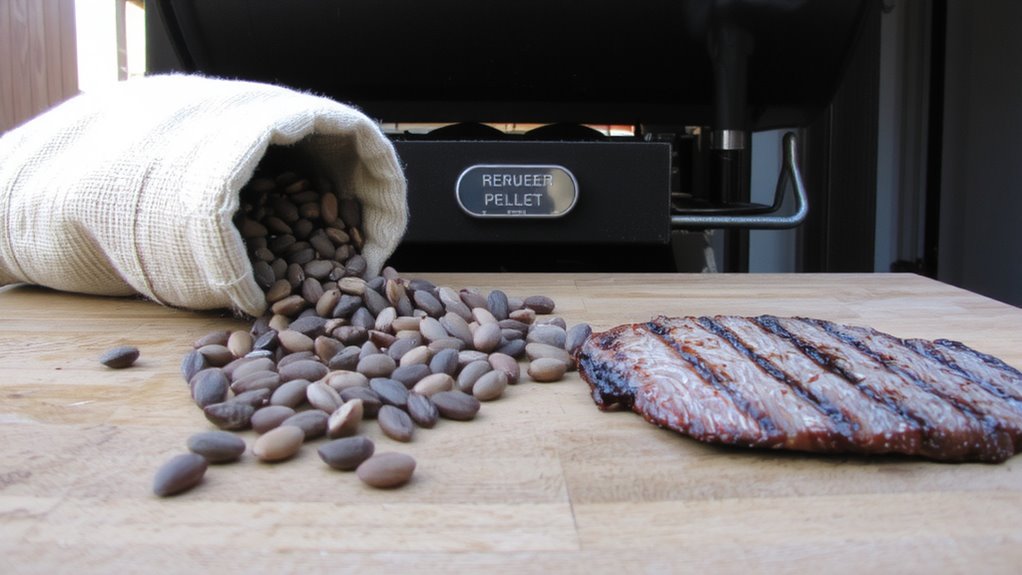
A well-chosen wood pellet can transform your BBQ from ordinary to exceptional, and that’s where they really shine-delivering consistent, rich smoke flavor with minimal effort on your part. You’ll notice the flavor intensity is more controlled compared to chunk wood, thanks to precise burn rates in pellet grills. That means you get reliable smoke consistency throughout long cooks, whether you’re smoking brisket or ribs. Pellets combust cleanly and evenly, reducing flare-ups while maintaining steady temperatures. This level of control lets you focus on timing and technique, not stoking fires. You’re not just adding smoke-you’re shaping flavor with precision. High-quality pellets produce less ash and waste, too, making cleanup easier. For anyone serious about outdoor cooking, that balance of performance and convenience is hard to beat. When flavor intensity and smoke consistency matter most, pellets don’t just compete-they often outperform traditional fuels. For cuts like prime rib, choosing the right blend can make all the difference, with top picks including best pellets for smoking prime rib.
How Wood Type Changes Your Smoke Flavor
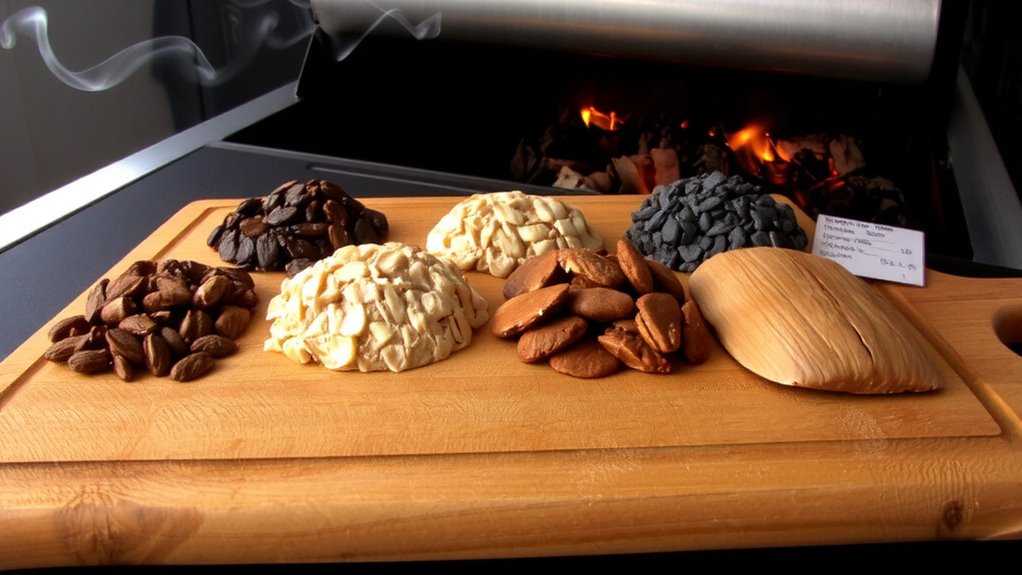
You’ve seen how pellet grills deliver steady smoke and consistent heat, but the real magic starts when you choose the wood type-each variety shapes your food’s flavor in distinct ways. Hickory brings bold smoke intensity and strong flavor notes of bacon and spice, ideal for beef and pork. Mesquite hits even harder, with a sharp, earthy punch best used sparingly. If you prefer subtlety, applewood offers mild smoke intensity with sweet, fruity flavor notes that enhance poultry and fish without overwhelming. Cherry wood gives a delicate smokiness and a hint of tartness, adding rich color and balanced depth. Oak sits in the middle-reliable, medium smoke intensity, with clean, toasty flavor notes that pair well with almost anything. Your choice directly affects the final taste, so match the wood to your protein and desired outcome. There’s no single best-only what works best for your dish. For those exploring options, a best smoking wood guide can help identify top-rated varieties based on flavor profiles and ideal food pairings.
Hardwood vs. Softwood Pellets: What You Need to Know
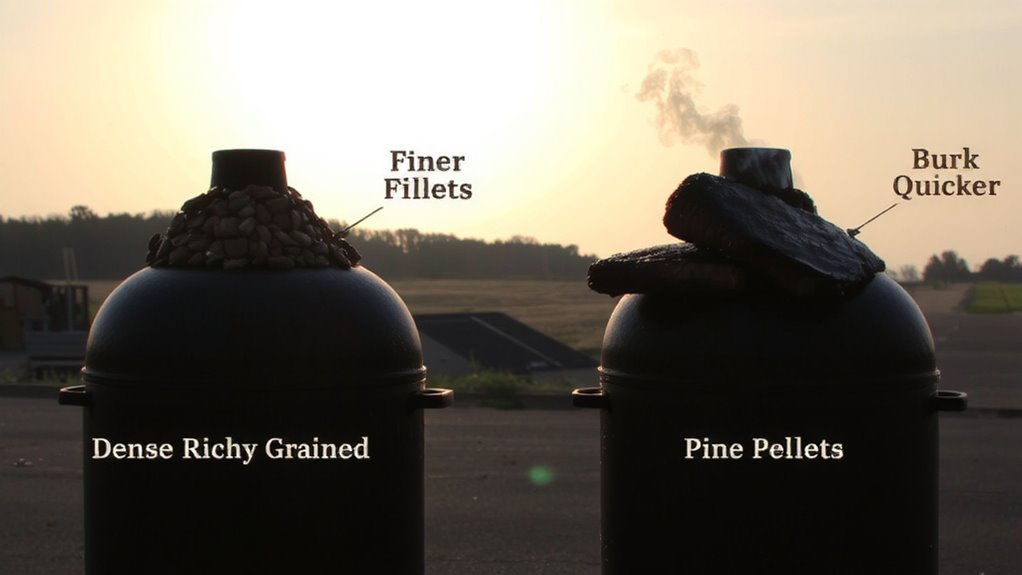
While softwood pellets might seem like a budget-friendly option, they’re not suitable for grilling or smoking food due to high resin and sap content that produces toxic smoke and an unpleasant chemical taste. Stick with hardwood pellets-they’re denser, cleaner-burning, and safe for cooking. Pellet density affects how efficiently they burn, and hardwood pellets pack more mass per inch, giving you better heat control and smoke flavor. They also have a slower burn rate, meaning longer cook times with fewer refills. Softwoods burn faster and less consistently, making temperature management a hassle. Top-rated Z Grills models consistently recommend using hardwood pellets for optimal performance and flavor.
Top 5 Wood Pellet Flavors and Their Best Uses
Smoke is the soul of great barbecue, and your choice of wood pellet flavor shapes its character. Hickory delivers a bold, classic smokiness with rich smoky sweetness, perfect for pork and beef when you want strong flavor intensity. Mesquite burns hot and fast, offering an aggressive punch-best used sparingly or blended to avoid bitterness. Apple wood provides a milder, slightly fruity smoke, ideal for poultry and pork, balancing smoky sweetness with gentle aroma. Cherry adds a touch of sweetness and imparts a beautiful mahogany color, working well for ribs and lighter meats. Pecan offers a nutty, buttery profile with moderate flavor intensity, great for extended smokes without overwhelming the palate. Each wood varies in burn rate and smoke density, so matching pellet to cook time and desired profile gives you control. Choose wisely-your wood choice isn’t just fuel; it’s flavor engineering.
Best Wood Pellet and Meat Pairings
When choosing wood pellets, matching the smoke profile to the meat isn’t just tradition-it’s how you maximize flavor without overpowering the protein. You’ll want mild flavor intensity woods like apple or cherry for poultry and pork-they complement without dominating. For beef or game meats, go bold with hickory or mesquite; their robust character stands up to rich, fatty cuts. Always consider pellet freshness: stale pellets produce uneven smoke and dull flavor, undercutting your efforts. Fresh pellets ignite cleanly and deliver consistent, aromatic smoke essential for balanced results. If you’re smoking salmon, alder’s delicate touch works perfectly, while pecan’s nutty sweetness enhances ribs without overwhelming. Ultimately, pairing isn’t guesswork-it’s about aligning smoke strength with meat type. Match them right, and you’ll pull off flavorful, restaurant-quality BBQ every time.
How Dryness and Clean Pellets Improve Burns
Since moisture content directly impacts combustion efficiency, keeping your wood pellets dry isn’t just a storage tip-it’s a critical factor in achieving clean, steady burns. When moisture content stays low-below 10%-pellets ignite faster and burn hotter, delivering consistent heat for better temperature control. Wet or damp pellets struggle to combust fully, leading to uneven flames, excess smoke, and frustrating temperature swings. That same inefficiency increases ash production, clogging your grill’s burn pot and requiring more frequent cleanups. Clean, high-quality pellets free of dust and debris also minimize residue, supporting longer, more efficient cook cycles. You’ll notice fewer flare-ups and less maintenance when you prioritize dryness and purity. In practical terms, this means sealing your bag tightly, storing pellets in a dry place, and inspecting them before use. Doing so guarantees every cook starts with maximum burn performance.
Mixing Wood Pellets for Custom Flavors
Flavor blending opens up a world of culinary possibility, letting you tailor smoke profiles to match any dish on your menu. You can mix hardwoods like hickory or oak with fruitwoods such as apple or cherry to achieve balanced flavor blending that enhances without overwhelming. Combining pellets lets you control smoke intensity-stronger woods lend depth to red meats, while milder blends suit poultry or fish. For example, mixing mesquite with alder reduces smoke intensity while adding complexity. Fresh, dry pellets burn cleaner and produce more consistent smoke, ensuring your custom blend performs as intended. Many experienced pitmasters recommend starting with a 50/50 split, then adjusting based on taste. Avoid combining overly pungent woods unless you’re aiming for bold results. With careful experimentation, custom mixes elevate your BBQ from good to exceptional, offering precision that store-bought single varietals rarely match.
On a final note
You’ll get the best BBQ results by choosing dry, clean hardwood pellets, since they burn efficiently and impart consistent smoke flavor. Softwoods, while cheaper, produce unpleasant resins best avoided. Matching wood types-like hickory for pork or apple for poultry-enhances each dish without overpowering it. Blending pellets lets you fine-tune flavor, but always prioritize pellet quality to maintain steady temperatures and minimize ash. Your smoker’s performance, paired with smart wood choices, ultimately defines the depth and balance of your barbecue.