Mastering Temperature Zones on a Charcoal Grill: A Grilling Guru’s Tips
You’ve got more control when you set up direct and indirect heat zones on your charcoal grill. Pile coals under one side for searing steaks or burgers, leave the other side bare for gentler cooking. Adjust airflow with the lid and vents-keep it closed to maintain steady temps. Use this two-zone setup to prevent burning, manage flare-ups, and cook everything from delicate fish to ribs with precision. You’ll start cooking smarter, not harder, and discover even better results ahead.
Notable Insights
- Set up a two-zone fire by placing coals under one side of the grate for distinct direct and indirect heat areas.
- Use the direct heat zone for searing steaks or burgers quickly at high temperatures.
- Cook delicate foods like fish and vegetables over the indirect heat zone to prevent burning.
- Control grill temperature by adjusting top and bottom vents while keeping the lid closed.
- Move food between zones during cooking to balance searing, doneness, and carryover heat.
Set Up Direct and Indirect Heat Zones
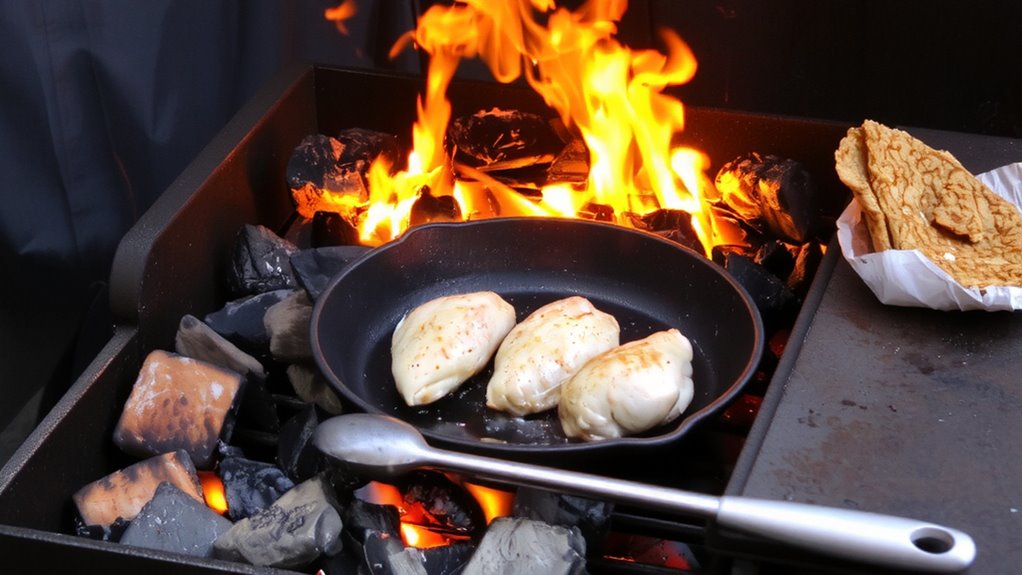
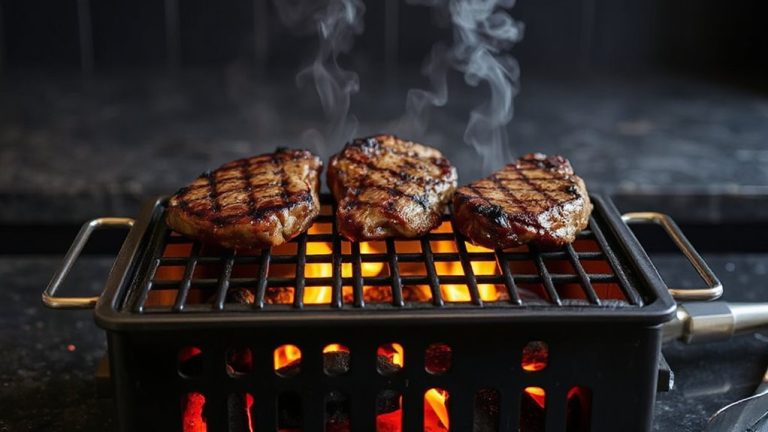
Heat control separates the rookies from the seasoned pitmasters, and mastering it starts with setting up proper temperature zones. You need both direct and indirect heat to handle different foods effectively. For direct heat, pile coals evenly under part of the grate-this is where you sear steaks or burgers. The rest of the grill stays coal-free, creating an indirect zone for slower cooking. Your charcoal arrangement determines how balanced your fuel distribution is. A two-zone setup gives you control without needing airflow tweaks yet. Place lit coals on one side, leave the other empty. That way, you can move food over when flare-ups happen or when delicate items need gentle heat. This method works reliably across kettle grills and larger rigs. Once you nail this foundation, managing cook times and doneness becomes far more predictable. Fuel distribution isn’t just about heat-it’s about precision. A well-designed charcoal grill setup enhances heat management and cooking versatility.
Control Temperature With Airflow and Lid
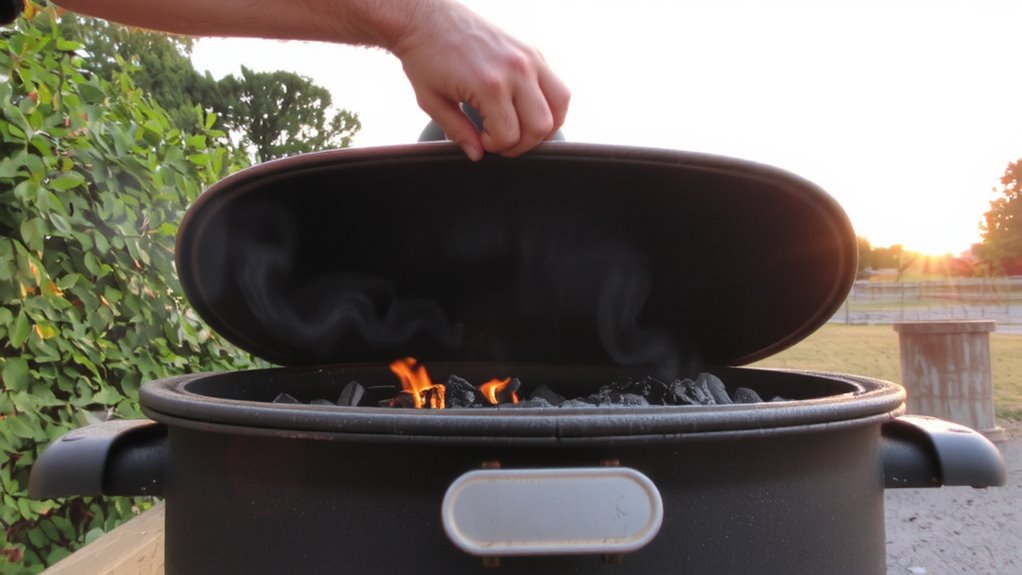
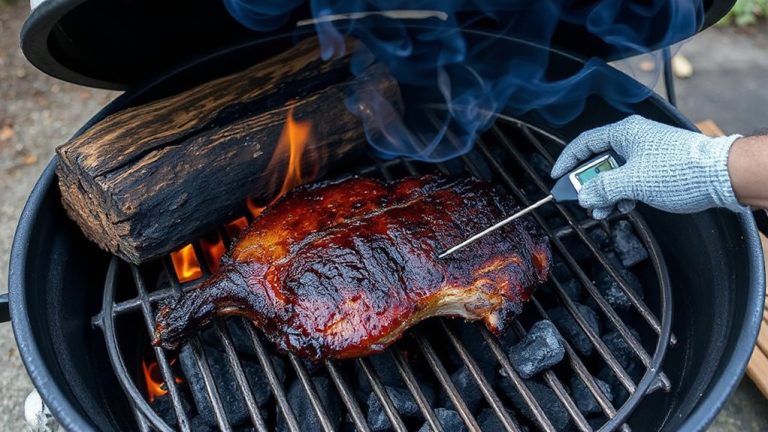
While you’ve already set up your two-zone fire, fine-tuning the cooking environment means you’ll need to start paying close attention to airflow and lid position-because temperature control on a charcoal grill isn’t just about how much fuel you use, but how you manage combustion. Proper airflow management and lid positioning are essential for stabilizing heat. Opening vents increases oxygen flow, boosting temperature; closing them slows burning and reduces heat. Lid positioning affects both convection and smoke concentration. Keep the lid closed as much as possible to retain heat and guarantee even cooking, only lifting it when necessary. For faster and more consistent ignition, consider using a charcoal chimney to eliminate the need for lighter fluid and ensure even heat distribution.
| Action | Effect on Temperature |
|---|---|
| Open top and bottom vents | Increases heat |
| Close vents partially | Maintains steady temp |
| Lid open frequently | Causes heat loss |
| Lid closed consistently terrifies Promotes even cooking
How Heat Zones Improve Grill Control and Food Quality
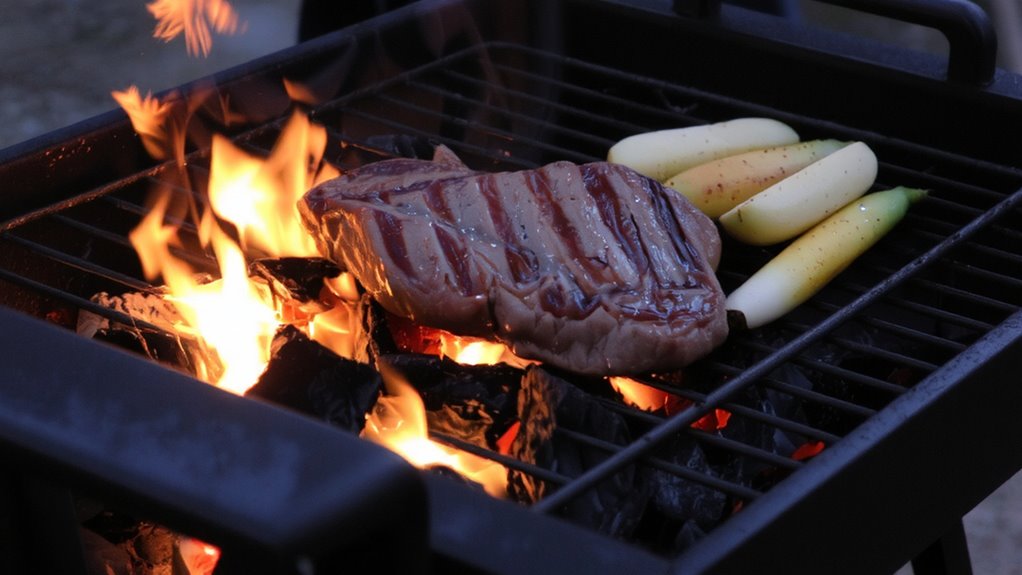
When you set up distinct temperature zones on your charcoal grill, you’re not just organizing heat-you’re gaining real control over how your food cooks from start to finish. A hot zone delivers intense heat for a solid sear, locking in juices and guaranteeing excellent sear retention, while the cooler zone allows for gentle, even cooking without burning. This flexibility means you can move food around as needed, avoiding hot spots and flare-ups. You’ll notice better flavor development, too-smoky nuances build gradually when food shifts from sear to smoke. Searing over high heat then finishing over indirect guarantees textures and doneness are spot-on. Instead of guessing, you’re managing the cooking process deliberately. Whether it’s thick steaks or delicate fish, heat zones reduce stress and mistakes. You’re not just grilling; you’re guiding the food’s journey from raw to perfectly plated with far better results.
Use Temperature Zones for Different Foods
You’ve already seen how splitting your grill into distinct temperature zones gives you command over cooking dynamics, but putting that control to work really matters when you’re handling different types of food. Sear steaks over the hot zone for that perfect crust, then move them to the cooler side to finish without burning. Delicate items like fish or vegetables benefit from indirect heat, reducing flare-ups while allowing steady smoke infusion. This method guarantees chicken or ribs cook through evenly, absorbing rich flavor without charring. You’ll get better results by matching each food’s needs to the right zone-high heat for quick food searing, lower temps for slower, more thorough cooking. Think of your grill as a kitchen with multiple burners: versatility is key. Mastering this balance means juicier meats, more complex taste, and fewer mistakes. It’s not just about heat-it’s about smart heat use.
Adjust Zones Mid-Cook for Better Results
If you want full control over your cook, shifting the temperature zones partway through isn’t just helpful-it’s essential. You’ll often start with searing over direct heat, then move food to a cooler zone to finish without overcooking. This kind of food placement flexibility lets you manage doneness precisely, especially with thicker cuts like ribeye or chicken thighs. Timing adjustments become critical-move items too soon, and you’ll lack that desirable crust; wait too long, and they’ll dry out. Smart mid-cook changes account for carryover cooking and ingredient variability. For instance, shifting burgers aside after a solid sear guarantees even internal temps without charring. Experienced grillers routinely manipulate zones to match each stage of the cooking curve, maximizing flavor and texture. You’re not just grilling-you’re guiding the process with intention, using active observation and strategy to elevate results.
Stabilize Your Grill’s Temperature
Though achieving a consistent cooking environment might seem secondary to the fire’s initial setup, maintaining a stable grill temperature is what separates decent results from truly reliable performance. You’ll need to account for both charcoal type and weather conditions to keep things on track. Lump charcoal burns hotter and faster, making temperature swings more likely, while briquettes offer a steadier, longer-lasting heat-ideal for extended cooks. Wind, rain, or sudden drops in temperature can disrupt airflow and cooling patterns, so position your grill in a sheltered spot when possible. Adjust the vents gradually; drastic changes cause spikes. Use the top and bottom dampers in tandem to fine-tune oxygen flow, which directly controls combustion rate. Monitoring the grill’s internal thermometer helps you react before minor shifts become major issues. With practice, you’ll anticipate fluctuations and correct them before they impact your food. Choosing the right fuel is crucial, and many experts recommend best charcoal for smoking for achieving optimal heat consistency and smoke flavor.
On a final note
You’ve got the tools to master charcoal grilling by leveraging direct and indirect heat zones. Controlling airflow and lid position stabilizes temperature, while proper zoning improves searing and even cooking. Adjusting zones mid-cook gives precise results for diverse foods. Once you dial in heat management, your grill delivers restaurant-quality outcomes consistently, proving that technique-not just heat-defines great BBQ.