The Science Behind Why Rosemary Enhances Smoked Meat Flavor in BBQ
You’re using rosemary not just for flavor, but for protection-its carnosic acid slashes carcinogenic HCAs by up to 100% and cuts PAHs by 25% during smoking. This antioxidant neutralizes free radicals and slows lipid oxidation, especially in beef and game meats. Fresh sprigs outperform dried, preserving volatile compounds when shielded from direct flame. Pitmasters swear by timed placement for maximum effect, balancing potency without bitterness-what you’ll learn next could transform your smoke session.
Notable Insights
- Rosemary’s carnosic acid reduces harmful HCA formation by 30–100% during high-heat smoking.
- Antioxidants in rosemary neutralize free radicals, preserving meat quality and enhancing flavor safety.
- Fresh rosemary sprigs release phenolic compounds that inhibit lipid oxidation in fattier meats like brisket.
- Carnosic acid degrades under direct flame, so indirect smoking preserves its protective benefits.
- Optimal use involves 3–4 inch fresh sprigs placed above meat to slowly infuse antioxidants without bitterness.
How Rosemary in Smoking Reduces Carcinogens
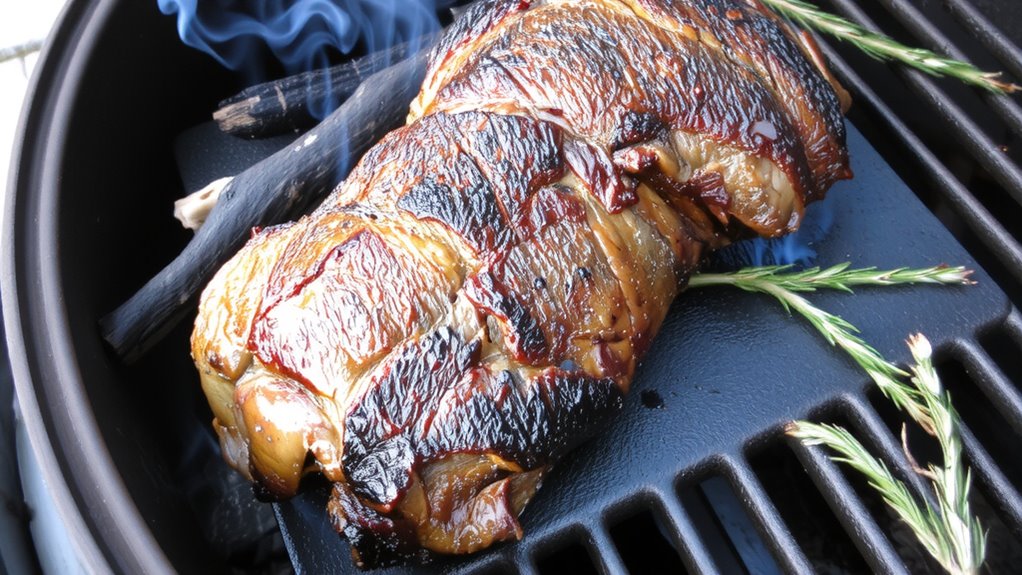
A growing body of research suggests you can substantially cut back on harmful compounds in smoked meat-just by reaching for rosemary. Studies show it reduces HCA’s (heterocyclic amines) by 30% to 100% during high-heat cooking, thanks to powerful antioxidants like carnosic acid and rosmarinic acid. These compounds interrupt the chemical reactions that form carcinogens by neutralizing free radicals when meat hits high temperatures. Carnosic acid, making up 0.8% of rosemary by weight, is especially effective at suppressing lipid oxidation, a key pathway to toxic byproducts. You don’t need much-adding fresh sprigs, extract, or a rosemary-based rub before smoking also lowers polycyclic aromatic hydrocarbons by up to 25%. The best part? It enhances flavor while making your BBQ safer. Practical and effective, rosemary isn’t just an herb-it’s a smart upgrade to any smoking routine, blending science and taste seamlessly.
Why Carnosic Acid Neutralizes BBQ Toxins
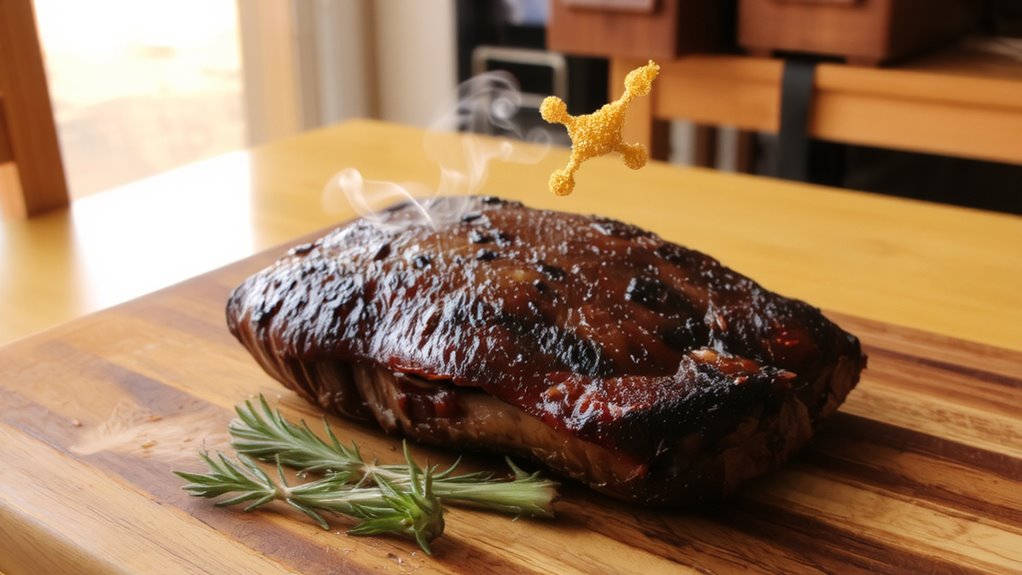
While you’re firing up the smoker, carnosic acid-the potent antioxidant making up 0.8% of fresh rosemary’s weight-is already working to protect your food at the molecular level. This powerful compound, along with other phenolic compounds in rosemary, scavenges free radicals produced during smoking, effectively reducing carcinogenic polycyclic aromatic hydrocarbons (PAHs) by up to 25%. Studies confirm carnosic acid also inhibits lipid oxidation, slashing heterocyclic amine (HCA) formation in beef by 30–100%. Its phenolic structure neutralizes reactive oxygen species before they damage meat tissues or your health. Fresh rosemary sprigs are essential-drying strips up to 60% of carnosic acid potency. Unlike dried versions, fresh sprigs deliver full protection, thanks to intact volatile oils and concentrated antioxidants. Though flavor matters, the real advantage lies in science: carnosic acid doesn’t just enhance taste-it actively defends against toxins, making your BBQ both tastier and safer.
Best Meats to Smoke With Rosemary
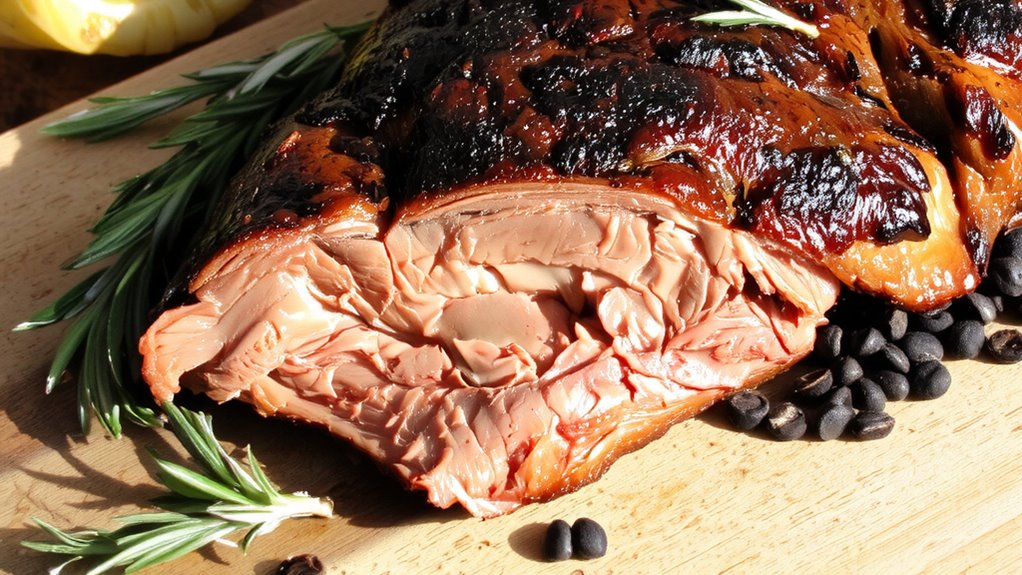
Rosemary’s bold, pine-tinged profile and powerful antioxidant properties make it a standout choice for certain meats on the smoker, especially when you’re aiming to boost both flavor and safety. You’ll find beef brisket excels with dried rosemary, as its fat content balances the herb’s intensity while carnosic acid reduces harmful PAHs by up to 25%. Pork shoulder benefits too-fresh sprigs slow lipid oxidation, extending shelf life by 30% and improving preservation over long cooking time. Lamb racks shine with rosemary’s ability to cut gaminess and form a protective antioxidant shield. Game meats like venison and elk respond well without overpowering their lean profiles. Avoid poultry and fish skin, but use rosemary on thick cuts where gradual infusion prevents bitterness. Try herb combinations like rosemary with thyme or garlic for balanced depth. It’s not just flavor-it’s function.
Common Rosemary Smoking Myths: Busted
Ever wonder why your smoked meats aren’t turning out as well as expected, even with rosemary in the mix? A lot of misconceptions about rosemary in Traditional smoking can lead you astray. Let’s bust some myths:
| Myth | Fact | Impact on Flavor Profile |
|---|---|---|
| Dried rosemary works like fresh | Dried loses 60% carnosic acid | Reduced antioxidant protection |
| More rosemary = better preservation | Plateaus quickly; excess causes bitterness | Bitter terpenes ruin balance |
| Rosemary can burn | Direct flame destroys volatile oils | Loses protective compounds |
| Pairs with all woods | Clashes with strong woods like mesquite | Overpowers meat’s nuance |
Using fresh rosemary wisely enhances flavor without overwhelming it. Don’t assume more is better-balance is key. Avoid direct flame contact and heavy woods. Respect the herb’s limits to elevate your smoked meats the right way.
How Pitmasters Use Fresh Rosemary in the Smoker
How do the best pitmasters get that clean, aromatic lift in their smoked meats without tipping into bitterness or burning off the good stuff? They use fresh rosemary just right. Place 3–4 inch sprigs on the smoker grates above the meat during the last 45 minutes-this timing preserves volatile antioxidants like carnosic acid, which Food Science shows can reduce polycyclic aromatic hydrocarbons (PAHs) by up to 25%. Fresh rosemary works best because it smolders slowly, especially when kept clear of direct flames, releasing protective phenolic compounds without the harsh, piney notes dried versions often bring. You only need about three sprigs per five pounds of meat; more risks terpene buildup and bitterness. Unlike dried herbs that burn fast and lose potency, fresh rosemary delivers cleaner smoke, enhancing flavor and safety. It’s not just tradition-it’s smart, science-backed technique that works best at the final stage.
On a final note
You’re using rosemary not just to enhance flavor, but to protect your food. Carnosic acid in rosemary neutralizes harmful carcinogens formed during smoking, making your BBQ safer without sacrificing taste. It works best with fatty cuts like brisket or pork shoulder, where smoke and herb compounds penetrate deeply. Fresh rosemary outperforms dried in the smoker, releasing aromatic oils gradually. Smart pitmasters use it in moderation-too much overwhelms-proving that science and tradition can improve outdoor cooking.