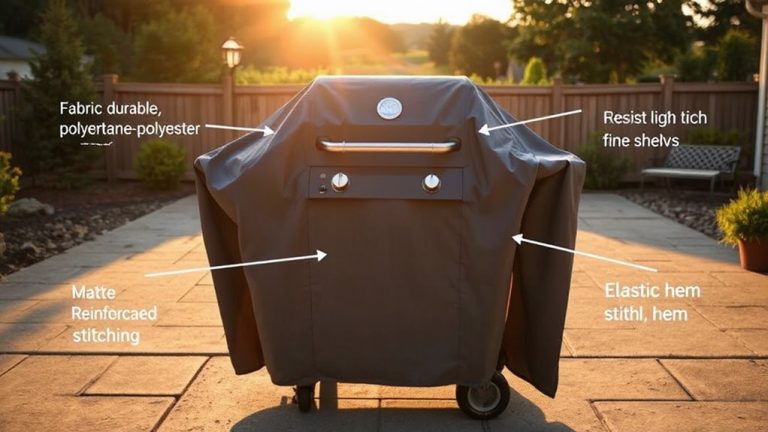
The Comprehensive Guide to Preparing Your Grill Before Each Use
You should always clean your grates with a sturdy wire brush while they’re warm to remove residue that causes flare-ups and uneven heating. Check gas lines for leaks using soapy water, and inspect burners for clogs or corrosion that disrupt flame performance. Preheat your grill 10–15 minutes for consistent heat, then lightly oil the grates with a high-smoke-point oil to prevent sticking and improve searing-each step guarantees better flavor, control, and safety. Mastering these habits transforms every cookout into a reliable, flavorful experience.
Notable Insights
- Clean the grates with a wire brush while warm to remove residue and ensure even heating.
- Check for gas leaks by applying a soapy water solution to connections and looking for bubbles.
- Inspect burners for cracks, corrosion, or clogs, and replace damaged parts for consistent flames.
- Preheat the grill for 10–15 minutes to stabilize temperature and eliminate hot or cold spots.
- Oil the grates using a high-smoke-point oil to prevent sticking and improve sear mark development.
Clean the Grates to Remove Old Residue
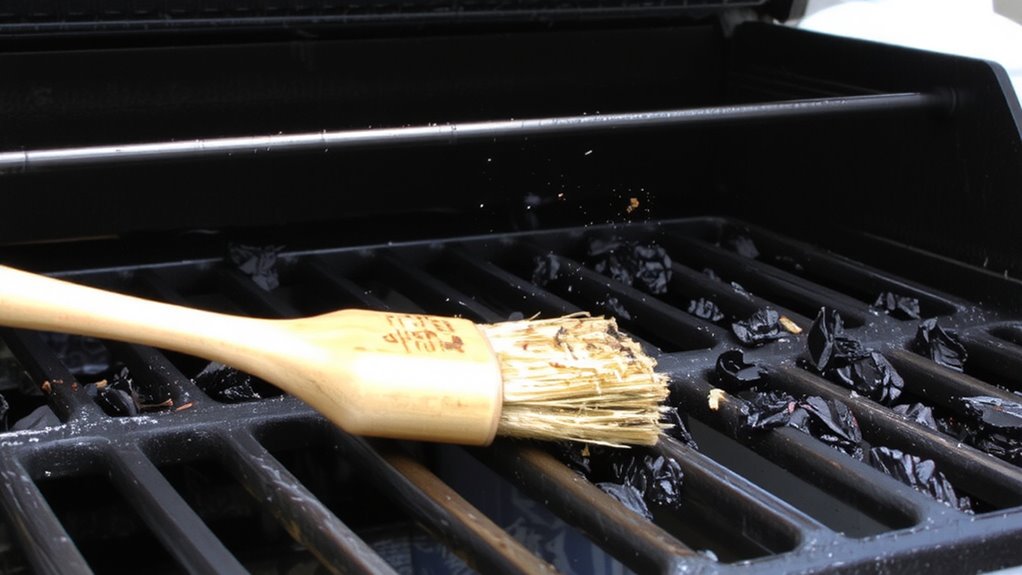
A clean grate is the foundation of every great cookout, and yours should never play host to last weekend’s charred remnants. Proper grill maintenance starts here-scraping off stuck-on food debris guarantees even heating and prevents flare-ups. You’ll want to use a sturdy wire brush while the grates are still warm, as heat loosens residue and makes removal easier. Over time, built-up gunk can corrode metal and taint flavors, undermining both performance and food quality. Think of it this way: a well-cleaned grate conducts heat more efficiently, giving you better sear marks and consistent results. Neglecting this step isn’t just unhygienic; it actively harms cooking precision. Regular attention to food debris accumulation keeps your grill in peak condition, season after season. Simple, consistent cleaning isn’t glamorous, but it’s the most impactful habit for reliable, flavorful outdoor cooking. For the safest and most effective results, choose one of the best grill brushes that combine durable bristles with secure construction to avoid bristle shedding.
Check for Gas Leaks and Loose Connections
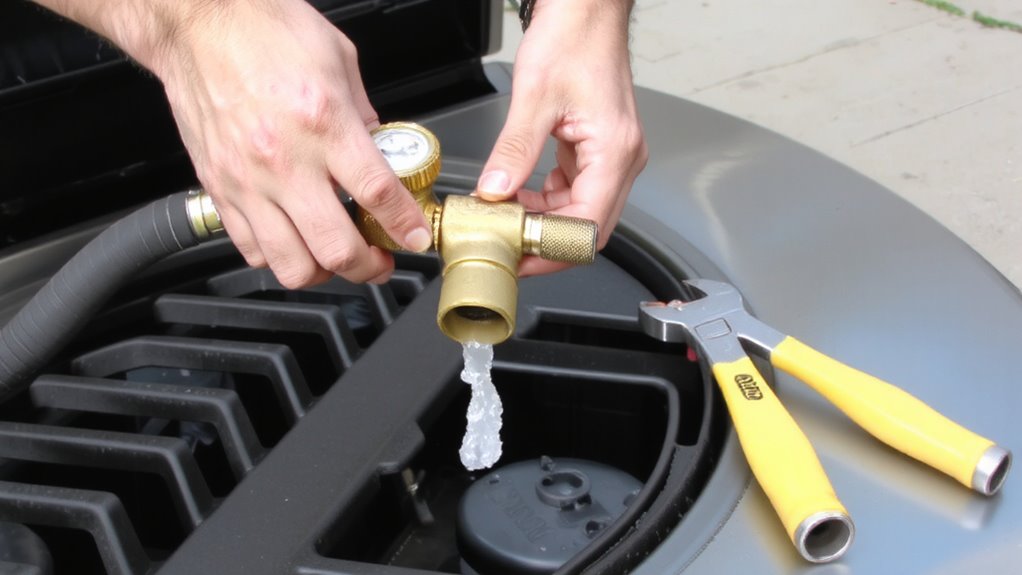
While your grill may seem ready to fire up after cleaning the grates, skipping a thorough inspection of the gas lines and connections could put safety at risk. You should always verify connection integrity before use-tighten fittings and examine hoses for cracks or wear. A loose or damaged connection can lead to gas leaks, which aren’t just inefficient-they’re dangerous. For reliable gas detection, apply a soapy water solution to joints and valves; bubbles will form if gas escapes. Don’t rely on smell alone, as conditions like wind can disperse odorants. Ensuring solid connection integrity not only prevents accidents but also maintains consistent performance. Over time, repeated heating and cooling cycles stress materials, so regular checks are essential. Gas detection isn’t overkill-it’s responsible grilling. Treat this step as non-negotiable, just like cleaning. Your safety and the grill’s efficiency depend on these small, smart habits every time you prepare to cook.
Inspect Burners and Replace Worn Parts
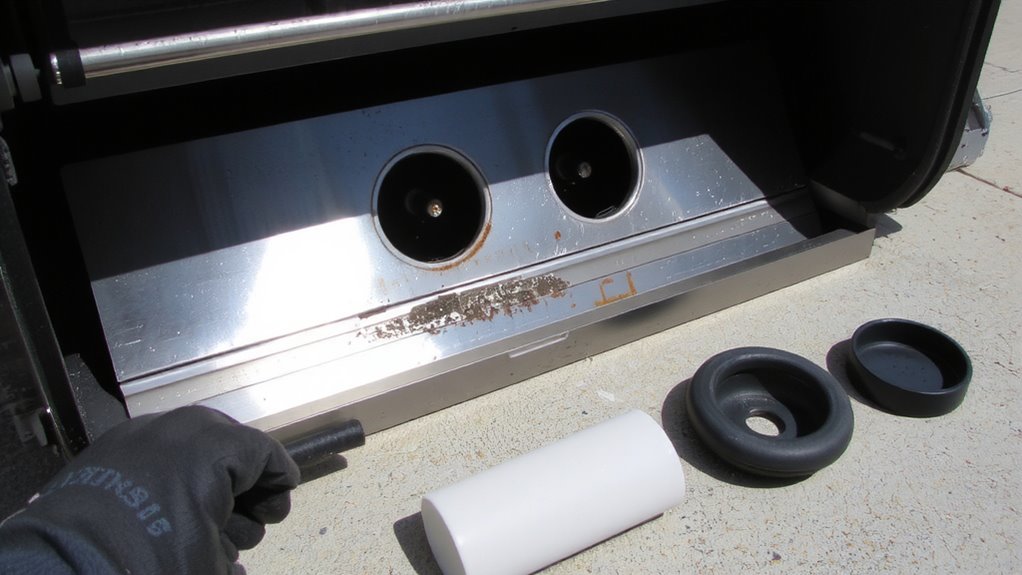
Nothing ruins a grilling session faster than uneven flames or dead zones on the cooking surface-signs you’ve likely got burner trouble. You need to inspect each burner closely, looking for cracks, corrosion, or clogged ports that hinder performance. Damaged burners reduce ignition efficiency and create hot spots, making proper burner alignment critical for consistent heat distribution. Misaligned burners can also block gas flow or interfere with the flame spread, increasing flare-ups and cooking times. If you spot heavy rust or warping, replacement is smarter than repair-worn parts compromise safety and function. Clean the burner tubes thoroughly, ensuring no debris blocks gas output. Reinstall them precisely, verifying they sit flat and align with ports and ignition sources. Proper maintenance boosts ignition efficiency and extends your grill’s lifespan, ensuring reliable, even heating every time you fire it up. A well-maintained gas grill performs similarly to top-rated models, such as those found in a guide to the best charcoal grills.
Preheat for Even Cooking
Since heat management is central to successful grilling, you’ll want to preheat your grill for 10 to 15 minutes before cooking to guarantee the entire cooking surface reaches a stable temperature. This step guarantees proper heat distribution across the grates, minimizing hot or cold spots that can disrupt your cook. Without preheating, you risk uneven searing and inconsistent results-especially with thicker cuts like steaks or chicken breasts. A well-preheated grill promotes better cooking consistency, allowing foods to release easily from the metal and develop a flavorful crust. Whether you’re using gas, charcoal, or pellet, allowing time for thermal stabilization improves control and predictability. You’ll notice sharper sear marks and juicier interiors when temperatures are uniform. Skipping this phase might save a few minutes, but it compromises performance. Think of preheating as calibrating your grill’s readiness-just like an oven, it needs time to reach ideal operating conditions for reliable, high-quality results every time.
Oil the Grates to Prevent Sticking
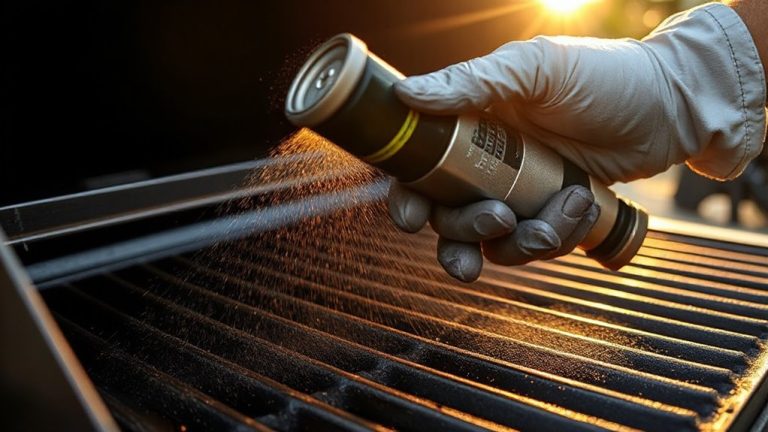
You’ve given your grill time to heat up, and now it’s ready for the next smart move-oiling the grates. This simple step guarantees better heat distribution and kickstarts grate seasoning, which improves with each use. A well-oiled grate prevents food from sticking, preserves non-stick qualities, and promotes even sear marks. Use tongs and a folded paper towel dipped in high-smoke-point oil-canola or avocado work best. Selecting the right tool for oiling can make a noticeable difference, especially when using larger cooking surfaces like those found on outdoor griddles.
| Method | Effectiveness | Best For |
|---|---|---|
| Paper towel | High | Quick preheat tasks |
| Spray oil | Medium | Even coverage |
| Brush | Medium-High | Controlled application |
| Oil-soaked rag | Low | Avoid (fire risk) |
| Silicone brush | High | Reusable, safe option |
Regular oiling enhances flavor development and extends grate life. It’s not just prep-it’s maintenance.
On a final note
You’ve cleaned the grates, checked for gas leaks, inspected burners, preheated thoroughly, and oiled the surface-now you’re ready. These steps aren’t just routine; they’re essential for safe, consistent cooking. A well-maintained grill delivers better heat control, extends equipment life, and improves food quality. Skipping them risks flare-ups, uneven searing, or stuck burgers. Treat your grill with care, and it’ll reward you with reliable performance every time. Proper prep makes all the difference.