Setting Up Dual Fire Stations: One for Cooking, Another for Warmth Only
You should set up two separate fires-one for cooking, one for warmth-to boost safety, efficiency, and comfort. Place your cooking fire downwind and away from shelter, using dry hardwood for steady heat and better control. Position your heat fire closer to camp, but on bare ground and ringed with rocks to reduce smoke and contain flames. Use radiant barriers and proper airflow to keep warmth directed your way. Choosing the right wood and layout for each fire cuts waste and improves performance-smart setup makes all the difference out there.
Notable Insights
- Separate cooking and heat fires by at least 10 feet to enhance safety and reduce smoke near seating.
- Place the cooking fire downwind and in an open area for better access and ventilation.
- Use hardwoods like oak for the cooking fire to achieve high, consistent heat for food preparation.
- Build the heat fire near lounging areas with slow-burning woods like maple for steady, long-lasting warmth.
- Design the heat fire with a chimney effect or radiant barrier to improve warmth and reduce smoke exposure.
Set Up Two Fires: One for Cooking, One for Heat
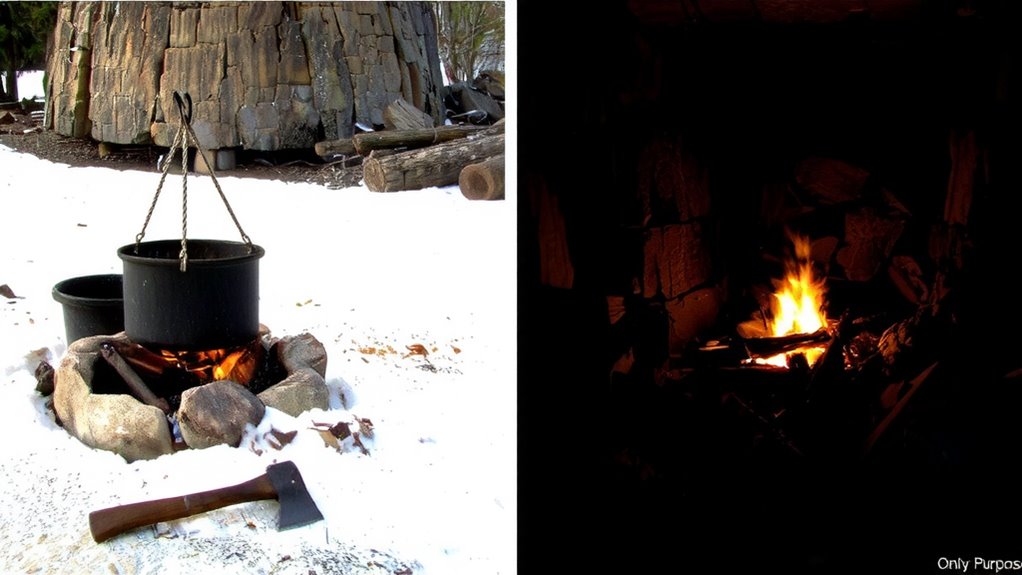
While managing a single fire might seem simpler, splitting your fire duties between two dedicated stations-one for cooking and one for warmth-ultimately improves efficiency, safety, and comfort in a camp setting. You’ll boost fire safety by reducing traffic around the cooking flame, minimizing accidental contact or sparks near food prep. A separate heat fire lets you maintain steady warmth without constant adjustments, enhancing heat efficiency through consistent, low-emission burning. Cooking fires, meanwhile, can be fine-tuned for temperature control-ideal for searing, simmering, or baking-without compromising warmth nearby. This division also lets you position each fire ideally for its role, reducing smoke exposure where you eat or rest. Though managing two fires demands more initial setup, the gains in safety, functionality, and thermal performance far outweigh the effort. You’ll spend less time troubleshooting and more time enjoying the outdoors.
Choose Locations for Cooking and Heat Fires
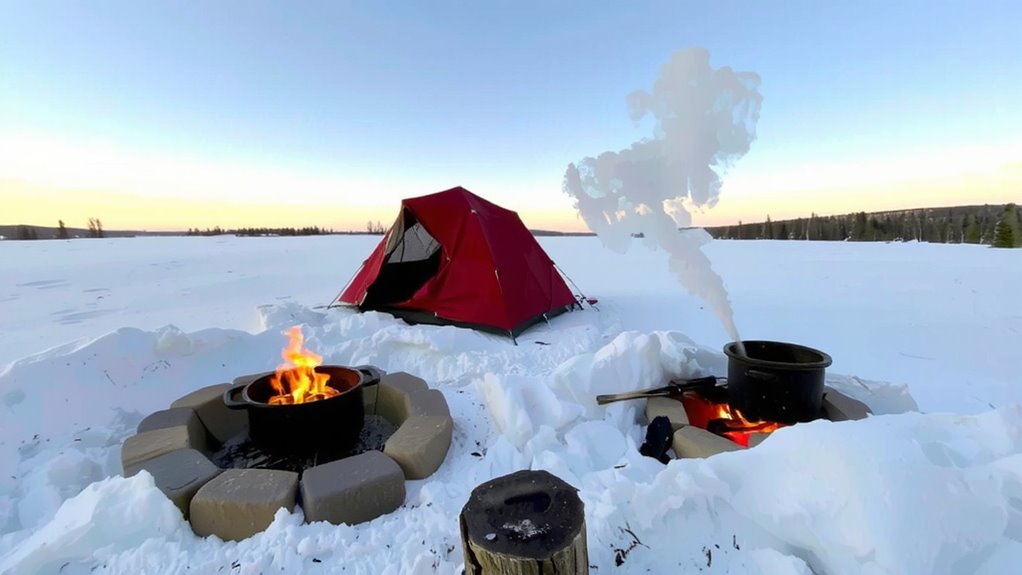
Since your safety and comfort depend on proper fire placement, you’ll want to position the cooking and heat fires with clear intent-keeping the cooking station downwind and at least 10 feet from your shelter or seating area to reduce smoke interference and fire risk. Establish distinct safety zones: the cooking fire needs open access for monitoring and utility, while the warmth fire can nestle closer to your lounging area, provided it’s on bare soil and ringed with rocks. Wind direction and terrain shape your setup; avoid depressions that trap smoke or accelerate flames. Thoughtful fire placement balances efficiency and caution. For optimal flavor and burn consistency, consider using best charcoal for smoking.
Build a Cooking Fire That Works Fast and Safe
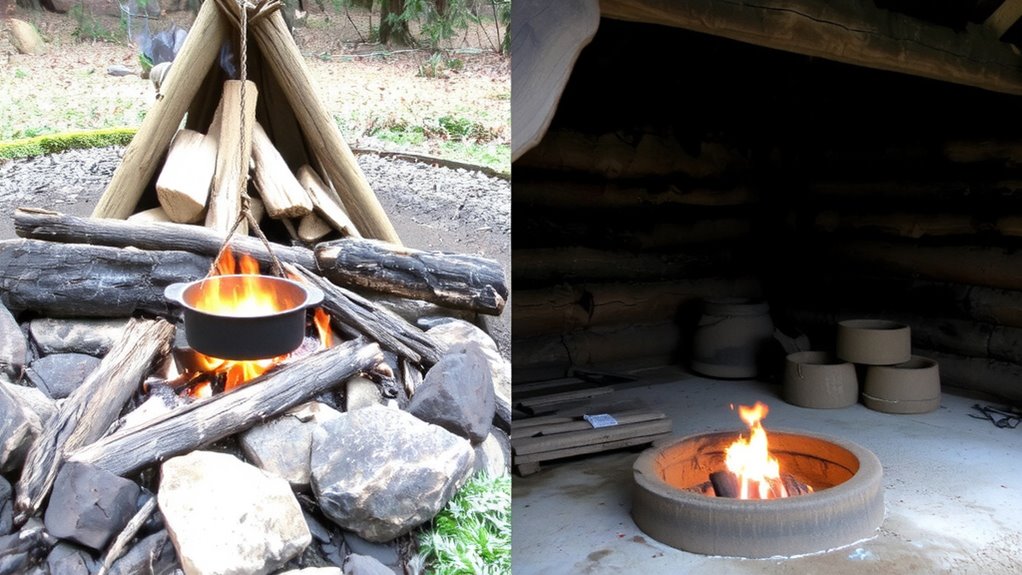
A well-built cooking fire starts with smart design. Choose a fire type like a raised griddle rig or a simple reflector hearth-it boosts efficiency and control. Use dry hardwoods; they burn hotter and steadier than softwoods, giving you consistent heat for searing or simmering. Position your cooking tools-grills, tripods, or Dutch ovens-over a low-log pyramid or a lean-to setup so flames lick evenly but won’t flare. Keep the fire compact; larger isn’t better when precision matters. A narrow base concentrates heat where you need it, reducing fuel waste and cooking time. Tend the fire actively: adjust air gaps, feed small splits, and monitor heat with your hand-three seconds of hold means it’s medium-hot. This approach delivers safer, faster results than random campfires. You’re not just burning wood-you’re managing energy. With the right fire type and trusted cooking tools, meals go from raw to ready with reliability.
Set Up a Heat Fire That Keeps Smoke Out of Your Space
If you’re trying to stay warm without filling your campsite with smoke, the design of your fire matters just as much as its placement. A well-built heat fire uses the chimney effect to draw smoke upward and away, minimizing lingering fumes. Stack logs in a vertical pyramid or use a metal fire ring with a chimney cap to enhance airflow. Position your heat fire just outside your shelter’s opening, angled so wind doesn’t push smoke inward. Use radiant barriers-like a rock wall or reflective foil-backed board-behind the flames to bounce warmth toward you while blocking drafts. These barriers improve efficiency, letting you stay warmer with less fuel. Unlike open cooking fires, a heat-only fire should burn steadier and cleaner, so avoid green wood that increases smoke. Proper setup means real comfort without choking on the fumes. Smoke control isn’t just about comfort-it’s about safety and stamina in cold weather.
Burn Smarter: Fuel Both Fires Without Waste
You’ve got your heat fire running clean, positioned to keep smoke away while reflecting warmth where it’s needed-now think about how that setup interacts with your cooking fire. Running two stations means smart fuel efficiency: use hotter, shorter-burning hardwoods like oak or hickory for cooking, where direct, intense heat is key. For warmth, switch to slower-burning, denser logs like maple or birch that sustain low smoke output and steady radiant heat. Size matters-split wood uniformly to match each fire’s purpose, reducing guesswork and waste. This isn’t just about having flames; it’s about purpose-built fire maintenance. Check airflow, clear ash buildup early, and adjust log placement as coals develop. A well-fed cooking fire needs vigilance, while the heat fire thrives on stability. Balance both, and you’ll stretch your wood supply, minimize effort, and maintain performance across both stations-efficient, effective, and entirely under your control. Choose the right best fire pit wood based on burn characteristics to maximize efficiency in both cooking and heating roles.
Avoid These Dangerous Dual Fire Setup Errors
While proper placement of dual fire stations can boost efficiency, setting them too close together undermines safety and performance-radiant heat from the warmth fire can destabilize the cooking flame, creating unpredictable flare-ups or uneven temperatures that ruin delicate dishes. You’re also increasing fire hazards if airflow isn’t managed; restricted ventilation traps heat and sparks, raising the risk of accidental ignition. Never overlook carbon monoxide, especially in semi-enclosed spaces-both fires consume oxygen and emit this odorless, deadly gas. Position your stations upwind and at least ten feet apart, using windbreaks strategically to shield flames without suffocating them. Avoid shared chimneys or flues, as they concentrate carbon monoxide and reduce draft efficiency. Regularly check fuel sources and clear debris to prevent flare-ups. A well-designed layout balances safety and functionality-prioritize distance, ventilation, and monitoring to keep your dual fire setup effective and secure, without compromising on performance or well-being.
On a final note
You’ll cook more efficiently and stay warmer by separating your fires. A dedicated cooking fire gives precise heat control for searing and simmering, while a steady heat-only fire radiates warmth without contaminating food with excess smoke. Proper placement reduces gust interference and improves safety. When fueled mindfully, both fires burn cleaner and last longer. Just avoid common mistakes-like placing fires too close or using damp wood-and you’ll find this setup outperforms single-fire methods in comfort and functionality.