Assigning Designated Fire Managers in Larger Camping Parties
You should assign a designated fire manager in larger camping parties to maintain control and safety around the fire. This person oversees fuel loads, manages airflow and heat, and guarantees cooking stays efficient. They enforce strict rules-no accelerants, clear perimeters, and constant supervision-while remaining calm under pressure. Proper training includes emergency response, like quick suppression and weather adaptation. Choosing the right person matters more than popularity. You’ll learn how to structure their role effectively.
Notable Insights
- Assign a calm, detail-oriented person as Fire Manager to oversee safety and cooking operations.
- Establish clear pre-ignition rules, including fuel limits, clothing safety, and child supervision.
- Ensure the Fire Manager enforces proper fire setup with tinder, kindling, and controlled airflow.
- Require continuous supervision to monitor flames, adjust heat, and maintain perimeter safety.
- Train the Fire Manager in emergency response, including extinguishing methods and equipment use.
Why Your Campfire Needs a Designated Fire Manager
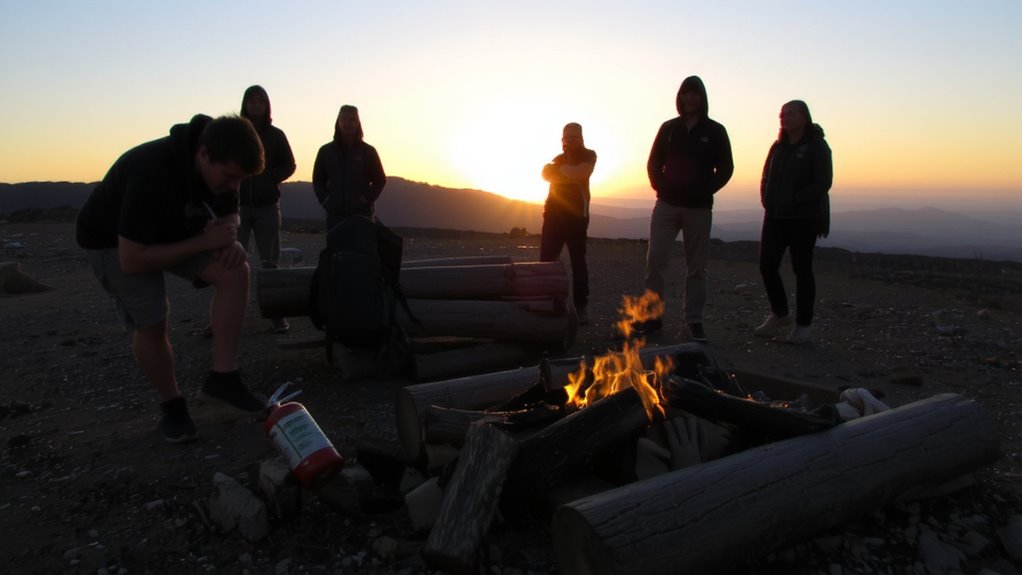
While anyone can toss logs on a fire and call it cooking, having a designated fire manager guarantees your campfire stays safe, efficient, and effective for outdoor cooking. You’re not just managing flames-you’re ensuring fire safety by monitoring fuel load, controlling spread, and responding quickly if things go wrong. Without someone responsible, sparks can fly, fires grow uncontrollably, and emergencies escalate. A designated fire manager also streamlines team coordination, especially when multiple people are prepping food or adjusting the fire. They direct who adds wood, when to adjust heat, and when to douse the flames, creating a smoother, safer cooking process. In larger groups, this role prevents confusion and overlapping tasks. Think of it as a pit boss for your open flame-someone who understands heat management, airflow, and burn times. Ultimately, assigning this role improves control, reduces risk, and elevates your outdoor cooking experience from chaotic to reliable.
What Fire Managers Do: From Lighting to Lights-Out
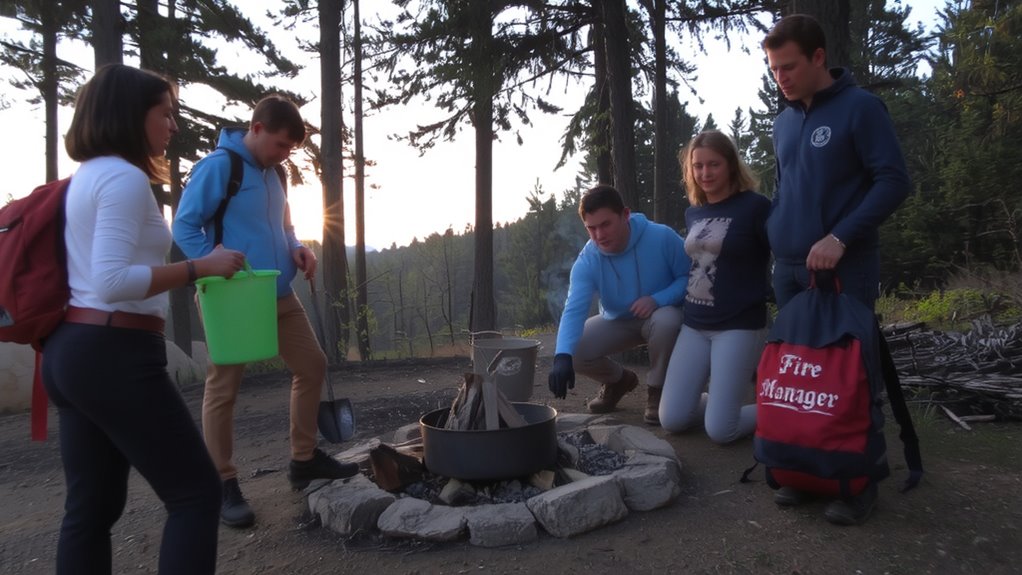
Because your campfire plays a central role in both cooking and safety, the fire manager takes charge from the very first match-assessing the site, arranging tinder and kindling, and lighting the fire with controlled precision. You monitor flame height and heat distribution, ensuring consistent burn control for grilling or boiling without flare-ups. Throughout the evening, you adjust airflow and fuel placement, balancing efficiency with fire safety. You’re responsible for keeping the perimeter clear, maintaining a bucket of water nearby, and never leaving the fire unattended. As cooking winds down, you begin the gradual熄灭 process-smothering coals evenly and checking for lingering embers. Lights-out means full extinguishment, not just dimming flames. Your role isn’t just oversight; it’s active stewardship. Effective burn control reflects expertise, while strict fire safety protects everyone. You don’t just manage flames-you manage risk, comfort, and camp functionality from ignition to final ash.
Set Clear Rules Before the Fire Is Lit
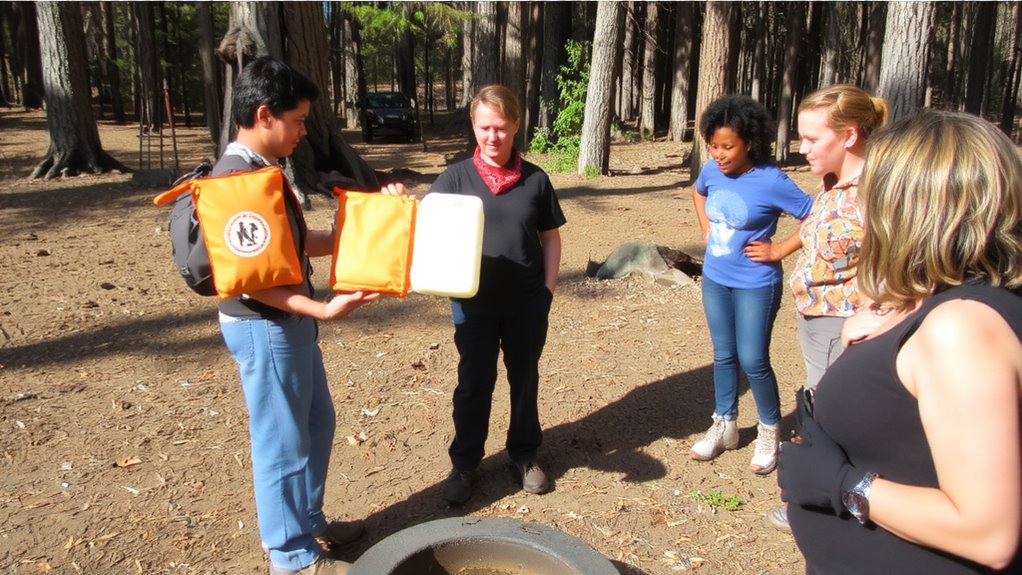
Even before the first spark catches, your fire manager should gather the group to establish clear, enforceable rules-this isn’t just about preventing accidents, but about shaping how efficiently and safely your campfire serves its purpose. You need firm camp rules that everyone understands: no loose clothing near flames, strict supervision of children, and a ban on flammable accelerants. Fire safety means defining fuel limits, setting boundaries for seating, and assigning roles for emergencies. These rules should cover cooking procedures too-like using proper grills or reflectors-so your outdoor cooking remains effective and controlled. A well-managed fire reduces smoke, burns cleaner, and delivers consistent heat for BBQ tasks. Without clear expectations, even small lapses can compromise safety and performance. Establishing these standards upfront guarantees the fire supports your group’s needs without becoming a hazard. Compliance isn’t optional; it’s the foundation of responsible camping.
How to Pick the Right Fire Manager
You’ve set the rules, drawn the boundaries, and made expectations clear-now the person you choose to manage the fire carries the responsibility of enforcing them. Look for someone calm under pressure, detail-oriented, and respected by the group. Fire safety isn’t just about lighting and extinguishing-it’s consistent monitoring, proper fuel use, and knowing when conditions are too risky. This person must act decisively, not hesitate when enforcing protocols. Good team coordination is just as vital; they’ll need to communicate clearly with cooks, scouts, and cleanup crews, ensuring everyone knows their role around the fire zone. Avoid choosing based on popularity-prioritize reliability and attentiveness. The right fire manager stays present, anticipates problems, and keeps the group focused without stifling enjoyment. Their leadership directly affects both safety and efficiency, making this role central to a successful, incident-free camp experience. Choose wisely-it’s more than a title; it’s real responsibility.
Train Your Fire Manager for Emergencies
What happens when the wind suddenly shifts, sending sparks toward the tent line-do you have someone who can react instantly and correctly? You need your fire manager trained in fire safety and clear emergency protocols. They must know how to cut off fuel, suppress flames with dirt or water, and alert the group without panic. Proper training means practicing responses before emergencies occur-knowing where extinguishers are, how to use a shovel effectively, and when to evacuate. A well-prepared fire manager doesn’t hesitate; they act based on drills, not instinct. Their knowledge of safe fire placement, moisture in wood, and wind behavior reduces risk markedly. This isn’t just supervision-it’s active prevention and readiness. In outdoor cooking scenarios, where open flames are necessary, their role becomes even more critical. Real competence comes from rehearsal, not assumption. Train your manager thoroughly-because when seconds count, preparation beats guesswork every time. Choosing the right bushcraft campfire styles can significantly influence fire safety and efficiency in emergency scenarios.
Should You Rotate Fire Management Duties?
How often should the same person handle fire duties throughout a trip? While consistency maintains familiarity, rotating duties can strengthen group safety and skill. Fire rotation benefits include broader competence-if the primary manager is unavailable, others can respond confidently. It also prevents fatigue and maintains vigilance. However, shared responsibility risks emerge when roles aren’t clearly defined, potentially leading to confusion or neglected monitoring. In larger groups, assign shifts with one person officially in charge at a time, supported by a trained teammate. This balances consistency with preparedness. Rotate only among those who’ve completed fire safety training to maintain control standards. Frequent rotation without oversight may compromise fire integrity, especially during cooking or overnight burns. Ultimately, structured fire rotation benefits the group most when paired with accountability-guaranteeing every member contributes without sacrificing safety or performance under real outdoor conditions.
How to React When Weather or Wind Changes Fire Conditions?
Even with the most consistent fire management and well-structured rotation plans, unexpected shifts in wind or weather can quickly disrupt even a well-maintained camp combust. When you notice sudden changes in fire behavior-like flames lifting, spreading unpredictably, or smoke shifting direction-you need to act fast. Wind gusts can carry embers beyond the ring, increasing burn risks. You should immediately assess the fire’s intensity and adjust its airflow by closing fuel gaps or reducing wood input. Reevaluate your safety protocols: guarantee water or dirt is within reach, bystanders are at a safe distance, and the fire manager is clearly in charge. If conditions worsen, extinguishing the fire may be necessary. Monitoring weather forecasts and staying alert to environmental cues improves your responsiveness. A proactive approach to changing conditions keeps cooking efficient and营地 safe.
On a final note
You need a designated fire manager because uncontrolled campfires risk safety and the environment. This person monitors fuel, airflow, and spark containment, ensuring the fire stays efficient and safe. A good manager adapts to wind or damp conditions, adjusting burn techniques accordingly. Training and clear rules prevent accidents. Rotating duties works only with consistent standards. Ultimately, skilled fire management improves cooking precision, heat control, and site cleanliness-critical for responsible outdoor cooking and sustainable camping practices.