Campfire Breakfast Hash in a Single Cast Iron Skillet – No Extra Dishes Required
You’ll get the best campfire breakfast hash by using dense sweet potatoes and fresh bell peppers-they caramelize well and hold their texture over coals. Cook in a single cast iron skillet over glowing embers for even heat, avoiding open flames that create hot spots. Start the potatoes first, then add eggs to the center once the hash is mostly cooked, covering briefly to set the whites. Custom additions like sausage or spinach cook quickly and add richness without extra pans. Letting the skillet cool slightly before wiping excess grease keeps cleanup simple and protects the seasoning. There’s more to mastering fire-cooked meals with minimal gear and maximum flavor.
Notable Insights
- Use dense sweet potatoes and fresh vegetables to ensure texture and prevent mushiness over the fire.
- Cook over glowing coals, not flames, for even heat and consistent browning in a cast iron skillet.
- Start potatoes and onions first, then push to the edges to crack eggs into the center.
- Add precooked meat or hearty vegetables early, and tender greens just before finishing.
- Wipe grease with a paper towel and rinse with hot water for quick, soap-free cleanup.
Pick the Best Ingredients for Campfire Breakfast Hash
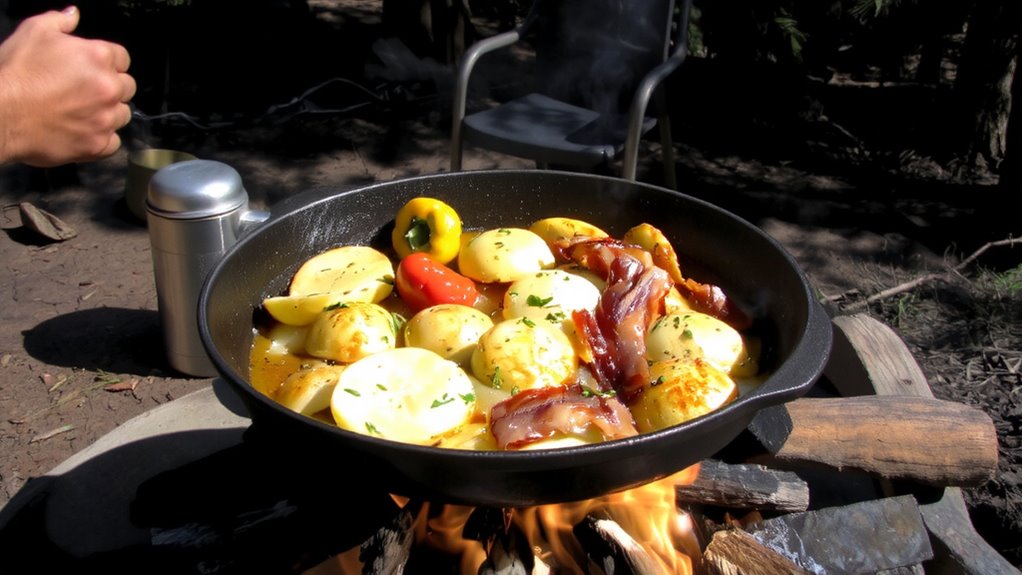
Quality starts with selection, and when you’re cooking over an open flame, the right ingredients make all the difference in your campfire breakfast hash. You’ll want sturdy, flavorful components that hold up to direct heat and long cook times. Sweet potatoes are ideal-they’re dense, rich in flavor, and caramelize beautifully over coals. Their natural sweetness balances the savory elements, adding depth without overpowering. Bell peppers bring color, crunch, and a mild vegetal brightness that cuts through the richness of eggs and meat. Choose firm, glossy peppers; red, yellow, or orange varieties enhance both taste and visual appeal. Freshness matters-wilted or soft produce breaks down too quickly and turns mushy. Since you’re limited to one skillet and no extra dishes, efficient ingredient performance is key. Each element must contribute both texture and taste, minimizing waste and maximizing output in your outdoor cooking routine.
Heat Your Skillet Over the Fire the Right Way
Even if you’ve got the best ingredients lined up, your campfire breakfast hash can still fall short if you don’t heat the skillet properly over the flames. Fire management is key-build a bed of glowing coals rather than relying on open flames, which create hot spots and uneven cooking. Position your skillet over medium-low coals to establish steady heat control; too hot and your potatoes burn before the inside cooks, too cool and they steam instead of sear. Cast iron retains heat exceptionally, but it responds slowly, so patience matters. Lift the skillet occasionally to adjust height or rotate it for even exposure. You’ll notice the difference in browning and texture when heat control is mastered. Proper fire management guarantees a consistent cooking surface, turning outdoor preparation into a reliable, repeatable process. Let the coals do the work-don’t rush the heat. For larger groups or more versatile cooking options, consider using a best outdoor griddle to expand your camp kitchen capabilities.
Cook Hash and Eggs in One Cast Iron Skillet
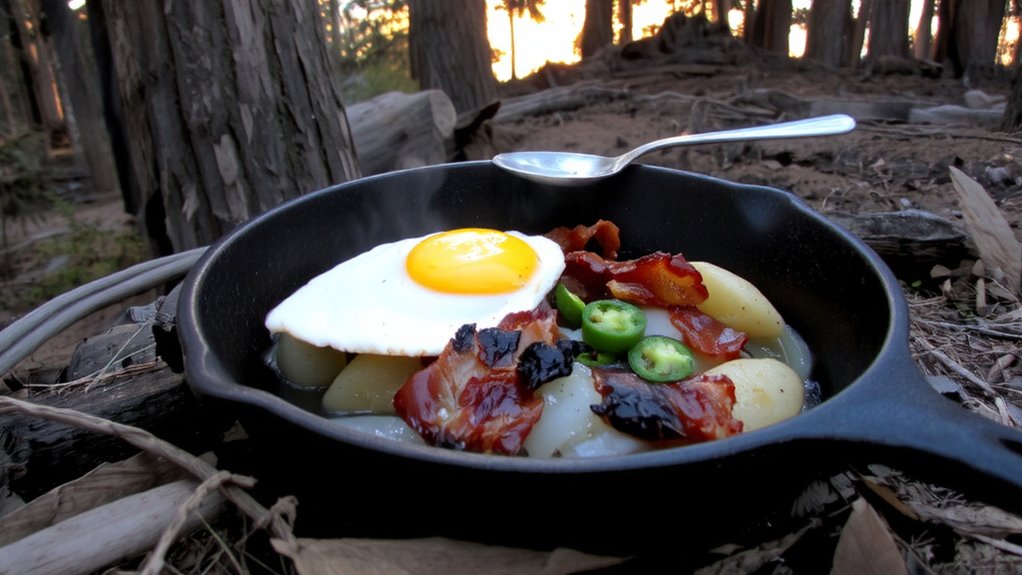
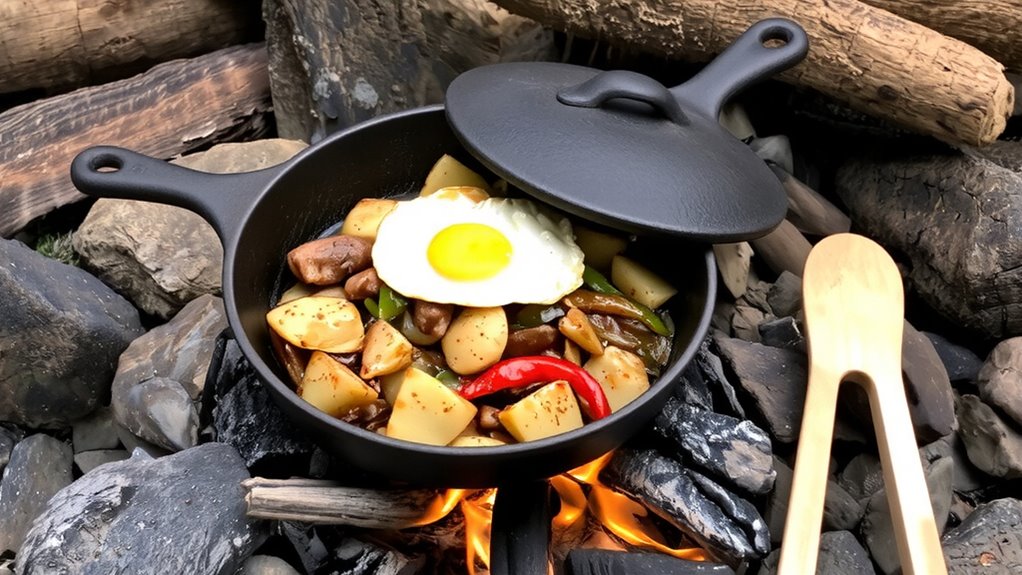
You can pull off a complete campfire breakfast in just one skillet if you time it right and work smart. Start by layering your diced potatoes and onions where the heat is hottest, letting them sizzle into a crisp base without burning-your cast iron seasoning guarantees even heat distribution and natural non-stick performance. Push the hash to the skillet’s edges after 5–7 minutes, making space in the center to crack the eggs. Cover briefly with a lid or foil to help the egg whites set without flipping. Monitor flame levels closely; maintaining consistent heat improves results while supporting outdoor cooking safety. Avoid flare-ups by keeping flammable materials clear and never leaving the fire unattended. The skillet’s retained heat finishes the eggs perfectly, yielding a hearty, integrated meal. This method proves efficient, minimizing cleanup and maximizing flavor through reliable, time-tested design. For best results, choose a pre-seasoned cast iron skillet known for durability and superior heat retention.
Customize Your Campfire Hash With Veggies or Meat
A well-balanced campfire hash starts with the base of potatoes and onions but really comes to life when you add your choice of meat or fresh vegetables. You’ve got plenty of room to experiment with vegetable pairings-bell peppers, zucchini, mushrooms, and spinach all hold up well over open flames and add color, texture, and nutrients. For heartier meals, consider protein options like diced ham, crumbled sausage, or shredded chicken; they integrate seamlessly into the sizzling base and boost satiety. Cooking everything in one skillet guarantees flavors meld beautifully, with meats rendering fat that crisps the potatoes just right. Keep in mind that denser veggies need a head start, while leafy greens wilt in seconds. Choosing quality ingredients makes a noticeable difference over direct heat, where subtleties can intensify. Your custom hash isn’t just practical-it’s a chance to balance taste, nutrition, and campfire efficiency with every forkful. For savory, high-quality sausage that stands up to high heat and bold flavors, consider one of the best breakfast sausage picks based on performance and flavor balance.
Keep Cleanup Fast: No Extra Dishes Needed
The beauty of cooking campfire breakfast hash in a cast iron skillet isn’t just in its even heat distribution or flavor development-it’s in how effortlessly everything wraps up once you’re done. You’ve used just one pan, so cleanup is fast and straightforward-no piles of dishes to scrub in the wild. After cooking, simply wipe out excess grease with a paper towel while the skillet’s still warm, then rinse with hot water. Avoid soap to preserve the seasoning. This means easy cleanup without sacrificing hygiene. Minimal prep plays a big part too: chop ingredients beforehand or use pre-cut veggies to save time and tools. Since everything cooks in one vessel, there’s less gear to pack and clean. Cast iron’s durability makes it ideal for repeated outdoor use, and proper care guarantees longevity. For campers and weekenders alike, this method offers practicality without compromise-efficient, reliable, and built for real-world conditions.
Make It Your Own: Easy Variations and Tips
Now that cleanup’s handled with minimal fuss, focus shifts to personalizing your campfire breakfast hash-where cast iron’s versatility truly shines. You can easily tweak ingredients based on taste or what’s in your cooler. Swap potatoes for sweet potatoes, or add bell peppers and mushrooms for extra texture. For bold flavor, experiment with spice blends like smoked paprika, cumin, or chili powder-just a pinch deepens the profile without overpowering. Cooked sausage or diced ham integrates well, boosting protein. If you’re serving eggs on top, that’s a classic pairing; the runny yolk binds beautifully with the hash. Consider breakfast pairings like toast cooked on the skillet’s edge or campfire-grilled tomatoes. Cast iron holds and distributes heat evenly, making it ideal for these small adjustments. Your meal becomes uniquely yours-simple, satisfying, and scalable for any outdoor adventure.
On a final note
You’ve got a reliable method here: cast iron holds heat evenly, searing potatoes and onions to a crisp while eggs set perfectly in the center. This one-skillet approach cuts cleanup and maximizes flavor. Outdoor cooking rewards preparation and the right gear-this recipe uses both wisely. It’s efficient, adaptable to fuel types, and built for real use over coals or flames. A solid choice for hearty, satisfying campfire meals without the mess.