Maximizing Flavor Through the Artful Use of Salt, Sugar, and Acid in Outdoor Cooking Adventures
You’re grilling over open flame, and salt, sugar, and acid are your secret weapons. Salt boosts flavor and helps form a crisp, moisture-locking crust on proteins. Sugar balances heat and sparks caramelization for richer taste. Acid cuts through smoke and fat, adding brightness. Timing matters-salt early, sugar mid-cook, acid at the end. Master this trio, and your meals transform from basic to exceptional, no matter how remote the trail. There’s more to uncover about perfecting flavor in the wild.
Notable Insights
- Salt enhances flavor and texture by improving searing and forming moisture-locking crusts on proteins during open-flame cooking.
- Sugar promotes caramelization and balances bold flavors, but should be applied carefully to avoid burning over high heat.
- Acid adds brightness by cutting through smoke and richness, with citrus or vinegar best added at the end of cooking.
- The timing of ingredient application-salt early, sugar mid-to-late, acid at the end-creates layered, intentional flavors outdoors.
- Combining salt, sugar, and acid thoughtfully balances contrast and harmony, transforming simple grilled dishes into flavorful meals.
Why Salt, Sugar, and Acid Make Outdoor Cooking Shine
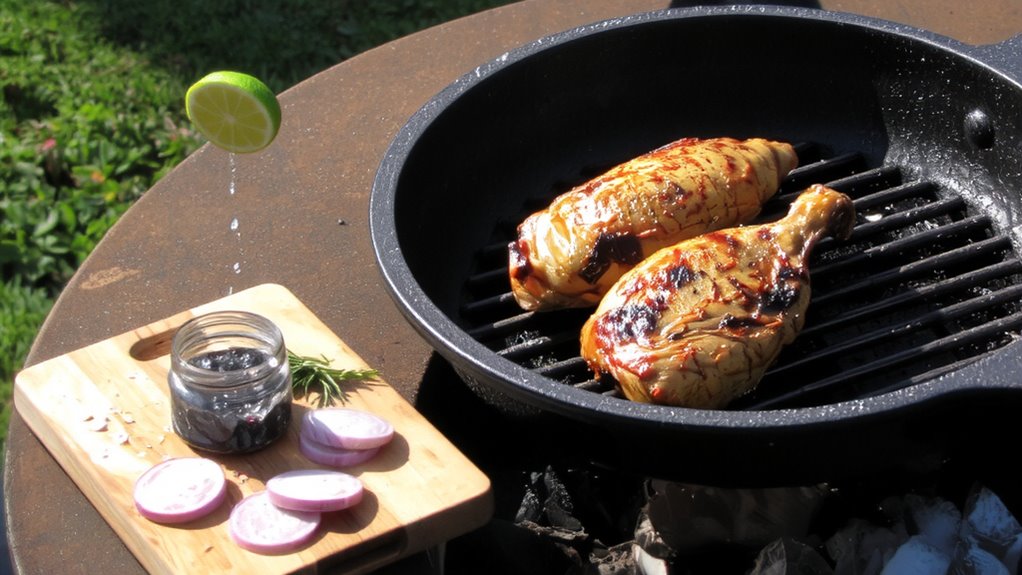
While you’re layering flavors on the grill, it’s salt, sugar, and acid that quietly do the heavy lifting-turning simple ingredients into something memorable. These three aren’t just seasonings; they’re essential tools in flavor chemistry, shaping how your food develops and tastes during outdoor cooking. Salt enhances taste perception by amplifying other flavors, while sugar balances bitterness and promotes caramelization for depth. Acid-like lemon juice or vinegar-brightens dishes, cutting through richness and invigorating your palate. Together, they create contrast and harmony, making each bite more engaging. Unlike indoor cooking, grilling exposes food to intense, uneven heat, which can mute subtleties. That’s why understanding their interplay matters. You’re not just seasoning-you’re guiding reactions. With thoughtful use, these elements elevate even basic proteins or vegetables, ensuring your outdoor meals don’t just feed but truly satisfy. It’s science-backed, practical mastery. A well-balanced best sauce for shrimp can exemplify this harmony by combining salt, sugar, and acid to enhance grilled seafood perfectly.
Boost Flavor in the Wild: How Salt Transforms Meals
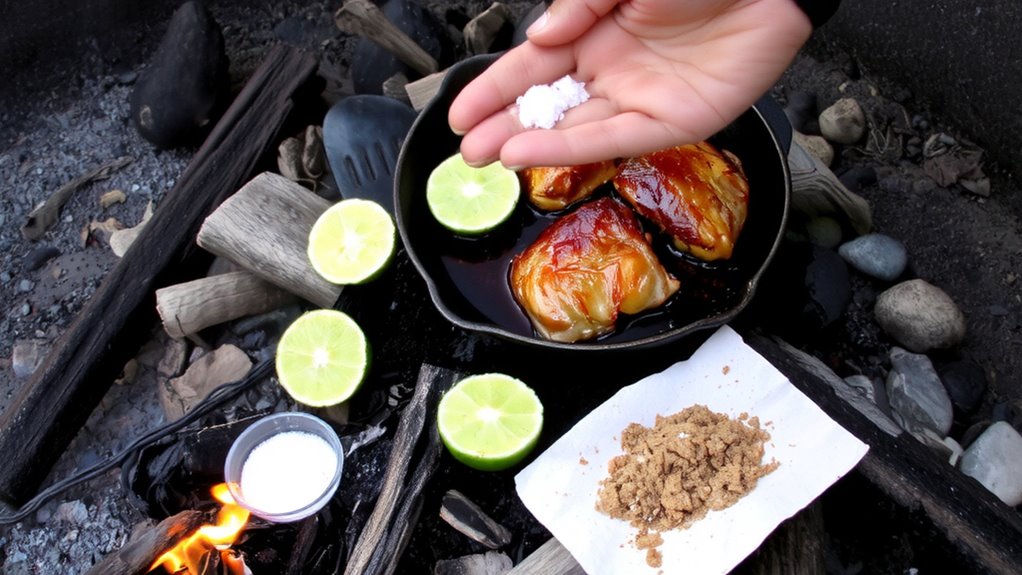
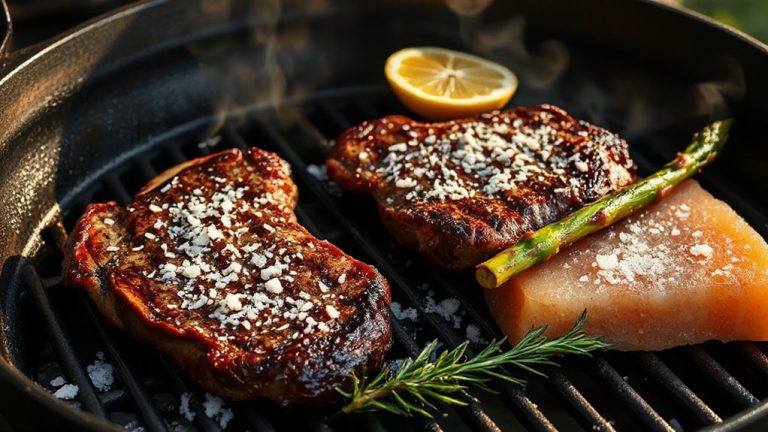
Salt isn’t just a shaker on the picnic table-it’s your most reliable ally in the backcountry kitchen. You’ll use it to enhance natural flavors, preserve perishables, and control moisture, especially when cooking over open flame. Salt crusts form protective seals around proteins, locking in juices while adding subtle texture and depth. When you’re miles from refrigeration, techniques like curing meats become essential-salt draws out moisture and inhibits bacterial growth, transforming cuts into shelf-stable, flavor-rich staples. You’ll find that a well-salted steak sears better and tastes bolder, while vegetables gain complexity under seasoned heat. Unlike more volatile seasonings, salt performs consistently across environments, from damp forests to arid deserts. It’s not just seasoning-it’s function. Mastering its use means mastering control over taste, texture, and food safety in the wild. For peak results, consider using best salt for steak, as the right variety can elevate both crust formation and overall flavor.
Use Sugar to Balance, Brown, and Brighten Over Heat
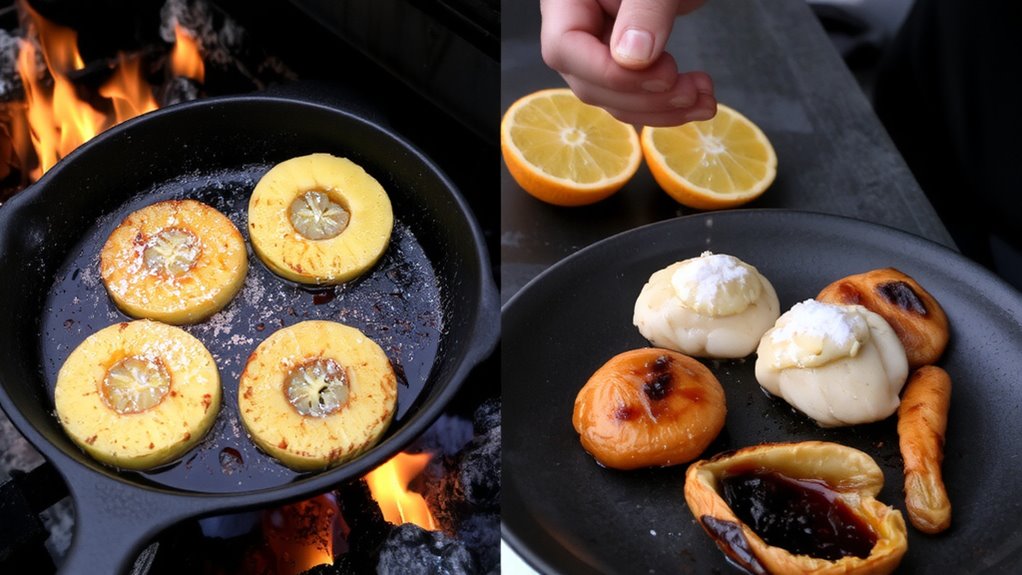
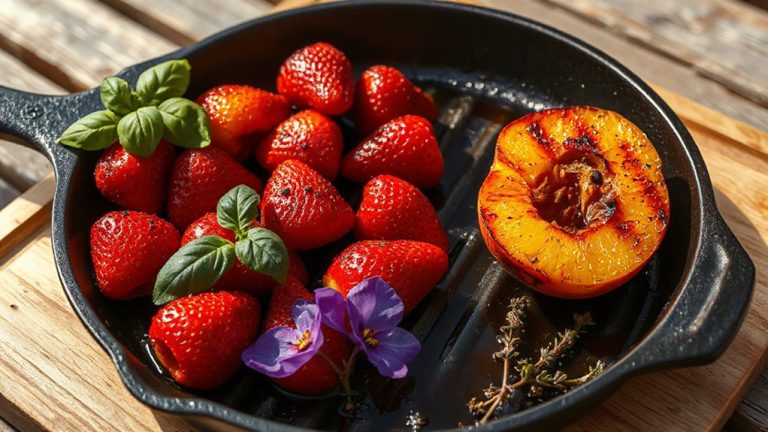
Sugar’s role in outdoor cooking goes far beyond sweetness-it’s a dynamic player in how your food browns, balances, and behaves over heat. When you toss sugar onto a hot grill, it kicks off rapid caramelization techniques that develop deep color and complex taste on meats, vegetables, or fruit. This browning isn’t just visual-heat transforms sugar into rich compounds that enhance flavor layering, adding depth without overwhelming. You’ll notice how a sprinkle on onions or carrots intensifies their natural sugars, creating a subtle sweetness and savory complexity. In dry rubs or marinades, sugar tempers salt and spice, rounding out bold profiles. But be careful-too much burns fast. Controlled application guarantees even charring, not bitterness. Whether using brown sugar, honey, or maple syrup, each brings a unique response to flame. Mastering sugar means mastering control, balance, and the chemistry of heat-all essential for elevated outdoor cooking.
Add Acid for Instant Brightness: Even in the Backcountry
Why does grilled food sometimes taste flat, even when perfectly cooked? Because it’s missing acid-the secret to brightness. Out in the backcountry, a simple vinegar splash or sprinkle of citrus zest can transform a dull meal into something vibrant. Acid cuts through richness, lifts flavors, and awakens your palate, especially when fat and smoke dominate. You don’t need fancy bottles-just carry a small container of vinegar or dry zest. A little goes a long way, and it balances without overpowering.
| Acid Source | Best For | Flavor Note |
|---|---|---|
| Lemon zest | Fish, chicken | Floral, bright |
| Apple cider vinegar | Beans, stews | Fruity, mild tang |
| Lime juice | Tacos, grilled veggies | Sharp, tropical |
| White vinegar | Pickling, sauces | Clean, punchy |
| Orange zest | Glazes, meats | Sweet-citrus lift |
When to Add Salt, Sugar, and Acid for Maximum Impact
Though you might think seasoning is just a final touch, getting the timing right with salt, sugar, and acid can make or break your outdoor meal. Salt early in cooking helps penetrate proteins and vegetables, enhancing depth, while adding it late mainly seasons the surface-each approach serving different impact strategies. Sugar benefits from mid-to-late addition, especially when grilling, since it caramelizes under heat but can burn if applied too soon. Acid, like lemon juice or vinegar, often delivers the most brightness when drizzled at the end, preserving its sharp, lively notes. Mastering these timing techniques guarantees balanced flavor development. You’ll notice dishes taste layered and intentional, not haphazard. Whether you’re searing over coals or simmering in a pot, thoughtful seasoning timing improves texture and taste. It’s a small shift that elevates your camp kitchen from functional to refined-proving precision matters just as much in the wild as in a professional kitchen.
Apply the Trio: Simple Campfire Meals That Shine
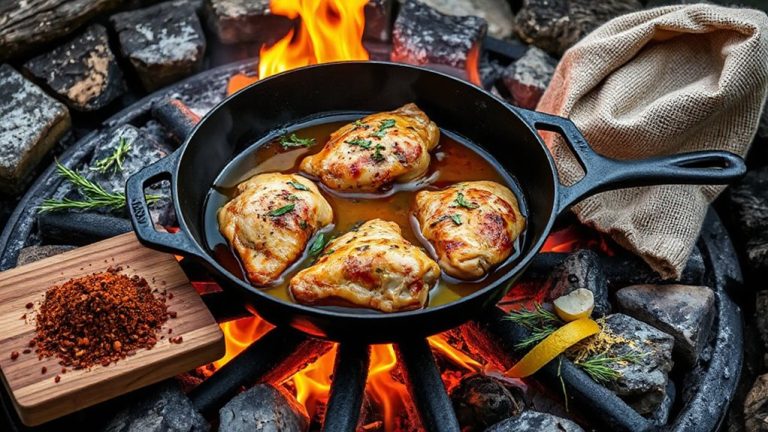
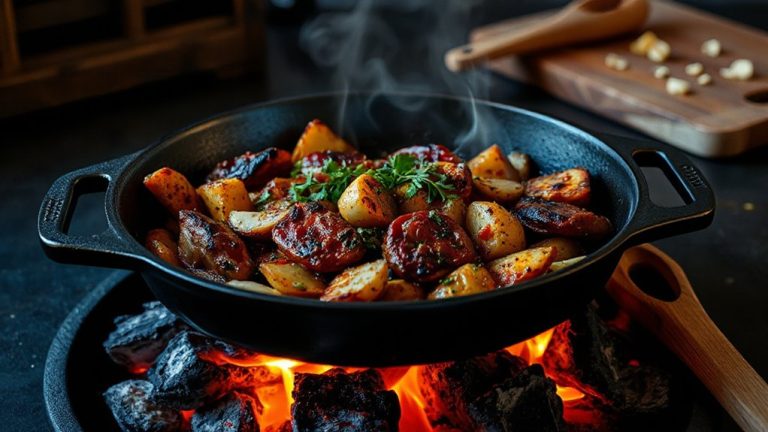
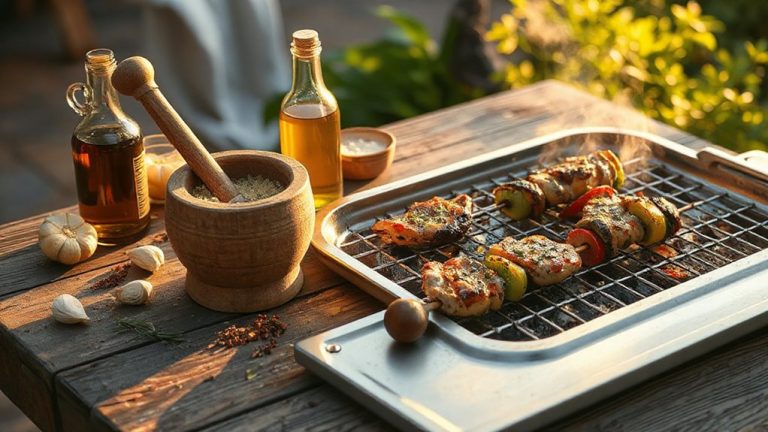
You’ve got the timing down-knowing when to apply salt, sugar, and acid makes a clear difference in how flavors develop over fire. Now, put that knowledge into action with simple campfire meals that let the trio shine. Grilled skewers with marinated vegetables and chicken, for example, respond beautifully to smart grill techniques: direct heat for char, indirect for even cooking. A balanced marinade of soy (salt), honey (sugar), and lime (acid) deepens flavor, especially when paired with thoughtful spice blending-think cumin, smoked paprika, and garlic. The same principles elevate foil-pack fish with tomatoes and herbs, where lemon juice brightens rich oils while salt enhances natural sweetness. These aren’t just convenient-they’re calculated. With minimal ingredients and deliberate layering, your outdoor cooking becomes reliably bold and cohesive, turning basic proteins and veggies into meals worth savoring under the open sky. For consistent results, choose a best campfire grill that matches your cooking style and group size.
Pack a Portable Flavor Kit for Any Adventure
A well-designed flavor kit can transform even the most basic camp kitchen into a hub of culinary potential. You’ll want essentials that maximize impact without adding bulk. Focus on versatile salt varieties, balanced sugar forms, and bright acids-each enhances outdoor dishes with minimal effort. Don’t overlook spice blends and herb pairing; they’re your secret weapon for layered flavor. A compact kit keeps your go-to combinations organized and ready.
| Item | Purpose | Example Use |
|---|---|---|
| Flaky sea salt | Finishing | Over grilled vegetables |
| Smoked paprika blend | Spice blends | Rub for campfire meats |
| Citrus zest powder | Acid component | Brighten soups |
| Rosemary-thyme mix | Herb pairing | With potatoes or fish |
| Coconut sugar | Sugar alternative | Morning oatmeal |
Store in airtight containers to preserve potency across adventures.
On a final note
You’ve seen how salt enhances depth, sugar promotes browning and balance, and acid lifts flavors even in rugged conditions. Together, they transform simple campfire dishes into memorable meals. When timed right, this trio maximizes taste without complexity. A well-stocked flavor kit proves essential, offering control and consistency outdoors. Smart seasoning isn’t just practical-it’s foundational to great outdoor cooking. Mastery comes not from gear, but from understanding these core elements.