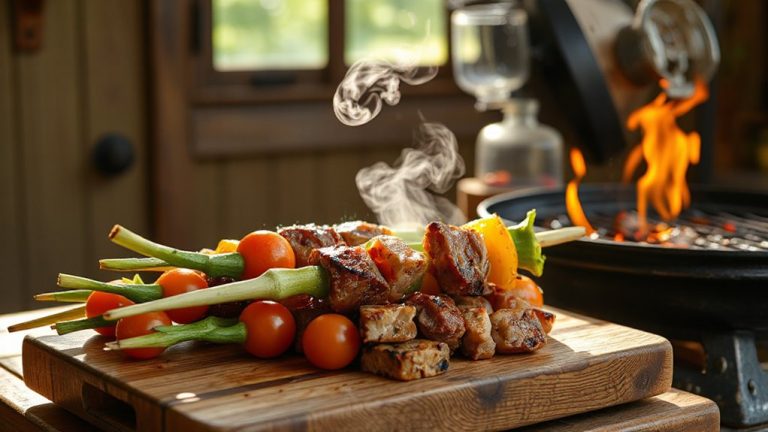
Maintaining Consistent Heat in a Tandoor for Batch Cooking
Use hardwood or natural lump charcoal for the most consistent tandoor heat-it burns hotter, lasts longer, and radiates evenly with less ash. Preheat for 20–30 minutes to reach 500°F–700°F, letting the clay absorb and reflect steady energy. Control temperature with the bottom vent: open slightly to boost heat, close to slow burn. Rotate naan and kebabs for even browning, and stoke every 20–30 minutes as glow fades. Master these steps, and you’ll access the full rhythm of authentic tandoor cooking.
Notable Insights
- Use hardwood or natural lump charcoal for steady, long-lasting heat with minimal ash.
- Preheat the tandoor for 20–30 minutes to ensure even radiant heat up to 700°F.
- Regulate temperature by adjusting the bottom vent to control oxygen and combustion rate.
- Rotate naan and kebabs during cooking to balance exposure and prevent uneven browning.
- Replenish fuel every 20–30 minutes before heat drops to maintain optimal cooking temperature.
Pick the Best Fuel for Steady Tandoor Heat
When it comes to tandoor cooking, the fuel you choose makes or breaks the heat consistency you’ll need for perfectly cooked naan and juicy kebabs. You’ll want hardwood charcoal or natural lump charcoal-they deliver superior heat retention and steady radiant heat. Unlike briquettes, they burn hotter with less ash, giving you better control. Propane might be convenient, but it lacks the deep, even warmth true tandoor cooking demands. For long batches, hardwood charcoal wins: it offers strong fuel efficiency, meaning you add less over time. You’ll notice fewer temperature swings, which is key when juggling multiple dishes. Coal also radiates heat evenly across the chamber, helping the walls stay hot-critical for clinging naan. Stick with quality natural fuels, and you’ll get the reliable performance your tandoor needs. Fuel efficiency and heat retention aren’t just technical perks-they’re what separate decent from exceptional. For premium results, consider Japanese best Japanese charcoal known for its density and long burn time.
Preheat Your Tandoor for Even Cooking Results
You’ve picked the right fuel-hardwood charcoal that burns hot and steady, setting the stage for consistent tandoor performance. Now, let it preheat fully before loading in food. Getting the tandoor temperature up to 500°F–700°F takes about 20–30 minutes, depending on weather and airflow. This initial heat-up guarantees the clay walls absorb and radiate energy evenly, eliminating cold spots that lead to uneven cooking. Skipping this step means longer cooking duration and inconsistent results-meats might char outside while staying raw within. A properly preheated tandoor maintains stability, so each batch cooks just like the last. Use an infrared thermometer to verify wall and air temps; visual cues like glowing charcoal and steady heat waves help, too. Preheating isn’t a luxury-it’s essential for precision and efficiency. You’ll save time, reduce flare-ups, and achieve that signature sear with tender interiors every time.
Use the Vent to Control Tandoor Heat Like a Pro
How do you maintain that perfect 500°F–700°F sweet spot once your tandoor’s up to temperature? You master the vent. Proper airflow management isn’t just helpful-it’s essential. By adjusting the bottom vent, you control how much oxygen reaches the fire, directly influencing heat intensity. Crack it open for more combustion when the temperature dips; partially close it to slow burning and promote temperature stabilization. Experienced users treat the vent like a throttle-small tweaks make big differences. Too much airflow and you risk overheating or uneven cooking; too little and the fire suffocates. Consistent airflow means consistent results, especially during batch cooking. You’ll notice fewer spikes and dips, leading to juicier kebabs and better-risen naan. Unlike ovens, tandoors rely on this manual fine-tuning, making your attention to the vent a marker of skill. Master it, and you’re not just cooking-you’re commanding the fire.
Rotate Naan and Kebabs for Consistent Results
Though heat control sets the foundation, even the most stable tandoor temperature can’t guarantee uniform cooking without proper food rotation. You need to actively manage naan placement and kebab spacing to guarantee even exposure to radiant heat. Positioning naan too close together causes uneven puffing and charring, while proper spacing lets each piece cook fully. Rotate kebabs halfway through-this counters hot spots and encourages consistent browning. Skewers near the coals cook faster, so swapping their positions top-to-bottom evens out doneness. You’ll notice juicier, better-textured results when flipping and shifting every few minutes. Tight kebab spacing leads to steaming, not searing, reducing that signature smoky crust. Likewise, rotating naan guarantees both sides blister properly without burning. It’s not just about timing-it’s about strategic movement. With careful attention to rotation and arrangement, you maximize heat efficiency and achieve restaurant-quality results every time.
Stoke the Fire at the Right Times to Sustain Heat
When should you add more fuel to the coals-too early, and you risk overheating the chamber; too late, and the temperature dips below ideal cooking range. Mastering fire timing is essential in maintaining a steady heat rhythm, especially during batch cooking. You’ll want to feed the fire just as the glow softens and radiant heat begins to wane-typically every 20 to 30 minutes, depending on fuel type and airflow. Hardwood coals release heat more evenly than charcoal, helping sustain a reliable rhythm. Watch for subtle cues: slower browning, longer cook times, or a duller flame. Adding fuel proactively, not reactively, keeps temperatures between 450°F and 500°F-the sweet spot for tandoor cooking. Consistent fire timing isn’t just about heat; it’s about rhythm, control, and respecting the process.
On a final note
You’ve seen how fuel choice, preheating, and vent control directly impact tandoor performance. When you manage the fire carefully and rotate food evenly, heat retention stays consistent across batches. Proper stoking preserves thermal stability, essential for authentic results. This isn’t just tradition-it’s thermodynamics. With practice, your tandoor becomes a reliable, high-heat cooking chamber, ideal for naan and kebabs alike, outperforming many outdoor grills in efficiency and sear quality.