Adapting Appalachian Hickory Methods for Urban Rooftop Patio Grilling Constraints
You can adapt Appalachian hickory grilling to your rooftop by using small hickory chunks for faster smoke and pairing them with chicken or fish for subtle flavor. Position your grill away from walls, ideally near a corner, and set it up with indirect heat to manage flare-ups and cook evenly. Choose compact grills on foldable stands for better airflow and space efficiency. Soak chips briefly or use dry hardwood chunks in a smoker box to minimize smoke while maintaining clean, blue wisps. Aim for proper ventilation and safety compliance-cooking this way keeps tradition alive without breaking fire codes or annoying neighbors. There’s more to optimizing this balance where convenience meets authentic results.
Notable Insights
- Position the grill away from walls and railings, ideally near a corner to meet fire codes and shield from wind.
- Use small hickory chunks or chips with brief soaking to achieve authentic flavor while managing smoke in tight spaces.
- Set up indirect heat by placing coals on one side to reduce flare-ups and safely cook larger cuts on shared patios.
- Combine hickory with milder woods like apple to balance smoke intensity and minimize dense emissions on urban rooftops.
- Clean grills and surfaces immediately after use, containing ash with trays and disposing of waste properly to maintain shared areas.
Grill Smarter on Rooftops
How do you make the most of limited space without sacrificing flavor when grilling on a rooftop? You start with smart grill placement. Position your unit away from railings and walls to meet fire codes and improve airflow. Place it near a corner if possible-it offers some wind shielding while maintaining access. Watch the wind direction closely; gusts common at elevation can cool the cooking surface or spread smoke into seating areas. Orient the grill perpendicular to prevailing winds to stabilize temperature and limit drifting. A compact kettle or infrared model performs better in tight spots than large smokers, heating quickly and holding steady. Consider foldable stands or carts that allow mobility without clutter. Secure everything-urban rooftops aren’t forgiving if gear shifts. Thoughtful setup means you get even searing, consistent results, and safer operation, even fifty stories up. Grill smarter, not harder. For those prioritizing portability without compromising performance, consider models highlighted in the best portable grills roundup, which balances size, heat control, and ease of transport.
Use Small Hickory Chunks or Chips
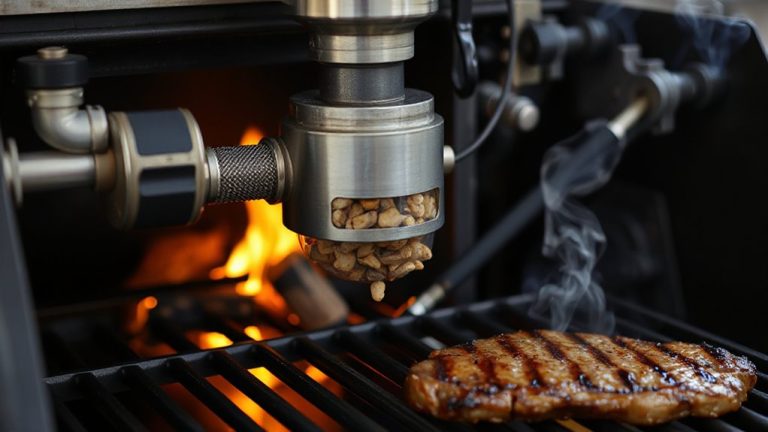
A few well-chosen hickory chunks or chips can go a long way in building bold, clean smoke on a rooftop grill, where space and fuel capacity are limited. You’re better off using small chips or quartered chunks-they ignite faster and burn efficiently without overwhelming your compact setup. Hickory pairing works best with pork, poultry, or sturdy vegetables, delivering that classic Southern flavor infusion without bitterness. Since airflow is restricted on urban patios, smaller pieces reduce smoke buildup and flare-ups. You’ll notice a more consistent aroma when you soak chips briefly-about 20 minutes-then drain and scatter them directly over hot coals or in a smoker box. Chunks last longer and maintain steady smoldering, ideal for sessions over 30 minutes. Ultimately, your choice between chips or chunks should align with cook time and desired smoke intensity, balancing tradition with rooftop practicality. For optimal results, consider the best wood chips for smoking based on flavor profile and burn characteristics.
Set Up Indirect Heat for Safety
Once you’ve managed your fuel with small hickory chunks or chips, it’s time to focus on how heat moves across your grill, especially in tight rooftop spaces where safety can’t be an afterthought. You’ll want to set up indirect heat by placing coals or burners on one side, leaving the other free for slower cooking. This method improves heat control, reducing flare-ups and giving you room to adjust if things get too hot. In close quarters, fire prevention is critical-direct flames near railings or walls are risky. Indirect heating isn’t just safer; it allows tougher cuts like pork shoulder to cook evenly without charring. Most modern grills handle this setup well, though compact models may require careful monitoring. You’re not losing efficiency-you’re trading raw intensity for precision. With consistent airflow and proper positioning, you maintain flavor while minimizing danger. It’s a small shift that makes open-flame grilling practical-and responsible-on urban patios. A reliable option for achieving this balance is choosing one of the best charcoal grill smokers designed for controlled airflow and steady temperature.
Reduce Smoke, Keep Flavor
While thick smoke might seem like a badge of authenticity, it’s often the enemy of clean flavor and neighborly peace on urban rooftops. You need effective smoke control to avoid complaints and maintain a pleasant grilling environment. Opt for dry, seasoned hardwood chunks instead of chips-these smolder longer and produce cleaner smoke. Your wood selection directly impacts this: hickory, while bold, should be used sparingly and paired with milder woods like apple or cherry to balance intensity. Avoid green or resinous woods, which create excessive smoke and soot. Use a smoker box with tight-fitting lids to regulate oxygen flow, giving you better smoke control. Monitor the smoke color: thin blue wisps mean clean combustion; thick white plumes signal incomplete burning and potential off-flavors. With careful wood selection and attention to airflow, you’ll preserve rich flavor without overwhelming your space or neighbors.
Cook Chicken and Fish With Light Smoke
Since chicken and fish have more delicate flesh and subtle flavor profiles than red meat, they demand a lighter touch with smoke to avoid overpowering their natural taste-especially in tight urban settings where heavy smoke lingers. You’ll want to use small amounts of hickory chips, not chunks, and soak them briefly to create a gentle, aromatic haze rather than thick plumes. Pair this with balanced marinade blends-think citrus, garlic, and olive oil for fish; soy, ginger, and sesame for chicken-to enhance, not mask, the meat’s essence. Apply the marinade for no more than two hours to prevent texture breakdown. A quick sear over direct heat finishes the dish beautifully, locking in juices while adding grill marks without overcooking. This method maintains flavor clarity and fits rooftop constraints, delivering nuanced smoke that complements, not dominates, your proteins.
Stay Legal: Rooftop Grill Safety Rules
If you’re planning to fire up a hickory grill on your rooftop, you’ll need to check local fire codes first-many cities restrict open-flame cooking on upper floors due to fire risk and limited evacuation routes. You may need fire permits, especially in dense urban buildings, and skipping this step could lead to fines or shutdowns. Be mindful of noise complaints, too-grill fans and exhaust systems can扰 neighbors if used late. Balancing tradition with safety means adapting Appalachian methods without compromising compliance.
| Requirement | Urban Reality |
|---|---|
| Open-flame grills | Often banned above ground level |
| Fire permits | Usually required for gas/charcoal |
| Clearance from walls | Minimum 10–20 feet enforced |
| Noise and smoke | Frequent source of noise complaints |
Clean Up Fast for Shared Decks
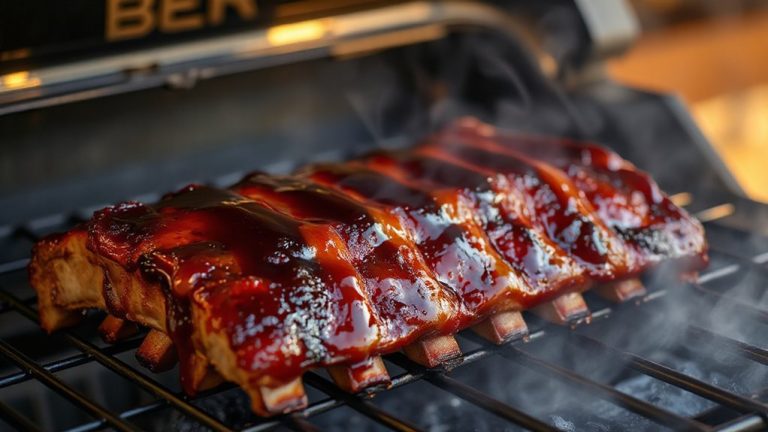
You’ve checked the fire codes, secured the permit, and grilled your hickory-smoked ribs within legal limits-now comes the part that keeps your neighbors from filing complaints or giving you side-eye the next time you fire up: cleaning up fast on shared decks. Residue and grease invite pests and violate communal etiquette. Immediately after grilling, use a heat-resistant glove and a quick wipe with a damp microfiber cloth to remove drippings from the grill’s exterior and nearby railings. A compact scraper helps lift stuck-on char without scratching surfaces. Sweep ash and debris into a trash bag; never pour it into shared planters or sweep it across decking. Seal the bag tightly and dispose of it in a designated bin downstairs. Metal trays placed under the grill minimize mess and streamline cleanup. A disciplined post-grill routine protects your reputation, preserves deck integrity, and guarantees you’ll be welcome at the next rooftop cookout.
On a final note
You’ve streamlined Appalachian hickory techniques for tight urban spaces, and it works. Small chunks or soaked chips deliver flavor without excessive smoke. Indirect heat keeps temperatures controlled and safe on shared decks. Lighter meats like chicken and fish absorb smoke well without overwhelming the palate. Follow local fire codes, clean quickly, and maintain gear-roof grilling’s limits don’t mean sacrificing quality, just optimizing method.