Adapting Commercial-Style Sear Stations to Residential Gas Grill Setups
You can upgrade your residential grill into a commercial-style sear station with the right modifications. Install a 15,000+ BTU burner for intense heat, and consider infrared technology-it heats faster and sears more evenly than traditional models. Optimize airflow with forced convection and use thick, heat-retentive grates like cast stainless steel. Guarantee proper gas pressure and add safety features like flame stabilization and gas shutoffs. With the full setup, you’ll achieve restaurant-quality sears right at home-and see how each component elevates your results.
Notable Insights
- Install high-output burners delivering at least 15,000 BTUs for restaurant-grade searing performance.
- Upgrade gas lines and regulators to maintain adequate pressure for commercial-level heat output.
- Use infrared burner technology to achieve 700°F in under two minutes with even, direct heat.
- Replace standard grates with thick cast stainless or carbon steel to retain extreme searing temperatures.
- Optimize airflow with forced convection systems to sustain high heat and improve combustion efficiency.
Can Your Home Grill Handle a Commercial Sear Station?
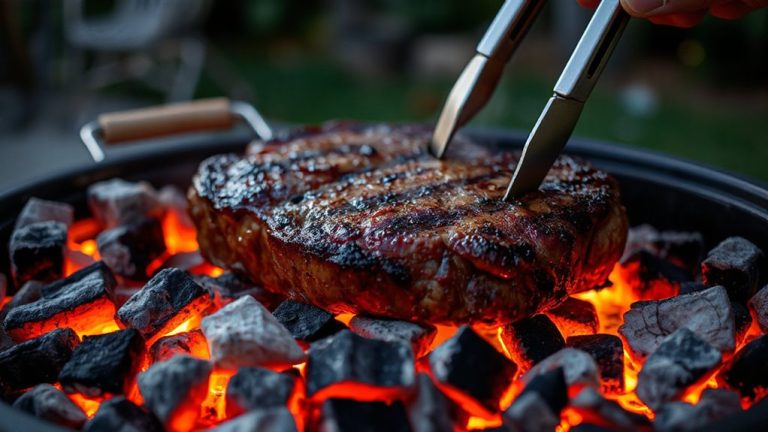
How tough is your home grill, really-can it deliver the kind of searing heat and consistent performance typical of a commercial sear station? Most residential models struggle with sustained high temperatures, often falling short of the 700°F+ needed for proper searing. Without intense, even heat distribution, you’ll get spotty marks and uneven cooking. That inconsistency limits flavor enhancement, since proper Maillard reaction depends on uniform browning. While some grills mimic commercial performance, many lack the burner design or construction to maintain it. You might achieve a decent sear once, but repeated use reveals limitations in BTU recovery and temperature retention. Retrofitting a sear station demands more than just added heat-it requires balanced airflow, durable materials, and precise control. Your grill might handle quick searing now and then, but true commercial-style results? That’s a different challenge altogether.
Choose a High-Output Burner for Maximum Searing Power
You’re not going to achieve restaurant-grade searing unless your grill delivers serious power, and that starts with the burner. For true char and crust, you need a high-output burner that pushes 15,000 BTUs or more. These burners generate the intense, concentrated heat required to lock in juices and create flavor. Burner efficiency matters-well-designed burners distribute heat evenly while minimizing fuel waste, guaranteeing consistent results across the grilling surface. Your grill’s gas pressure also plays a vital role; insufficient pressure starves the burner, reducing heat output and searing potential. Upgrading to a high-output burner often means modifying the gas line or regulator to support higher flow rates. Proper installation guarantees stable gas pressure, letting the burner operate at peak performance. With the right setup, you’ll get faster preheat times, better temperature control, and professional-level searing right in your backyard.
Infrared vs. Traditional Burners: Which Heats Faster?
When it comes to achieving a rapid, blistering sear, does the technology behind the heat source really make a difference? Yes-and it comes down to heat transfer and burner efficiency. Infrared burners heat up faster than traditional ones, often reaching 700°F in under two minutes. They use radiant energy, directly transferring heat to food with minimal loss, making them incredibly efficient. Traditional burners rely on convection and hot air, which takes longer and spreads heat less evenly. While both can sear well, infrared delivers faster response and higher surface temperatures, ideal for locking in juices. You’ll notice less preheat time and more consistent results, especially when searing steaks. However, they require careful cleaning to maintain performance. If speed and efficiency matter most, infrared is your best bet. For simplicity and lower maintenance, traditional burners still hold value.
Boost Airflow for Higher, More Consistent Searing Temperatures
A high-performing sear isn’t just about the burner type-it’s also about how well that heat is sustained, and that starts with airflow. You need strong, consistent airflow to maintain searing temps above 600°F, and that’s where forced convection comes in. Unlike natural draft systems in most residential grills, forced convection actively pushes air into the firebox, improving combustion and stabilizing thermal dynamics. This means less hot spotting and quicker recovery when you sear multiple steaks. After testing several retrofits, we found small, high-velocity blowers markedly boost performance-especially when paired with modified burner tubes. Just be sure your setup vents properly; poor exhaust flow creates backpressure and uneven heating. Also, clean burn ports and a well-maintained combustion chamber keep airflow efficient. While not all backyard grills handle this mod easily, even basic airflow tweaks yield better consistency. It’s a simple principle: more oxygen + smarter airflow = better searing every time.
Use Sear-Grade Grates That Hold Extreme Heat
The best sear-grade grates aren’t just about durability-they’re engineered to absorb, retain, and evenly radiate extreme heat, which is critical when pushing a residential grill to perform like a commercial sear station. You need superior heat retention to achieve that restaurant-quality sear, and that starts with the right grate material. Thick, heavy-duty cast stainless steel or reinforced carbon steel holds and transfers heat far better than standard grates. These materials withstand prolonged exposure to 900°F without warping, ensuring consistent contact and even browning. While porcelain-coated grates may look sleek, they chip easily and don’t retain heat as effectively. For serious searing, you’ll want solid, high-mass grates that recover quickly after contact with cold meat. They’ll also last longer under intense use. Proper care-like preheating fully and brushing while hot-keeps them performing well. For top options that meet these criteria, check out the best grill grates based on performance and heat retention.
Add Safety Upgrades for 900°F Grilling
Though hitting 900°F on a residential grill activates pro-level searing, it also introduces real risks that standard backyard setups aren’t built to handle, so upgrading for safety isn’t optional-it’s essential. At these temperatures, flame stabilization becomes critical; turbulent or lifting flames can lead to uneven heating or flare-ups. High-flow burners need precise air-fuel mixing, and aftermarket systems with integrated flame retention improve stability dramatically. You’ll also want gas leak detection built into your line-a simple sniff test won’t cut it when dealing with high-pressure mods. Electronic detectors or automatic shutoff valves give you peace of mind, catching leaks early before they become hazards. These aren’t just add-ons-they’re foundational. Without them, pushing your grill to commercial extremes risks more than performance; it risks safety. Proper flame stabilization and gas leak detection make extreme searing both achievable and secure.
Build Your Home Sear Station: Step-by-Step Setup
You’ve secured the safety systems needed for running a grill at commercial-grade temperatures, so now it’s time to turn your backyard into a real sear station. Start by selecting a high-BTU burner-ideally ceramic or infrared-and integrate it into your existing setup using DIY modifications that improve heat retention. Position this burner in a dedicated zone to create custom layouts that separate searing from slower cooking areas. Use stainless steel grates rated for 900°F and insulate beneath to maintain intensity. Mount a reliable thermometer near the cooking surface for accuracy. While these upgrades demand precision, they transform residential grills into performance-driven tools. Well-designed DIY modifications reduce temperature lag, while smart custom layouts enhance workflow. The result? Restaurant-quality sears on steaks and seafood, with consistent, repeatable results that standard grills simply can’t match.
On a final note
You’ve seen how commercial-style sear stations can transform home grilling. High-output and infrared burners deliver intense, fast heat-ideal for locking in juices. Proper airflow and sear-grade grates sustain those 900°F temps safely and evenly. With the right upgrades, your residential grill handles steakhouse results. It’s not just about power; it’s controlled, consistent performance. For serious outdoor cooks, this setup offers measurable gains in searing efficiency and flavor development, making the investment both practical and effective.