Creating a Hybrid Charcoal-Wood Fire With Ignition Coals at the Base
You start your hybrid charcoal-wood fire by laying ignition coals at the base for reliable, steady heat. Use lump charcoal for high output or briquettes for longer burns, then stack dry hardwood chunks on top to smolder slowly. This layered method guarantees easy lighting, better airflow, and clean combustion, giving you thin, blue-tinged smoke and precise temperature control. You’ll get intense base heat from the coals and rich, aromatic flavor from the wood, creating ideal conditions for consistent cooking every time. More details follow on how to optimize every stage.
Notable Insights
- Start with a solid base of ignited charcoal to ensure steady, even heat for the hybrid fire.
- Layer quality hardwood chunks gradually on top of hot coals to promote smoldering, not flaring.
- Use lump charcoal for quick ignition and high heat, or briquettes for longer, consistent burn.
- Stack split wood loosely over the coals to allow proper airflow and controlled combustion.
- Adjust grill vents to regulate oxygen and maintain thin, blue-tinged smoke for optimal cooking.
Build a Hybrid Charcoal-Wood Fire the Right Way
While you might be tempted to just toss wood on a charcoal bed and call it good, doing it right means understanding how each fuel type behaves under heat and over time. You’ll want to layer quality hardwood chunks atop hot coals gradually, letting the wood smolder and smoke rather than flare. This method improves flavor control and burn consistency. Proper fuel storage keeps wood dry and charcoal free from moisture, ensuring cleaner ignition and steady burns. Always prioritize fire safety: keep the area clear of debris, have water nearby, and never leave the fire unattended. A well-built hybrid fire delivers the intense base heat of charcoal with the aromatic complexity of wood, giving you superior cooking performance. It takes planning, but the payoff in flavor and control is worth the effort. For best results, choose grills designed to handle both fuel types efficiently, such as models featured in the best charcoal grill smokers roundup.
Choose the Best Charcoal and Wood for Your Fire
Since not all charcoal and wood burn the same, picking the right combination can make or break your hybrid fire. Charcoal selection starts with quality-lump charcoal lights easily and burns hot, ideal for maintaining a strong base temperature, while briquettes offer longer, more consistent heat with fewer flare-ups. For best results, use dense hardwood lump if you want quick, intense heat. Wood pairing matters just as much: fruitwoods like apple or cherry add subtle sweetness, perfect for poultry or pork, while hickory or oak bring bold, robust flavors suited for beef. Avoid softwoods-they burn too fast and can impart unpleasant flavors. Match the wood to your cooking time; lighter woods for shorter sessions, denser ones for long smokes. A thoughtful charcoal selection and strategic wood pairing guarantee clean combustion, steady heat, and rich, balanced flavor in every bite. For reliable performance, consider grills from our list of best charcoal grills that excel in heat control and airflow management.
Light It Fast With Proper Ignition Layering
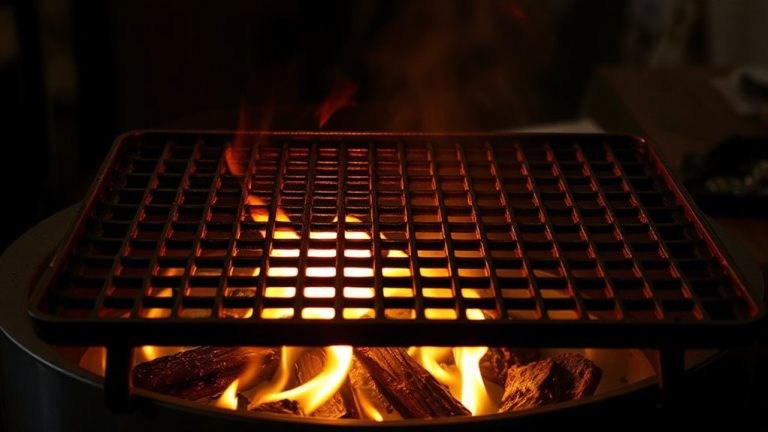
If you want your hybrid fire to ignite quickly and burn efficiently, how you layer the charcoal and wood makes all the difference. Start with a bed of ignited charcoal at the base-these hot coals provide steady initial heat to light your wood. Place fire starters beneath or within the bottom charcoal layer to kickstart combustion without overwhelming the flavor. Stack split wood loosely on top, allowing space for airflow control, which is critical for flame development and minimizing smoke buildup. Avoid packing the materials too tightly; oxygen circulation sustains combustion and speeds up ignition. This layered approach outperforms dumping everything together, offering faster lighting and more reliable burn progression. Well-placed fire starters reduce frustration, while thoughtful airflow control guarantees the fire grows steadily. With this method, you’ll achieve a strong, clean flame quicker, making it ideal for time-conscious cooks who still want full control over their fire’s behavior from the first match.
Stabilize Heat and Smoke for Consistent Cooking
Once the flames settle and the coals begin to glow, you’ll need to adjust the balance between wood and charcoal to maintain steady heat and clean smoke, which is where the true control of a hybrid fire reveals itself. You want consistent heat control, so start by spacing the charcoal evenly and adding just a few wood chunks-too much wood overwhelms the fire and disrupts smoke management. Aim for thin, blue-tinged smoke rather than thick, white plumes; that’s your sign of efficient combustion. Use the grill’s vents to regulate airflow: partially closed for lower temps, more open when searing. A stable fire means predictable cooking, so monitor the temperature closely and make small, thoughtful adjustments. Charcoal provides longevity, while wood adds flavor-but only when managed right. This balance is what separates decent results from exceptional ones. With practice, you’ll fine-tune both heat control and smoke management for reliably delicious outcomes.
Fix Common Hybrid Fire Problems Quickly
Things can go sideways even when you’ve nailed the balance between heat and smoke. Poor fire management often stems from airflow control issues or incorrect fuel placement. Stay on top of common problems with quick diagnostics and corrections. Below is a guide to help you troubleshoot efficiently:
| Problem | Cause | Solution |
|---|---|---|
| Flame too intense | Excessive airflow | Partially close vents, reduce oxygen |
| Smoke too thick | Wet or dense wood chunks | Replace with dry hardwood, adjust airflow |
| Temperature drops | Insufficient charcoal base | Add pre-lit coals, check airflow control |
| Uneven cooking | Poor fuel arrangement | Rebuild fire for even heat distribution |
A well-maintained hybrid fire demands attention. You can’t ignore airflow control or fuel quality and expect consistent results. Smart fire management means reacting early-adjusting vents, rearranging coals, or swapping wood. Preventative checks keep your cook on track, especially during long sessions.
On a final note
You’ve built a reliable hybrid fire, blending charcoal’s steady burn with wood’s aromatic smoke. Ignition coals at the base guarantee fast, even lighting, while proper layering stabilizes temperature. This method offers precise heat control, ideal for searing or slow cooking. Though airflow management is essential, the payoff-rich flavor and consistency-outweighs the effort. With practice, you’ll maintain cleaner burns and avoid common issues like flare-ups or uneven heat, making this technique a smart upgrade for serious outdoor cooks.