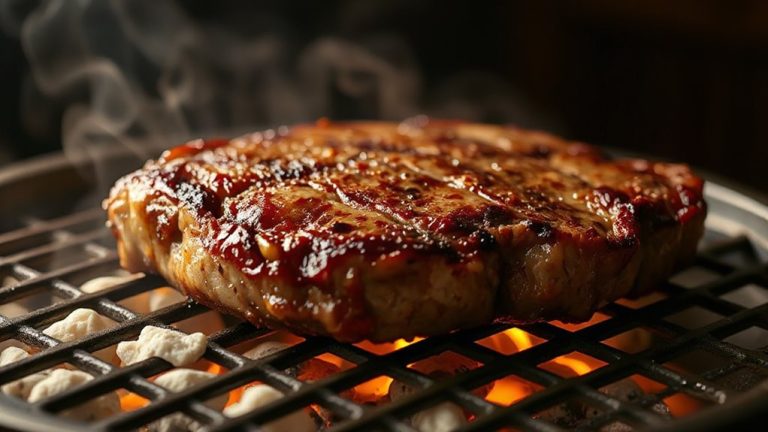
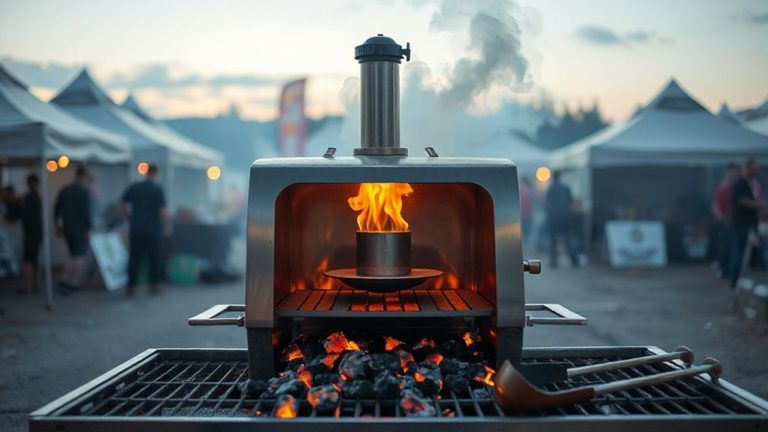
How to Match Hickory Wood Smoke Profiles to Beef Cuts for Authentic Central Texas BBQ
You match hickory smoke to beef by aligning cut thickness and fat content with smoke intensity-thick, fatty brisket needs heavy, clean hickory early on for deep flavor and bark, while leaner tri-tip only tolerates light smoke for the first hour. Fat slows smoke absorption, preventing bitterness, so marbled cuts handle bold profiles. Mistakes like black exhaust or oversmoking ruin the balance. Central Texas perfection lies in precision-and knowing what comes next elevates your results.
Notable Insights
- Use heavy hickory smoke for brisket to penetrate its dense muscle and develop deep flavor during long cooks.
- Limit hickory smoke to 30–60 minutes for thin cuts like tri-tip to avoid overpowering their delicate texture and taste.
- Match smoke intensity to fat content-high marbling in ribeye slows absorption, requiring moderate, even smoke.
- Apply bold hickory early in the cook to build flavor bark and support collagen breakdown in tough cuts.
- Avoid excessive smoke on lean cuts like sirloin to prevent bitterness, as low fat leads to rapid smoke absorption.
Pick the Best Beef Cut for Your Smoker
What makes one cut of beef better for smoking than another? You’ll find it comes down to marbling, connective tissue, and how the meat responds to low, slow heat. Brisket and chuck roast stand out because their rich fat content breaks down over hours, yielding tender, flavorful results. These cuts often benefit from dry aging, which concentrates flavor and improves texture by drawing out moisture. When you apply bold spice rubs-typically salt, pepper, and garlic-you enhance the natural beefiness without overpowering it. Leaner cuts like sirloin? They lack the fat and collagen needed for smoker success and can dry out. For authentic Central Texas-style BBQ, fatty, well-marbled cuts reign supreme. Your best bet is selecting quality meat, letting dry aging elevate it, then trusting a simple rub and steady smoke to deliver depth. Choose wisely-your smoker rewards patience and the right cut. Best Cuts of Meat for Smoking include brisket, chuck roast, and ribeye due to their ideal fat-to-meat ratio and response to prolonged smoking.
How Hickory Smoke Transforms Tough and Tender Meats
You’ve picked the right cut-something with enough marbling and connective tissue to handle the smoker’s slow, steady heat-and now it’s time to think about how smoke shapes the final result. Hickory smoke doesn’t just add flavor; it interacts with the meat’s surface, creating a rich, mahogany bark through consistent wood penetration. This process enhances texture and deepens taste, especially in tougher cuts like chuck or plate. You’ll notice a distinct smoke ring just beneath the surface-a pink halo formed by nitrogen dioxide dissolving into the meat and bonding with myoglobin. While it doesn’t impact flavor directly, it’s a hallmark of well-executed barbecue. For more tender steaks, though, be careful-prolonged exposure can overwhelm delicate fibers. Hickory’s bold profile works best when matched to cooking time and cut density, ensuring smoke complements rather than dominates. Choosing the right smoking wood type can significantly influence the depth and balance of flavor in your finished brisket or roast.
Why Brisket Needs Long, Heavy Hickory Smoke
Because brisket is packed with dense connective tissue and requires a long cook to break down collagen into gelatin, it thrives under a steady stream of heavy hickory smoke. You need that prolonged exposure because deep smoke penetration is essential for flavor development in such a thick, muscular cut. Hickory’s bold, slightly sweet profile stands up to the meat’s richness, especially when clean wood combustion produces consistent, white smoke rather than thick, acrid billows. You’ll notice the flavor integrates better when smoke runs heavy early-this is when the meat absorbs the most. Sustained, controlled combustion guarantees the bark forms properly while carrying smoke deep into the tissue. Don’t underestimate timing: the first several hours are critical for imprinting flavor that lasts through the stall and finish. With brisket, heavy smoke isn’t overkill-it’s necessary. You’re not just cooking; you’re transforming tough fibers into something tender, rich, and unmistakably smoky. Prime rib also benefits from strong smoke, but best wood for smoking prime rib depends on balancing intensity with the cut’s inherent marbling and shorter cook time.
Keep Smoke Light for Tri-Tip and Flat Iron
Thin cuts like tri-tip and flat iron respond best to a gentle touch when it comes to hickory smoke-too much and you’ll overpower their more delicate flavor. Because of their reduced cut thickness, these steaks cook faster and don’t need prolonged exposure to smoke. You’ll want to keep smoke intensity low, using just enough hickory to add a subtle backbone without dominating the beef’s natural taste. A short 30 to 60-minute smoke at the start of the cook is plenty; after that, let the sear and seasoning carry the flavor. High smoke intensity works for brisket, but here it clashes with the balanced profile these cuts offer. Match the smoke to the meat’s structure: thinner means lighter. With tri-tip and flat iron, precision matters-you’re enhancing, not masking. Getting this balance right means cleaner flavor, better texture, and a more authentic Central Texas result.
How Fat Content Affects Smoke Absorption
Fat plays a critical role in how smoke interacts with beef during the cook, and understanding this relationship helps you get better results on the grill. Higher fat saturation acts as a smoke magnet, slowing down smoke penetration and mellowing the final flavor. Lean cuts absorb smoke faster but risk over-smoking if unchecked. Marbling distributes heat evenly and supports gradual smoke penetration, especially important when using strong hickory. You’ll want to match your beef’s fat content with smoke intensity to avoid bitterness or raw smoke taste.
| Cut | Fat Saturation | Smoke Penetration |
|---|---|---|
| Brisket | High | Slow, even |
| Ribeye | High | Moderate |
| Tri-Tip | Medium | Quick |
| Flank | Low | Very fast |
Balancing these factors guarantees clean, rich smoke without overwhelming the meat.
5 Mistakes That Ruin Smoked Beef (And How to Avoid Them)
Getting the smoke right on beef means more than choosing hickory or trimming fat-you’ve got to sidestep common errors that turn a promising brisket into a bitter, dry letdown. One major mistake? You might choke airflow by overloading your smoker with wood or blocking vents, which restricts combustion and creates thick, acrid smoke that coats the meat harshly instead of imparting clean flavor. Hickory burns best with steady oxygen flow-keep it regulated. Another fatal error: you’ll ruin tenderness if you skip rest. Slicing right off the smoker traps steam inside, collapsing texture and losing juices. Let your beef rest, tightly tented, for at least an hour-this allows carryover cooking and fiber relaxation. Temperature control matters too; fluctuating heat leads to uneven doneness. Avoid these missteps, and you’ll consistently produce smoky, succulent beef that honors Central Texas tradition-not just in flavor, but in technique.
On a final note
You’ll get the best results when you match hickory smoke intensity to beef cut and fat content. Brisket thrives under long, heavy smoke, developing deep flavor and tender texture. Leaner cuts like tri-tip need lighter exposure to avoid bitterness. Fat carries smoke, so well-marbled pieces absorb more complexity. Avoid oversmoking, poor temperature control, or skipping rest time-all common mistakes that compromise quality. Master these variables, and your Central Texas-style BBQ will deliver authentic, restaurant-grade results every time.