Baking Peach Cobbler in Cast Iron With Tinfoil-Lined Coals for Precise Top Heat
You’ll get even baking and precise top heat by using a cast iron skillet over tinfoil-lined coals, which reflect warmth upward and shield the cobbler from flare-ups. Set up a two-tier fire with glowing embers for steady, oven-like heat, and choose firm, freestone peaches to prevent sogginess. Assemble directly in the preheated skillet and adjust foil positioning mid-bake to manage browning-this method delivers reliable results you can fine-tune as you go.
Notable Insights
- Use a preheated cast iron skillet for even browning and seamless stovetop-to-coals transition.
- Set up a two-tier fire with glowing embers on one side for direct and indirect heat zones.
- Line coals with foil to reflect heat upward, shielding the cobbler top from scorching flames.
- Choose firm, slightly underripe freestone peaches to prevent sogginess and ensure clean caramelization.
- Position foil to redirect heat and elevate skillet if center is undercooked, ensuring uniform bake.
Why Cast Iron Is Perfect for Campfire Peach Cobbler
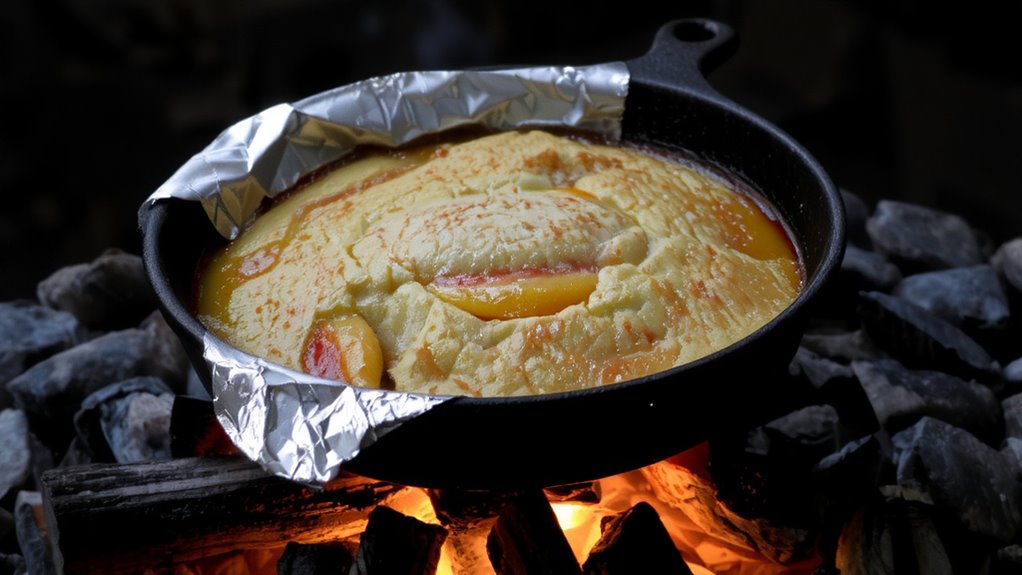
Around a campfire, few tools deliver the same level of reliable performance as a cast iron skillet, especially when you’re baking something as deceptively simple as peach cobbler. You count on even browning, and cast iron delivers-its thick walls distribute heat slowly and steadily. That superior heat retention means no cold spots, so the fruit bubbles just right while the biscuit topping rises uniformly. Unlike thinner pans that scorch over open flame, cast iron buffers temperature spikes, giving you control without constant adjustment. You’ll notice the crust develops a rich, golden finish, not patchy or burnt. It handles the shift from stovetop to coals seamlessly, a versatility other cookware can’t match. With proper seasoning, it resists sticking and lasts decades. For campfire baking, where precision is scarce, cast iron brings consistency. It’s not just durable-it’s dependable, transforming raw ingredients into dessert with minimal fuss and maximum results.
Build a Two-Tier Fire for Even Heat
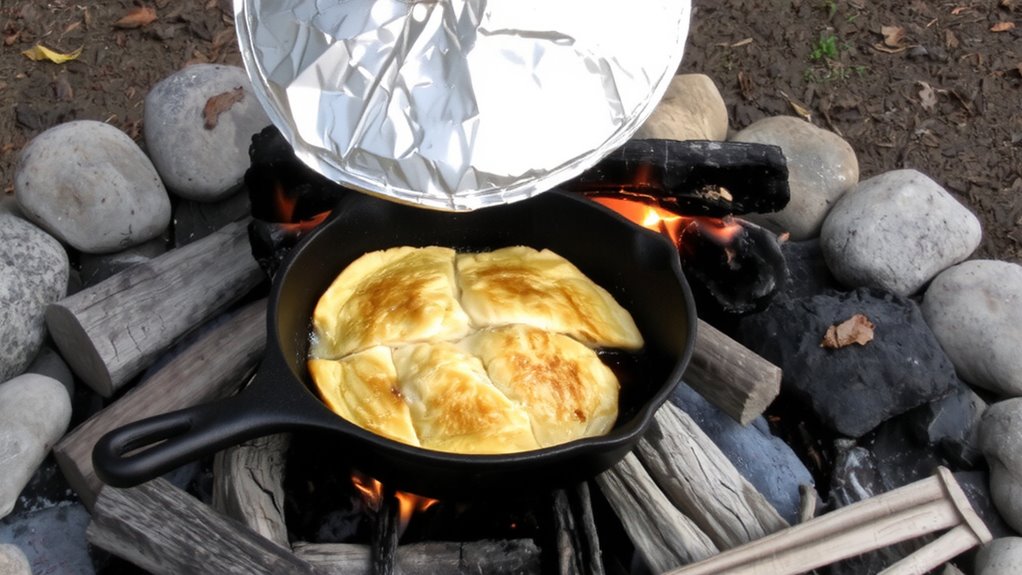
You’ve got your cast iron skillet ready, but the real secret to even baking lies in how you build the fire. A two-tier fire gives you control through thoughtful heat placement and adjustable fire height. Stack coals on one side for direct heat, leaving the other side cooler-this lets you move the skillet as needed. You’ll want glowing embers, not open flames, to avoid scorching the bottom. The ideal fire height is about 2–3 inches below the skillet; too close and you risk overheating, too far and baking slows. This setup mimics an oven’s consistent warmth, essential for delicate desserts like peach cobbler. It takes a few minutes to arrange, but the payoff is even cooking from edge to center. Proper heat placement guarantees the crust sets without burning, while the filling bubbles just right. With practice, you’ll read the coals like a pro, adjusting as the dish progresses. For optimal results, consider using Japanese charcoal for a cleaner, more consistent burn with minimal ash.
Use Foil to Reflect Heat and Protect the Top
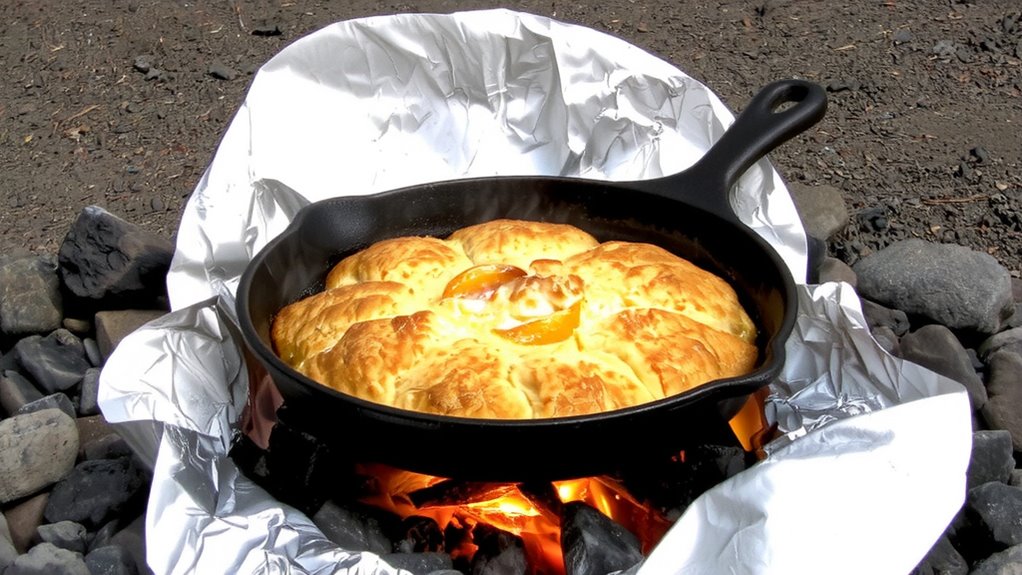
A sheet of aluminum foil does more than just shield-it actively reshapes the heat environment above your cast iron skillet. When you use foil insulation, you’re not only trapping warmth beneath but also managing airflow and radiation. Position the shiny side up to reflect heat back toward the cobbler, ensuring even baking without scorching. This method offers direct shielding from erratic flames, which is essential when cooking over an open fire. Without it, the top crust can burn before the fruit softens. Foil creates a makeshift convection effect, improving thermal consistency. It’s a simple tweak, but seasoned camp chefs rely on it for predictable results. The material holds up well under high heat and can be repositioned as needed. While not a complete substitute for an oven, direct shielding with foil brings you surprisingly close. Practical, cheap, and effective-few tricks match its return on effort.
Choose Peaches That Hold Up to Heat
Once you’ve got your heat shielded and the skillet’s environment stabilized with foil, the next decision-what kind of peaches to use-starts shaping how your cobbler will turn out. You’ll want firm, slightly underripe peaches; their lower moisture content and denser flesh withstand prolonged heat without collapsing. Peach ripeness is vital-overripe fruit breaks down too fast, turning mushy and releasing excess juice that dilutes flavors. The ideal peach holds its structure, allowing the filling to thicken evenly. This stability also promotes even sugar crystallization, enhancing texture without scorching. Freestone varieties are easier to prep and distribute uniformly. While heirloom types offer depth, their juiciness demands careful balancing. With cast iron’s even conductivity and your foil-modulated heat, firm peaches caramelize gradually, building complexity. Don’t sacrifice structure for sweetness-choose peaches that support sustained baking. Their integrity guarantees a cohesive, richly flavored result, matching the precision your setup delivers.
Assemble Peach Cobbler Right in the Skillet
Structure matters as much as flavor when building a peach cobbler directly in the skillet, especially over open fire. You skip transferring dishes and preserve heat by assembling right in the preheated cast iron. Start with your peach selection-firmer varieties like Elberta or Oconee hold shape and won’t turn to mush under high heat. Toss them with sugar, a dash of cinnamon, and a squeeze of lemon to balance sweetness. Drop spoonfuls of biscuit dough over the top, leaving space for steam to escape. The close contact with the hot skillet base guarantees a crisp underside, while the open top allows for controlled browning. Your topping texture should be golden and slightly crisp on the surface but tender within. This method maximizes efficiency and deepens flavor development where it counts-right at the fruit-dough interface.
Adjust Heat in Real Time With Foil Shields
Managing uneven fire zones becomes a lot easier when you’ve got a roll of tinfoil on hand-just tear off a sheet and shape it into a shield to deflect excess heat from hot spots under or around the skillet. You’re in full control with simple foil manipulation, subtly redirecting flames and moderating cooking temperatures. By placing a crumpled foil barrier between the fire and one side of the skillet, you improve heat diffusion, ensuring the cobbler bakes evenly without scorching. It’s not just about blocking heat-it’s about smart distribution. You’ll notice immediate improvements in crust texture and fruit consistency when you adjust shields mid-bake. Unlike rigid tools, foil molds to your setup, adapting to shifting coals or wind. Seasoned camp cooks rely on this trick because it’s cheap, instant, and highly effective. Real-time adjustments like this turn unpredictable fires into precision ovens, proving that mastery in outdoor baking often comes down to a few clever uses of foil.
Fix Soggy, Burnt, or Undercooked Cobbler
You’ve dealt with the fire, adjusted your foil shields, and still end up with a cobbler that’s soggy on the bottom, burnt on top, or uncooked in the center-frustrating, but fixable. Sogginess usually means excess moisture from underripe fruit; better fruit ripeness guarantees juices release evenly and cook down properly. Overly green peaches hold too much water, overwhelming the batter. If the top burns before the center sets, your radiant heat’s too intense-lift the foil shield slightly to slow browning. An undercooked core often stems from uneven thermal transfer; elevate the Dutch oven slightly on rocks to improve airflow. Sugar balance also matters-too much delays thickening, while too little affects crust development and flavor depth. Adjust sugar based on fruit sweetness and ambient humidity. With cast iron, thermal retention works for you-if you monitor timing and layer heat correctly, recovery is possible mid-bake.
On a final note
You’ve seen how cast iron’s heat retention and even dispersion make it ideal for campfire baking. By managing your two-tier fire and using foil to direct heat, you gain precise control, preventing burnt tops or undercooked fillings. This method turns unpredictable flames into reliable results. While it demands attention, the payoff-crisp, golden crust over tender peaches-justifies the effort, proving outdoor cooking can be as controlled as it is rustic.