Maximizing Flavor by Matching Wood Density to Cooking Time and Meat Cut
You’ll get the best results by matching wood density to your meat and cook time. For brisket or long smokes, use dense woods like hickory or oak-they burn slow and add bold, lasting flavor. Delicate meats like chicken or fish need lighter woods like apple or alder, which deliver a sweet, mild smoke without overpowering. Short cooks demand less smoke intensity, while longer cooks benefit from layered wood blends. Timing and wood choice shape the final taste more than most realize-you’ll see how small adjustments make a noticeable difference.
Notable Insights
- Match light woods like alder or apple to delicate meats and short cooks for subtle, sweet smoke flavor.
- Use dense woods such as oak or hickory for long smokes to ensure consistent, rich flavor in tough cuts like brisket.
- Balance wood moisture between 15% and 20% to produce clean, efficient smoke without harsh or bitter notes.
- Combine mild and dense woods in a 30%-70% ratio to layer flavor and maintain balance over medium cooking times.
- Aim for thin blue smoke throughout the cook to achieve clean, integrated flavor without overpowering the meat.
Choose the Right Wood Density for Your Meat Cut
While you might be tempted to use any hardwood that’s available, matching wood density to your meat cut actually makes a big difference in flavor and cooking performance. For tender, quick-cooking cuts like pork chops or chicken thighs, lighter woods such as pecan or alder work best-they produce milder smoke without overwhelming the meat. These woods often come from faster-growing trees, impacting their wood origin and typically yielding lower density. Importantly, you should use wood with a moisture content between 15% and 20%; too wet, and you’ll get inconsistent smoke, too dry, and the burn becomes harsh. You’ll notice the smoke flavor integrates more smoothly when density and cooking time align. Hardwoods like cherry or maple offer a middle ground, balancing sweetness and smoke penetration. Choosing wisely isn’t just tradition-it’s practical science that affects how cleanly the wood burns and how well your meat absorbs flavor. For optimal results, consider your best smoking wood selection based on the type of meat and desired smoke intensity.
Use Dense Woods for Brisket and Long Smokes
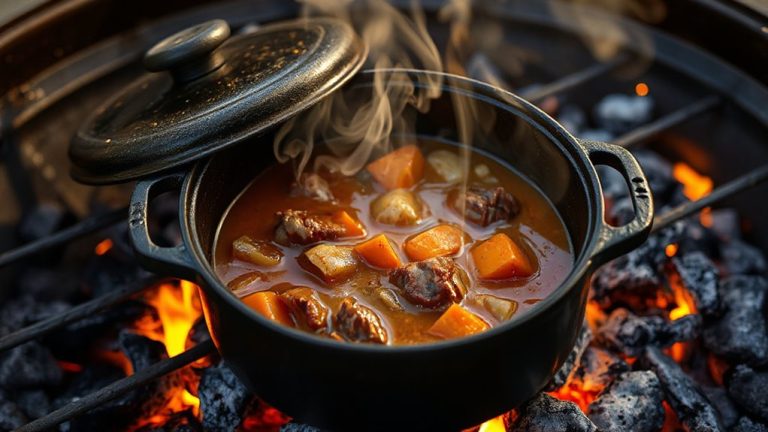
When it comes to brisket and other meats that take their time on the smoker, dense hardwoods like oak, hickory, and mesquite are your best allies. These woods burn slowly and steadily, delivering consistent smoke over many hours-a must for a proper long smoke synergy. Their density matches the extended cooking window, preventing flare-ups and ensuring even flavor development. You’ll find that a good brisket pairing comes naturally with hickory’s bold, savory notes or oak’s balanced richness, both enhancing the meat’s deep, beefy profile without overwhelming it. Mesquite, while intense, works well when mixed with milder woods, adding complexity without bitterness. Unlike softer woods that fizzle out too fast, dense hardwoods maintain smoke quality throughout, supporting the low-and-slow process that defines great barbecue. You’re not just cooking; you’re cultivating depth-one thoughtful burn at a time. For long smokes, this kind of reliability is essential.
Opt for Lighter Wood Density With Chicken or Fish
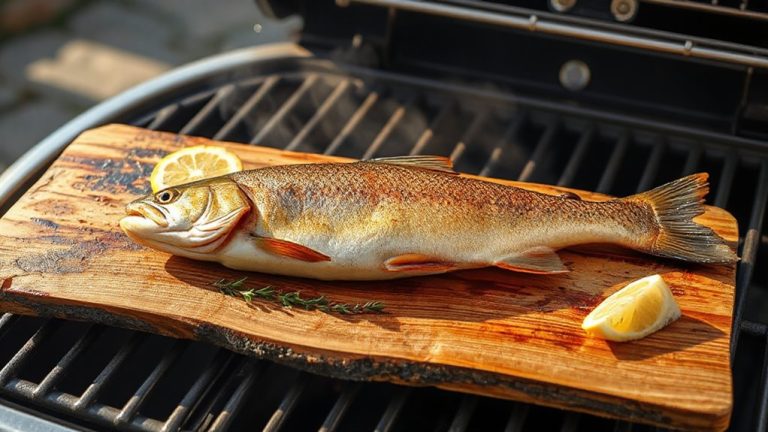
Since chicken and fish cook faster and carry more delicate flavors, you’ll want to reach for lighter woods like apple, cherry, or alder-woods that burn cleanly and impart subtle, sweet smoke without dominating the meat. These species deliver a mild smoke that complements, rather than overwhelms, the natural taste of poultry and seafood. Because these meats undergo a quick cook, whether grilled or roasted, there’s little time for smoke to penetrate deeply, making aggressive hardwoods like hickory or mesquite excessive. A lighter wood guarantees flavor harmony and prevents bitterness. You’ll notice cleaner flavor profiles and more consistent results when the smoke intensity matches the meat’s sensitivity. For best outcomes, pair wood density with cooking duration: light wood for short sessions, dense wood for long hauls. This approach maximizes nuance, especially with lean cuts prone to drying or flavor distortion under heavy smoke. Best Wood Chips for Smoking Chicken are ideal for achieving this balanced flavor when preparing poultry.
Balance Smoke Intensity and Cooking Time
If you’ve ever pulled apart a piece of brisket only to find the smoke flavor too sharp or barely there, you’ve run into the consequences of mismatched smoke intensity and cooking time. Achieving proper smoke timing and flavor balance means syncing your wood burn rate with the meat’s exposure. Too much smoke early on overwhelms; too little leaves it bland. You need consistency-clean, steady smoke for hours, not thick billows. Consider this:
| Cooking Time | Smoke Intensity | Flavor Outcome |
|---|---|---|
| Short (<2 hrs) | High | Harsh, acrid |
| Medium (2–6 hrs) | Moderate | Balanced, aromatic |
| Long (6–12 hrs) | Low to moderate | Deep, layered |
| Very Long (>12 hrs) | Low | Subtle, integrated |
You’re aiming for a thin blue smoke, not choking clouds. Proper smoke timing guarantees flavor balance-rich without dominating. Let time work with the smoke, not against it.
Avoid Overpowering Meat With the Wrong Wood Density
Though you might focus on flavor profiles alone, choosing the right wood density plays an equally critical role in how well the smoke complements rather than overwhelms your meat. Dense woods like hickory or oak burn longer and hotter, making them ideal for large cuts needing hours of low-and-slow heat. If your wood moisture is too low, though, flares and excessive smoke temperature can create bitter, acrid flavors that drown out the meat’s natural taste. On the flip side, lighter woods like alder or fruitwoods suit delicate proteins but can vanish too fast if used for long cooks. Their lower density means they generate milder smoke, so when paired with proper wood moisture levels-around 15% to 20%-they deliver clean, subtle notes without dominating. Misjudging density doesn’t just waste fuel; it risks turning a well-prepared brisket into a smoky mask. Match wood choice to both cooking duration and cut thickness to avoid overpowering your dish. For chicken, selecting the best smoke wood can enhance tenderness and flavor without overwhelming the meat, especially when using top picks for chicken.
Mix Wood Densities for Richer, Layered Flavor
You’ve seen how the wrong wood density can easily overpower your meat, especially when cooking times don’t align with burn characteristics. Now, consider mixing wood densities to build flavor layering and enhance smoke complexity. Pairing a fast-burning, mild wood like apple with dense, slow-charring hickory gives you control: the apple offers an aromatic base early on, while the hickory sustains a robust backbone throughout long cooks. This method balances sweetness, spice, and earthiness without overwhelming the meat. You’re not just adding smoke-you’re orchestrating it. Lighter woods complement poultry or fish, while dense hardwoods stand up to beef or pork, but combining them intelligently creates depth. For ideal results, use 70% high-density wood with 30% low-density for medium-length smokes. This ratio maintains consistency while allowing nuanced shifts in flavor. Experimentation is key, but the payoff is richer, more dimensional barbecue.
On a final note
You’ll get better results when you match wood density to both cooking time and meat type. Dense woods like hickory or oak deliver sustained, robust smoke ideal for brisket or pork shoulder over long smokes. Lighter woods such as apple or alder offer milder flavor, perfect for chicken or fish that cook faster. Using the wrong wood can easily overpower delicate proteins. Blending densities smartly adds complexity without overwhelming.