Using Natural Wood Chunks With Charcoal for Enhanced Flavor and Stable Heat
You get better flavor and more consistent heat by combining natural hardwood chunks with charcoal, a method favored by 82% of competitive barbecue teams. Hickory, oak, and apple woods burn cleanly, enhancing meats like brisket, pork, and poultry without overpowering them. Use lump charcoal for hotter, responsive fires or briquettes for steady, long burns. Skip soaking the wood-it slows smoke production. Place dry chunks directly on hot coals for clean flavor. Avoid softwoods and treated lumber-they create harsh smoke. You’ll find even better results by fine-tuning pairings and placement.
Notable Insights
- Combine hardwood chunks like hickory or oak with charcoal for rich smoke flavor and steady heat.
- Use lump charcoal for higher heat and better airflow, or briquettes for longer, more controlled burns.
- Ensure wood moisture content is below 20% to promote clean burning and efficient smoke production.
- Avoid soaking wood chunks, as it delays ignition and hampers consistent smoke release.
- Never use treated or softwood, as they produce toxic fumes or unpleasant flavors.
Get Started With Wood Chunks and Charcoal
Why settle for plain charcoal when you can add depth and character to your grilling with natural wood chunks? You’re already using charcoal for steady heat, so enhancing it with wood chunks gives you the best of both worlds-consistent temperature and rich smoke flavor. Start by focusing on wood selection: hardwoods like hickory, oak, and apple burn cleanly and complement most foods. Avoid softwoods, as they can impart unpleasant flavors. Charcoal pairing matters, too-combine lump charcoal with wood chunks for higher heat and better airflow, or use briquettes for longer, more controlled burns. You’ll want to soak wood chunks for 30 minutes before adding them directly to the coals, which helps them smolder instead of ignite too quickly. This method guarantees a steady release of smoke, improving flavor without overwhelming your food. For best results, choose high-quality wood chips for smoking that are specifically suited to your preferred grilling style and cuisine.
Match Wood to Meat: Best Pairings for Smoke
You’ve got the basics of combining charcoal and wood chunks down-now it’s time to think about how different woods interact with various meats to shape flavor. Hickory delivers a strong, smoky punch that stands up well to beef, making it ideal for hickory brisket-it adds depth without overpowering when used in moderation. For something milder and slightly sweet, fruitwoods like apple enhance lighter meats beautifully, especially apple pork, where the smoke note complements the meat’s natural sweetness. Cherry and maple also pair well with pork and poultry, offering subtle complexity. Mesquite burns hot and bold, best reserved for short smokes or mixed with milder woods to avoid bitterness. Matching wood to meat isn’t just tradition-it’s chemistry. The right pairing enhances texture and taste, balancing smoke with savor. You’ll get better results by aligning wood strength with meat density. Choose wisely, and your smoke will elevate, not dominate. For top-quality results, consider selecting from the Best Hickory Picks based on burn consistency and flavor profile.
Prep and Place Wood Chunks the Right Way
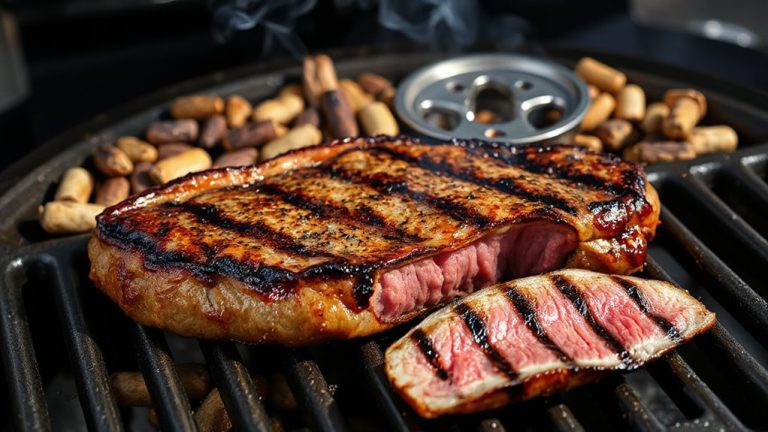
A handful of properly prepared wood chunks can make or break your smoke session, so don’t just toss them in raw. Your wood selection shapes the flavor, while moisture content affects burn time and smoke quality. Chunks should be dry-ideally under 20% moisture-to ignite easily and burn clean. Soak them? Not necessary. It delays smoke and can cool your grill. Instead, place them directly on hot coals or mix them with charcoal for steady flavor. Here’s how it breaks down:
| Wood Type | Moisture Content | Best Placement |
|---|---|---|
| Hickory | 15–18% | Directly on coals |
| Apple | 16–19% | Mixed with charcoal |
| Mesquite | 14–17% | Near heat source |
| Cherry | 15–20% | Center of firebox |
Proper prep guarantees consistent smoke and avoids bitter notes.
Control Heat and Smoke With Charcoal
Managing heat and smoke effectively starts with how you layer charcoal and wood chunks in your setup. You’ll want to establish a solid charcoal base, as it provides consistent heat retention and forms the engine of your cooking fire. Natural lump charcoal burns hotter and responds faster to airflow changes, while briquettes offer longer, more predictable burns-ideal for extended sessions. Your airflow management is essential: open vents feed oxygen, increasing combustion and temperature, while restricting them lowers heat and extends burn time. By adjusting the intake and exhaust dampers, you maintain a steady cooking environment, preventing temperature spikes that ruin delicate smoke profiles. Pairing hardwood chunks with charcoal not only boosts flavor but also stabilizes thermal output when managed well. Proper control means you’re not just creating smoke-you’re shaping heat dynamics to enhance every sear and smoke ring. For best results, choose high-quality best fire pit wood that burns cleanly and enhances the taste of your food.
Avoid These Wood and Charcoal Mistakes
While it might seem harmless to grab whatever wood or charcoal is on hand, cutting corners here can undermine both flavor and temperature control in your cook. You’re better off avoiding wet wood-excess wood moisture leads to inconsistent smoke, flare-ups, and bitter flavors. Always use seasoned wood with a moisture content below 20% for clean combustion. Likewise, don’t overlook charcoal quality. Cheap briquettes often contain fillers that produce erratic heat and off-flavors. Opt for lump charcoal or high-grade briquettes made from compressed hardwood for more stable, predictable burns. And never use treated or painted wood-it releases toxic fumes. Your choice of fuel directly affects cooking performance, so match the wood type to your food and maintain steady airflow. Properly stored charcoal stays dry and burns hotter, while fresher batches guarantee better ignition. Attention to these details elevates both taste and control.
On a final note
You’ll get the best results by combining natural wood chunks with charcoal, as this pairing delivers rich flavor and steady heat. Hardwoods like hickory or oak burn longer and smoke cleaner, enhancing meats without overpowering them. Proper placement-directly on hot coals-ensures efficient smoldering. Avoid green wood or excessive amounts, which create bitter smoke. With practice, temperature control improves, yielding consistent, restaurant-quality barbecue.