Placing Reflective Shields Behind Smokers to Protect Decking From Radiant Heat
Placing a reflective shield behind your smoker helps block radiant heat that can warp, discolor, or crack your deck over time. Materials like aluminum or stainless steel reflect thermal energy away, with stainless offering better durability. These shields won’t eliminate heat transfer but markedly reduce surface damage. For best results, combine the shield with proper placement and non-combustible flooring. You’ll find even more practical ways to safeguard your deck and improve your outdoor cooking setup.
Notable Insights
- Reflective shields placed behind smokers reduce radiant heat damage to decking by redirecting thermal energy away from wood surfaces.
- Aluminum and stainless steel are common shield materials, offering high reflectivity and durability against prolonged heat exposure.
- Shields help prevent wood discoloration, cracking, and sealant degradation caused by concentrated smoker heat on sensitive decking materials.
- Proper placement of reflective shields just behind the smoker maximizes protection while allowing adequate airflow for safe operation.
- Combining shields with non-combustible pads and safe spacing enhances deck protection beyond what shields achieve alone.
How Smoker Heat Damages Your Deck
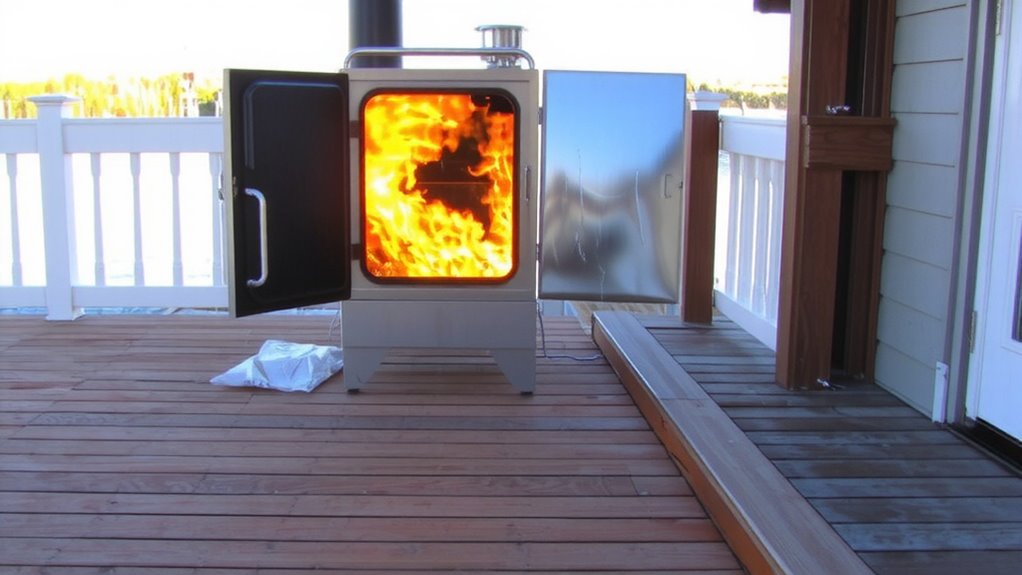
While you might think your deck can handle the heat from a smoker, prolonged exposure can lead to serious damage over time. Continuous radiant heat accelerates wood discoloration, leaving unsightly dark spots or faded patches that compromise your deck’s visual appeal. More critically, it contributes to structural weakening by drying out the wood fibers, making them brittle and prone to cracks or splintering. You’re not just risking appearance-you’re jeopardizing longevity. Over months or seasons, this thermal stress degrades sealants and promotes warping, especially in softer woods like cedar or pressure-treated pine. Even composite decking, though more resistant, isn’t immune to heat distortion. Without protection, the area beneath and around your smoker becomes a hotspot for measurable wear. Homeowners who overlook this risk often face costly repairs. So while outdoor cooking adds flavor to your life, it shouldn’t subtract from your deck’s integrity. Prevention beats restoration every time.
How Reflective Shields Stop Heat Transfer
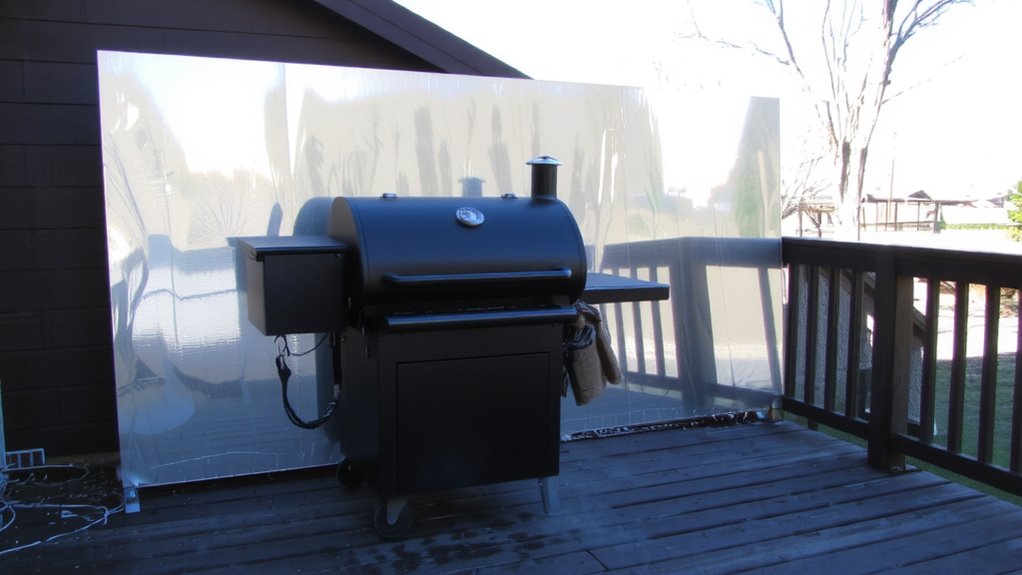
Because radiant heat from your smoker travels in straight lines and intensifies on contact, a reflective shield works by redirecting that energy away from your deck surface, and materials like aluminum foil or polished steel are especially effective at this. You’re relying on heat reflection to bounce thermal energy back toward the source instead of letting it soak into vulnerable wood or composite decking. While the shield itself doesn’t provide full thermal insulation, it dramatically reduces heat transfer by minimizing absorption. That means less charring, warping, or discoloration over time. Unlike bulky barriers, reflective options stay lightweight and easy to position, yet still deliver measurable protection during long smokes. You’ll notice the difference in surface temperature just inches from the shield. For backyard chefs who grill frequently, this smart layer of defense balances efficiency and practicality-keeping your deck intact without compromising your setup. It’s a simple fix that supports both safety and longevity.
Top Materials for DIY and Store-Bought Shields
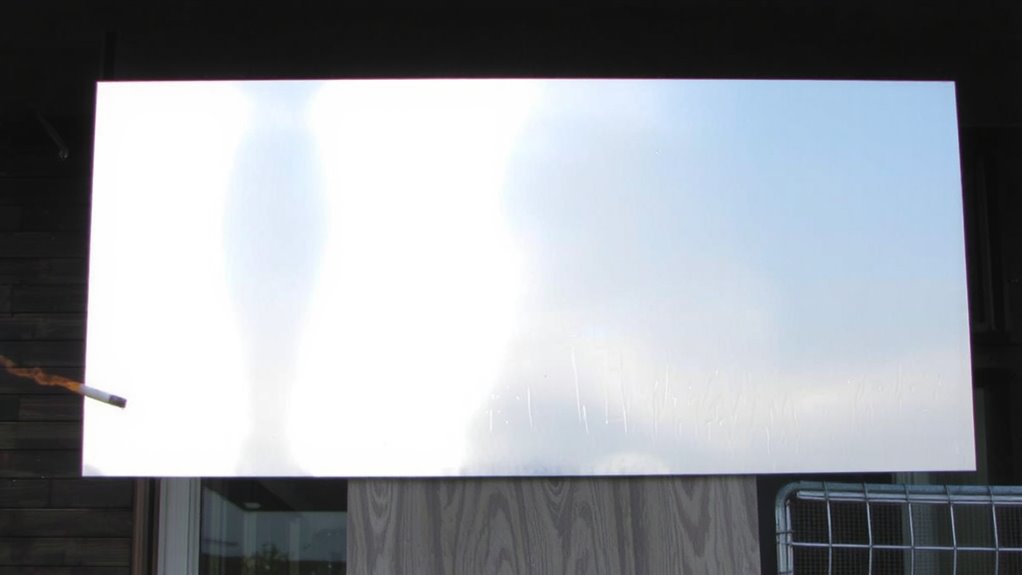
You’ve seen how reflective shields block radiant heat by bouncing it away from your deck, but picking the right material makes all the difference in durability, efficiency, and ease of use. Aluminum sheeting is a top DIY choice-lightweight and highly reflective, it offers solid material durability while allowing for custom sizing. But it dents easily and lacks rigidity. Stainless steel performs better long-term, resisting warping and corrosion, though it’s heavier and reduces shield portability. For store-bought models, many use layered composites: an aluminum face bonded to a fiberglass backing, boosting strength without much added weight. These handle repeated heating cycles well and are easier to move and store. Ceramic-coated panels reflect even more heat and hold up under extreme temperatures, but they’re pricier. Consider your smoker’s placement and how often you move it-balancing material durability with shield portability guarantees lasting protection.
Pick the Right Shield for Your Smoker
A well-chosen reflective shield makes a real difference in how your smoker performs and how much wear your deck endures over time. When you’re selecting a shield, consider both shield durability and installation ease to guarantee long-term protection and hassle-free use. Look for materials like stainless steel or aluminized panels, which resist warping and reflect heat efficiently. Below is a quick comparison to guide your choice:
| Material | Shield Durability | Installation Ease |
|---|---|---|
| Stainless Steel | High | Moderate |
| Aluminum | Medium | Easy |
| Ceramic Coated | Very High | Moderate |
| Reflective Board | Low | Very Easy |
Stainless steel offers the best balance for frequent users, while reflective boards suit occasional smokers. Prioritize solid construction and simple mounting to maximize performance without complicating setup.
Install a Heat Shield in 5 Minutes
While proper placement matters, getting the shield installed quickly guarantees you spend less time prepping and more time cooking, especially when a simple setup takes just minutes. Tool selection plays a key role-most shields attach with basic clamps or brackets that require only a screwdriver or wrench, minimizing complexity. Reflective panels designed for quick mounting often feature pre-drilled holes and adjustable arms, ensuring a snug fit against your smoker’s rear. This focus on time efficiency means you’re not wrestling with hardware when guests are waiting. In real-world use, models with flexible mounting systems prove more reliable across smoker types, from offset barrels to uprights. Fast installation doesn’t sacrifice performance; secure attachment maintains ideal distance from the deck, preserving the shield’s heat-deflecting function. With minimal tools and straightforward steps, you achieve effective radiant heat protection in under five minutes-making it a practical routine for regular cooks.
5 Safety Rules for Smoker Use on Decks
How often do you consider the risks when firing up your smoker on a wooden deck? You’re likely aware of fire hazards, but it’s easy to overlook how quickly sparks or radiant heat can ignite dry decking. Always position your smoker at least 10 feet from structures and over non-combustible surfaces like stone or metal pads. Never operate it under overhangs or near railings. Check local codes-many prohibit open combustion appliances on upper-level decks. And don’t forget carbon monoxide risks: guarantee proper ventilation, especially in semi-enclosed spaces. Never leave the smoker unattended, and keep a fire extinguisher nearby. Reflective shields help minimize radiant heat damage, but they don’t eliminate combustion risks. Ultimately, your safety depends on vigilant setup, constant monitoring, and respecting the machine’s power. Smart habits prevent accidents.
On a final note
You’ll find that reflective shields markedly reduce radiant heat damage to your deck, especially when using high-output smokers. These barriers, made from aluminum or stainless steel, reflect heat away, preserving wood or composite surfaces. Properly installed, they’re effective, affordable, and low-maintenance. For best results, pair them with safe placement and regular cleaning. Overall, they’re a smart, practical upgrade for any deck-based barbecue setup.