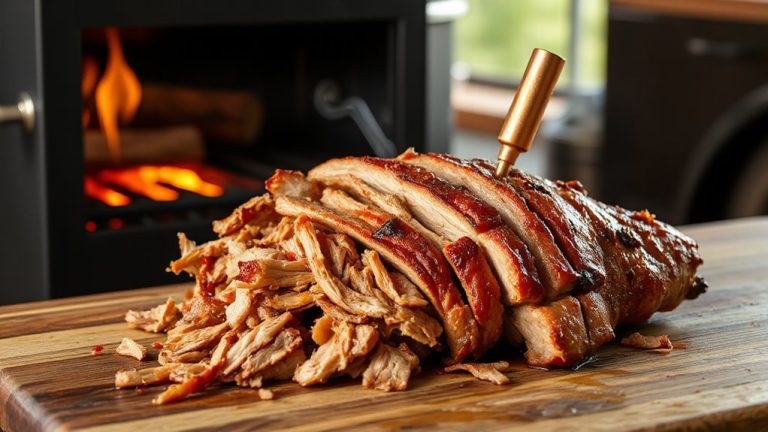
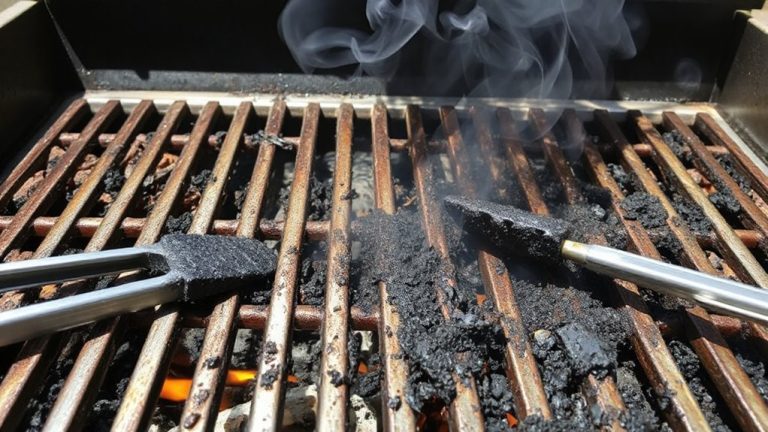
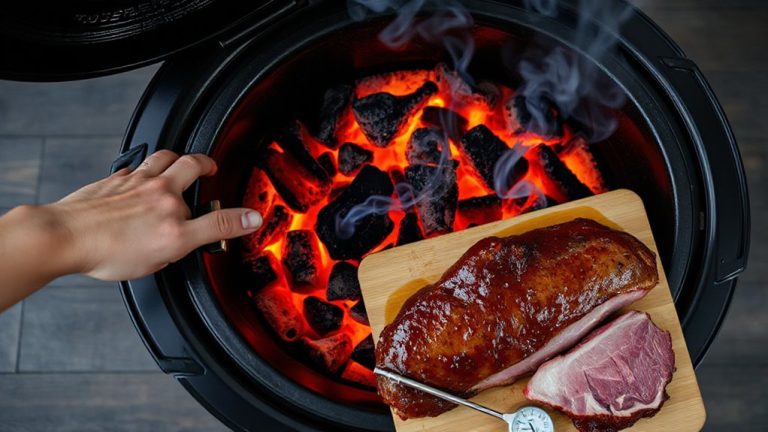
Mastering the Art of Smoking: Tips for Achieving Consistent Flavor Profiles
Choose your wood wisely-apple or cherry for poultry and pork, hickory or oak for beef, and mesquite sparingly for brisket. Use only seasoned hardwood to guarantee clean, consistent smoke and avoid bitter flavors. Maintain steady heat by controlling airflow and adding pre-lit wood in small batches. Aim for thin, blue smoke, not thick and white, for best flavor. Pat meat dry, apply a balanced rub, and rest it properly after cooking. You’ll find even better results once you fine-tune these fundamentals.
Notable Insights
- Choose wood types that complement the meat, such as fruitwoods for poultry and hickory for beef, to enhance natural flavors without overpowering.
- Use only seasoned, chemical-free wood to ensure clean, consistent smoke and avoid bitter or acrid off-flavors.
- Maintain steady smoking temperatures by controlling airflow with dampers and pre-lighting wood for seamless fuel replacement.
- Aim for thin, blue smoke by balancing wood quantity and airflow, avoiding thick white smoke that causes harsh, uneven flavor.
- Develop flavor-rich bark by drying meat surface, applying a balanced rub, and allowing proper rest time before slicing against the grain.
Choose the Right Wood for Your Meat Type
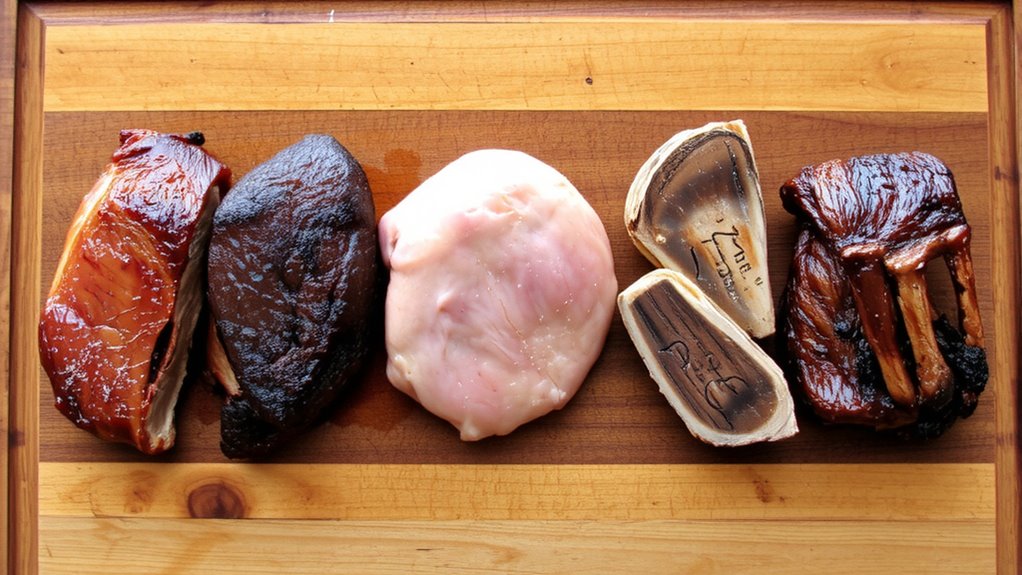
While you might be tempted to grab whatever wood is on hand, matching the right wood to your meat type actually makes a big difference in flavor and overall success. Proper wood pairing enhances the natural taste of the meat without overpowering it. For example, fruitwoods like apple or cherry offer a mild, sweet smoke ideal for poultry and pork, delivering subtle flavor infusion that complements rather than dominates. Hardwoods such as hickory or oak work better with beef and game, lending a robust, smoky depth that stands up to richer proteins. Mesquite burns hot and bold-great for brisket but risky with delicate meats, as it can turn bitter fast. Choosing the wrong wood not only dulls the dish but can make it unpleasant. Your smoke should support the meat, not mask it. Thoughtful wood selection reflects skill and attention to detail-key markers of a reliable barbecue result. For best results, always use properly seasoned wood chips for smoking that are free of chemicals and additives.
Maintain Consistent Fuel for Even Flavor
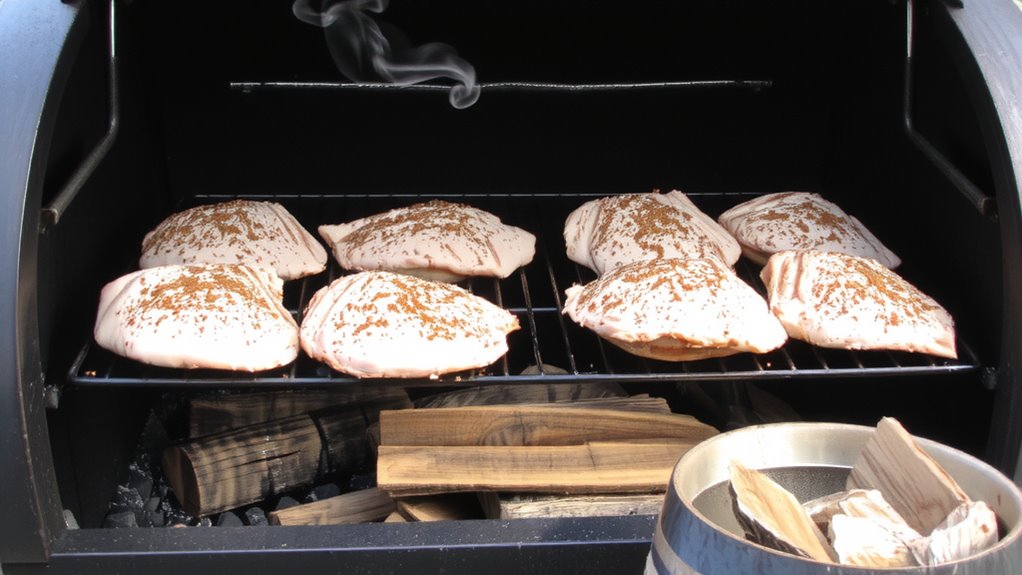
One of the most critical yet often overlooked aspects of achieving even, flavorful smoke is keeping your fuel source steady throughout the cook. You can’t expect consistent flavor if you let the fire dwindle or overload it with fresh chunks. Maintain a steady burn by adding fuel in small, timed increments-this stabilizes both heat and Smoke density. High Fuel quality matters too; seasoned hardwoods burn cleaner and produce more predictable smoke than green or resinous woods. Inconsistent fuel leads to bitter notes or weak flavor penetration. For best results, use uniform wood sizes and pre-light replacements to minimize temperature swings. Whether you’re using chips, chunks, or logs, your meat will taste better when the smoke is thin, steady, and blue-not thick and white. A stable fuel supply means cleaner combustion and richer, more balanced flavor. Choosing the right equipment, such as one of the best smokers for exceptional BBQ flavor, can significantly improve your ability to maintain consistent heat and smoke.
Control Temperature Like a Smoking Pro
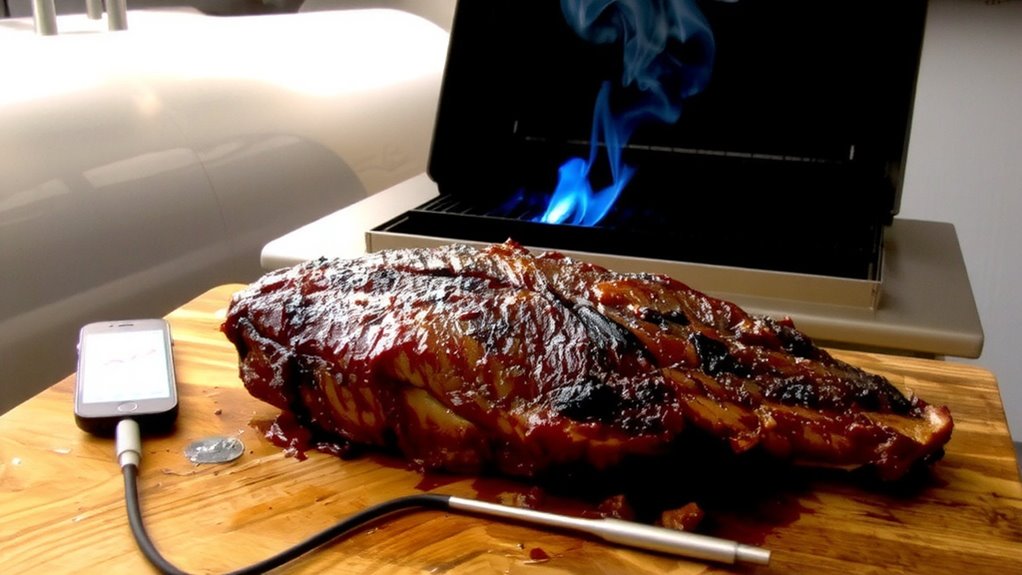
If you’ve ever pulled off a rack of ribs only to find them undercooked or dried out, chances are your smoker’s temperature drifted too far from the target zone. Consistent heat isn’t just helpful-it’s essential. You need to treat temperature control like the backbone of your smoke session. Fuel quality plays a major role; wet or green wood causes erratic burns and temperature swings, while seasoned hardwood delivers steady, predictable heat. Pair that with disciplined airflow management-adjusting intake and exhaust dampers precisely-to maintain oxygen flow without overspeeding combustion. Too much air cools the chamber by burning fuel too fast; too little starves the fire, dropping temps and increasing smoke density. Digital thermometers and probe monitors help, but real control comes from understanding how your smoker responds to small adjustments. Master these elements, and you’ll cook with repeatable precision, every single time. A reliable choice for maintaining consistent heat is investing in one of the best smokers for every grilling enthusiast, as they’re designed with precise airflow and temperature control in mind. best smokers
Master Smoke Balance to Avoid Bitterness
Since too much smoke can ruin even the most carefully seasoned brisket, getting the balance right is where your attention should be. Proper smoke penetration enhances flavor intensity without tipping into bitterness. You want clean, thin blue smoke-not thick white billowing clouds. Excess smoke creates creosote buildup, which coats the meat and delivers an acrid taste. To maintain control, monitor burn conditions and wood quantity closely.
| Smoke Level | Flavor Intensity | Smoke Penetration |
|---|---|---|
| Light | Mild, sweet | Shallow, delicate |
| Moderate | Balanced, rich | Even, consistent |
| Heavy | Harsh, bitter | Deep, overwhelming |
Adjust airflow and wood chunks to stay in the moderate zone. Hardwoods like hickory or oak deliver strong flavor fast, while fruitwoods offer gentler notes. Managing this balance assures complex, clean taste without bitterness.
Develop Perfect Bark With Proper Prep
While flavor development matters throughout the smoke, the bark is where texture and taste converge into something greater than the sum of its parts. You want that deep, crusted exterior packed with rich, smoky flavor. The key starts well before the meat hits the grate. First, eliminate surface moisture-pat your brisket or pork shoulder dry thoroughly. Moisture blocks adhesion and delays bark formation, leading to steam instead of sear. Apply a well-balanced dry rub generously but evenly; coarse salts and sugars need direct meat contact to caramelize and bind. Let the seasoned meat sit for at least 30 minutes, allowing the rub to draw out residual surface moisture while beginning osmosis. This prep phase builds the foundation for bark development. Proper drying and seasoning guarantee the rub clings, crusts, and forms a flavorful armor that holds up through hours of low, slow smoke.
Rest and Slice for Maximum Flavor Retention
Once the smoker’s work is done, how you handle the meat afterward makes or breaks the final result-resting isn’t just a pause, it’s a critical phase in flavor and moisture retention. You’ve got to give the meat time to reabsorb its juices, and that means paying close attention to rest duration. Larger cuts like brisket or pork shoulder need at least 30 to 60 minutes, loosely tented in foil. Skipping this step risks dry, tough meat no matter how well you smoked it. When you’re ready, your slice technique becomes equally important. Use a sharp, long-bladed knife and make smooth, single-pass cuts against the grain to preserve tenderness. Thick slices hold moisture better, while thin cuts work well for pulled applications. Proper rest duration and precise slice technique aren’t just details-they’re essentials for maximizing flavor in every bite.
On a final note
You’ve got the tools to master smoking by matching wood to meat, stabilizing temperature, and managing smoke for clean flavor. Consistent fuel and proper prep build rich bark, while rest and precise slicing lock in juiciness. These steps aren’t just tradition-they’re proven techniques that deliver predictable, high-quality results every time. With attention to detail and practice, your barbecue will achieve depth, texture, and balance that casual methods can’t match.