Understanding the Impact of Cooking Time on Meat Texture During Smoking Process
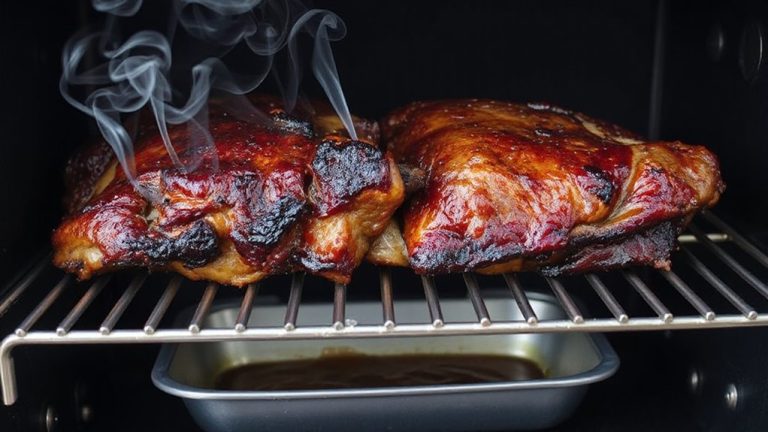
You’re transforming tough cuts like brisket and pork shoulder by letting time do the work-slow heat between 190°F and 205°F breaks down collagen into gelatin, which tenderizes the meat and improves mouthfeel. Smoke adds flavor, but texture hinges on patience: too little time and the meat stays chewy; too long and it turns mushy. Consistent temperature and airflow are essential. You’ll see the best results with well-marbled cuts carefully monitored through the stall. Understanding these phases reveals how precision shapes standout barbecue.
Notable Insights
- Cooking time allows collagen in tough cuts to break down into gelatin, significantly improving tenderness.
- Meat must reach 190°F–205°F and remain there for hours to fully transform connective tissue.
- Insufficient cooking time results in chewy, dry meat due to incomplete collagen conversion.
- Overcooking can destroy muscle fiber structure, leading to mushy, overly soft textures.
- Marbled cuts benefit from longer smoking, as fat renders and bastes meat internally over time.
How Time Transforms Smoked Meat Texture
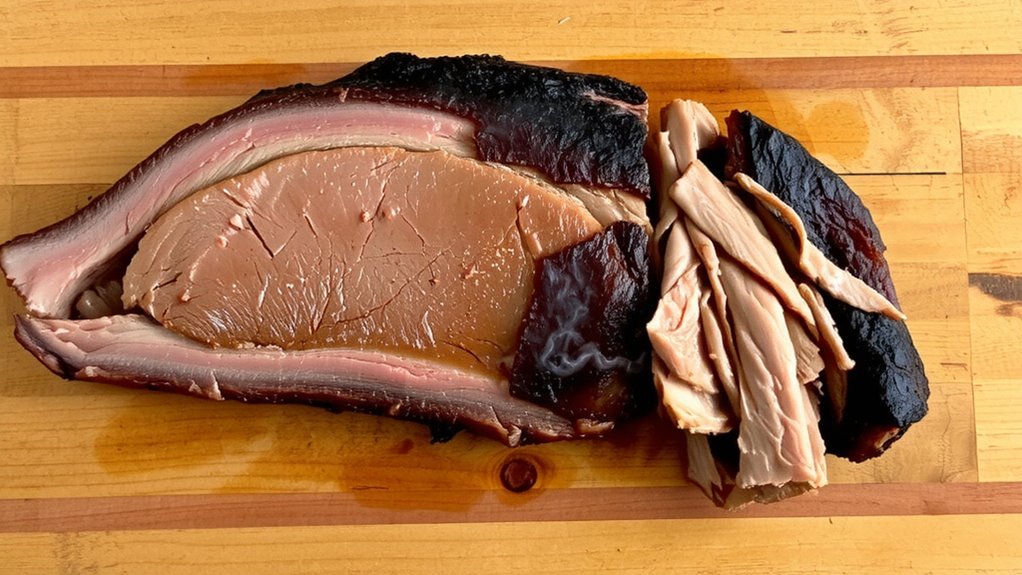
While you might think smoke is doing most of the work, it’s actually time that reshapes the texture of your meat during smoking, slowly breaking down tough connective tissues into tender, pull-apart fibers. You’ll notice the biggest changes happen between 190°F and 205°F, when collagen melts into gelatin, but this transformation only occurs with consistent, low heat over many hours. Your wood selection influences the process more subtly-hickory or oak adds flavor without overwhelming, while overly resinous woods can create harsh notes. Likewise, smoke intensity matters: too heavy, and you’ll bitter the surface; too light, and you’ll miss that signature depth. You’re not just cooking-you’re balancing chemistry and patience. The meat’s tenderness hinges more on time and temperature control than smoke volume. Mastering this balance is what separates decent barbecue from exceptional.
Why Brisket and Pork Shoulder Need Long Cooking
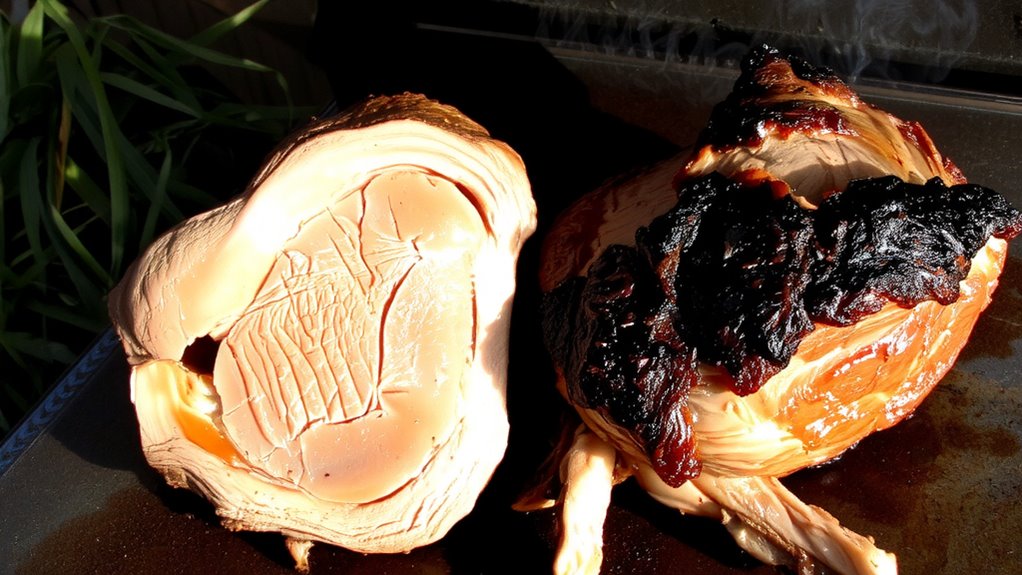
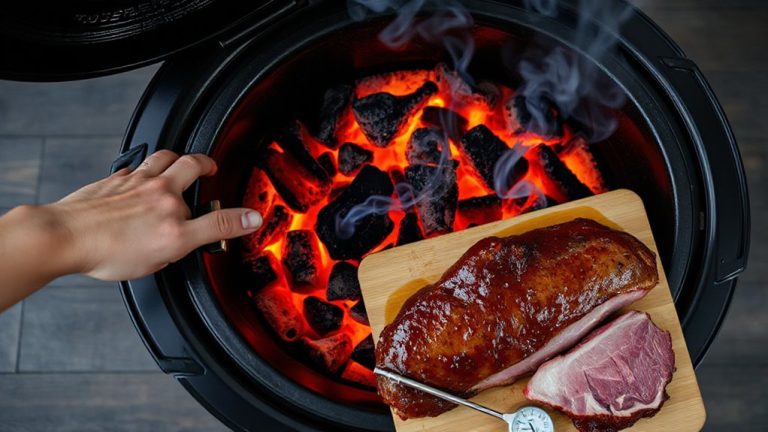
You’ve seen how time reshapes meat during smoking, slowly unraveling toughness into tenderness through steady heat and patience. Now consider brisket and pork shoulder-tough cuts packed with collagen and connective tissue that won’t surrender without hours of low-and-slow cooking. You can’t rush this. The prolonged exposure to heat breaks down dense fibers, but only if you maintain a consistent temperature and proper airflow. Your wood selection plays a pivotal role, not just in flavor but in sustaining clean, steady combustion. Too much hickory or mesquite overwhelms; fruitwoods often offer a milder smoke balance that complements without dominating. You’ll need precision: too little smoke and the flavor falls flat, too much and it turns acrid. Mastering this balance guarantees a rich, layered taste that enhances the meat’s transformation without masking it. Using a reliable best meat thermometers ensures you maintain the ideal internal temperature throughout the cook.
How Collagen Melts Into Gelatin in the Smoker
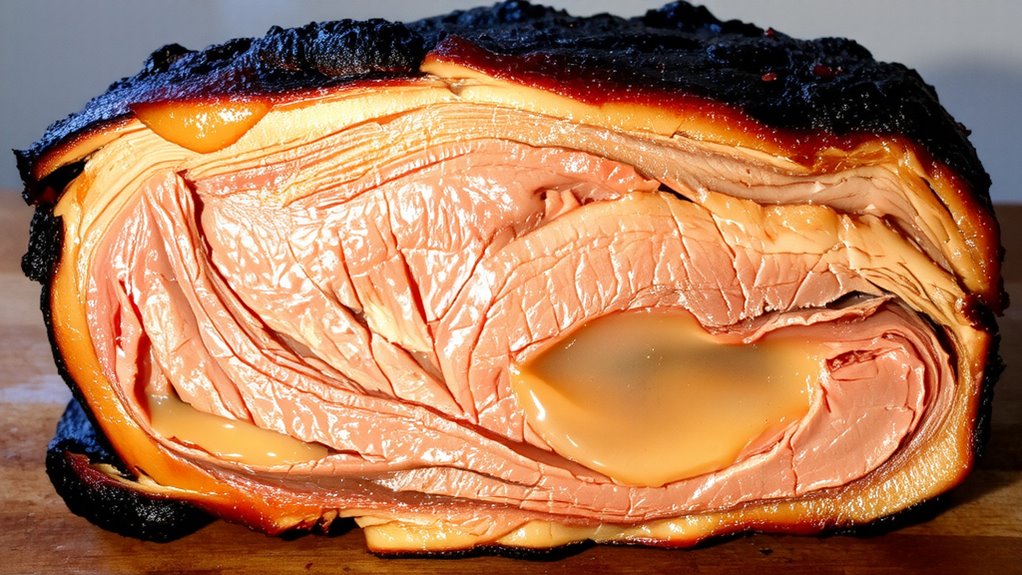
The secret to tender smoked meat lies in its connective tissue-specifically, how collagen behaves under low, steady heat. You won’t get that fall-apart texture by rushing the process; instead, you need patience and a smoker that holds a consistent 200–250°F. Collagen breakdown starts around 160°F, but real transformation kicks in above 190°F, where slow heat gradually unwinds these tough fibers. As collagen melts, it undergoes gelatin formation, turning into a rich, silky substance that lubricates muscle fibers and enhances mouthfeel. This process typically takes several hours, which is why cuts like brisket thrive with extended cook times. Without sufficient time, collagen won’t fully convert, leaving meat chewy and dry. Proper gelatin formation isn’t just about flavor-it’s the scientific foundation of tenderness in well-smoked barbecue, making temperature control and timing non-negotiable for quality results.
How Cooking Time Affects Moisture and Structure
Because moisture loss and structural changes in meat go hand in hand during smoking, how long you leave it in the heat makes all the difference in the final texture. As the meat heats, you’ll notice moisture slowly evaporates, leading to meat shrinkage-this is normal, but excessive cooking can dry it out. Meanwhile, fat rendering plays a vital role: the intramuscular fats melt slowly, basting the fibers from within and improving mouthfeel. Too little time, and the fat won’t fully render, leaving a waxy texture; too long, and both moisture and rendered fat escape, increasing shrinkage and yielding a coarse, dry result. The sweet spot lies in balancing temperature and duration so fibers relax without expelling too much juice. Properly rendered fat supports structure, counteracting excessive shrinkage. You want tender, cohesive meat-achieved not by cooking longer, but by mastering time and heat. For best results, choose cuts with good marbling, as best cuts of meat for smoking tend to retain moisture and develop richer flavor during prolonged exposure to low heat.
What Happens If You Pull Meat Too Soon
Even when the smoker’s temperature looks right, pulling meat too soon can leave you with a disappointing result-tough, chewy, and lacking that tender pull you’re after. You might think the meat is done based on color or time, but early removal interrupts the breakdown of collagen and connective tissues. Without sufficient exposure to low, steady heat, those proteins don’t melt into gelatin, which is essential for tenderness. You’re left with texture loss that no resting period can fix. Even if the internal temperature seems close, a few degrees matter-many meats need to reach 195°F–205°F to transform fully. That final phase inside the stall zone is vital. Skip it, and your brisket or pork shoulder stays dense and stringy. Patience isn’t optional; it’s part of the process. Relying on feel and probe tenderness-not just timing-ensures you avoid the pitfall of early removal and achieve the melt-in-your-mouth quality great BBQ demands.
When Smoked Too Long: Meat Turns Mushy
If you let the smoker run too long, that tender bite you’re after can slip right into mushy territory, losing both texture and integrity. The overcooking consequences become obvious: fibers break down past the ideal point, moisture evaporates excessively, and connective tissues dissolve too completely. What was once succulent now feels soft, almost pasty-classic texture degradation. You’re not just risking dryness; you’re undoing the careful balance of heat and time that makes smoked meat special. Collagen needs time to gelatinize, yes, but once it fully liquefies and muscle fibers keep unraveling, structure collapses. This isn’t just a minor setback-it undermines the entire smoking effort. Think of it like overbaked custard: patience is key, but too much patience backfires. The meat loses its satisfying chew, becoming unappetizingly mushy. Avoiding this means monitoring internal temps closely and respecting the sweet spot between tender and overdone.
Best Cooking Times for Common Smoked Cuts
While every cut of meat responds differently to low-and-slow heat, getting the timing right is essential for achieving that ideal balance of tenderness and structure in smoked barbecue. You’ll want to smoke a beef brisket for about 1.5 hours per pound at 225°F, as it benefits from long exposure to maintain moisture without becoming mushy. Pork shoulder needs roughly the same timeframe, but responds better to slightly higher smoke density for deeper flavor penetration. For ribs, aim for 5–6 hours; they’re done when the meat pulls back cleanly. Chicken takes 3–4 hours, depending on size. Your wood selection matters-hickory or oak gives a solid backbone, while fruitwoods offer subtlety. Too much smoke density early on can overwhelm; balance is key. You’ll find precision in timing and technique delivers the best texture every time.
On a final note
You’ve seen how time reshapes tough cuts like brisket and pork shoulder, breaking down collagen into gelatin for that tender pull. Too little time leaves meat chewy; too much turns it mushy. Moisture loss increases with overcooking, harming texture. Ideal windows vary, but patience rewards. Mastering this balance defines great BBQ-precision, not guesswork, guarantees flavor and tenderness align perfectly every smoke.