Harnessing the Power of Fire and Smoke in Achieving Optimal Barbecue Flavors
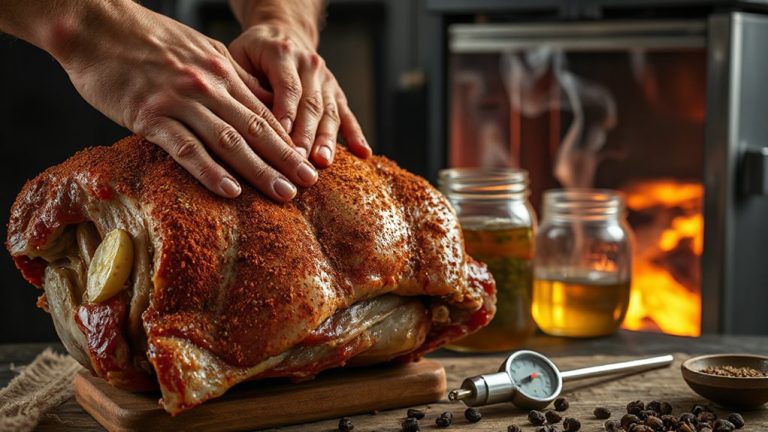
You get the best barbecue flavors by matching wood to meat-use hickory or oak for brisket, apple or cherry for turkey and fish. Keep your fire steady at 225°F to 250°F for tender results, especially with tough cuts like pork shoulder. Avoid wet chips; they create bitter smoke. Aim for thin, blue trails and reduce smoke after the bark forms. When the probe slides in clean and the meat yields easily, you’re set-there’s more to perfecting this balance than meets the eye.
Notable Insights
- Choose wood based on meat type: hickory or oak for brisket, apple or cherry for turkey and fish.
- Maintain a steady 225°F to 250°F for optimal collagen breakdown in tough cuts.
- Use clean, dry hardwood chunks to produce thin blue smoke for superior flavor.
- Limit smoke exposure after bark forms to prevent bitterness and over-smoking.
- Monitor doneness using both internal temperature and visual cues like probe tenderness and meat pull-back.
Choose the Best Wood for Each Meat Type
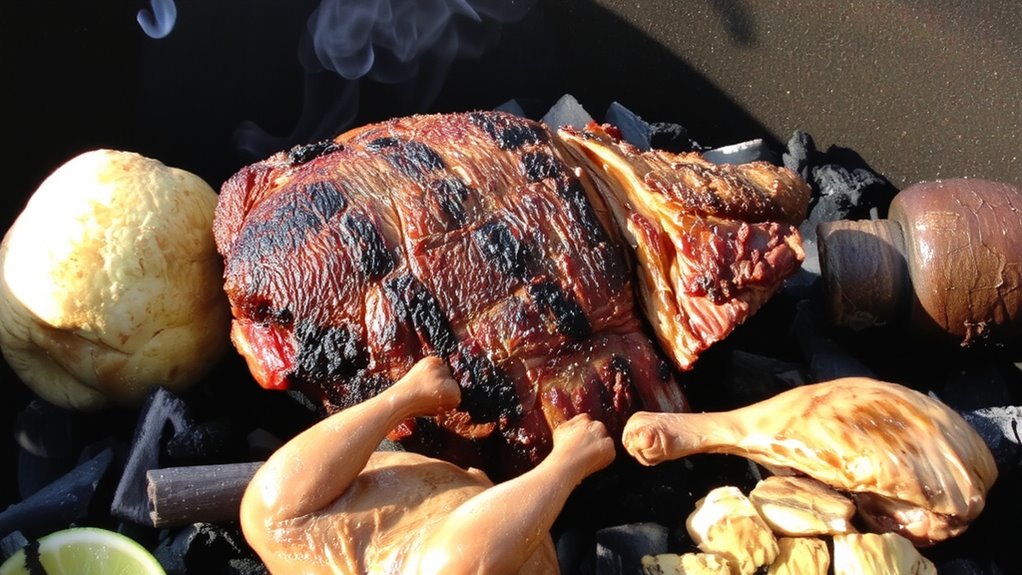
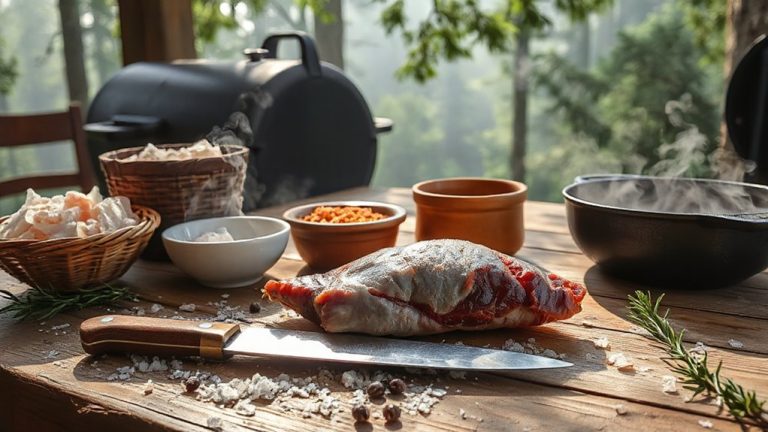
When it comes to building deep, resonant flavors in barbecue, wood choice isn’t just a detail-it’s a deciding factor. You need to match the meat to the wood, considering both wood density and smoke intensity. Heavier meats like brisket stand up to dense, strong-smoking woods like hickory or oak, which deliver bold flavor without overwhelming. For more delicate proteins-think turkey or fish-opt for lighter options such as apple or cherry, whose lower smoke intensity adds sweetness and subtlety. Mesquite burns hot and fast, best for short cooks; its high wood density can easily dominate if you’re not careful. Ultimately, balancing smoke intensity with cooking time and meat type gives you control. You’re not just adding flavor-you’re shaping the entire taste profile. Choose wisely, and your barbecue won’t just taste good-it’ll taste intentional. For a rich, aromatic smoke that complements beef without overpowering it, consider best wood for smoking prime rib.
Master Low and Slow Temperature Control
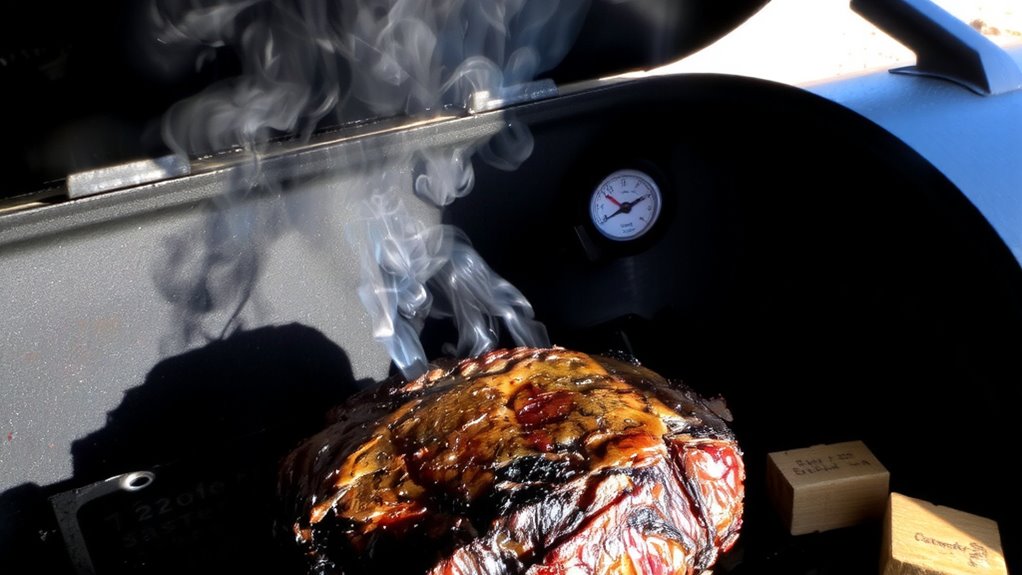
Though it might seem tempting to crank up the heat and rush the process, you’ll get far better results by keeping things low and slow-typically between 225°F and 250°F-because that’s where tough cuts like pork shoulder and brisket transform from chewy to tender. Consistent fire management is key; fluctuating temperatures can halt collagen breakdown, leaving meat tough. You need steady heat distribution across the cooking chamber to avoid hot spots and uneven cooking. Use a quality smoker with thick walls and tight seals to retain heat efficiently. Monitoring with a reliable dual-probe thermometer helps maintain control. Adjust airflow gradually-small tweaks to intake and exhaust dampers stabilize temperature without overshooting. For beginners, choosing the right equipment is crucial, and a well-reviewed best beginner electric smoker can simplify temperature control and consistency.
Match Cuts to Smoking Time and Heat
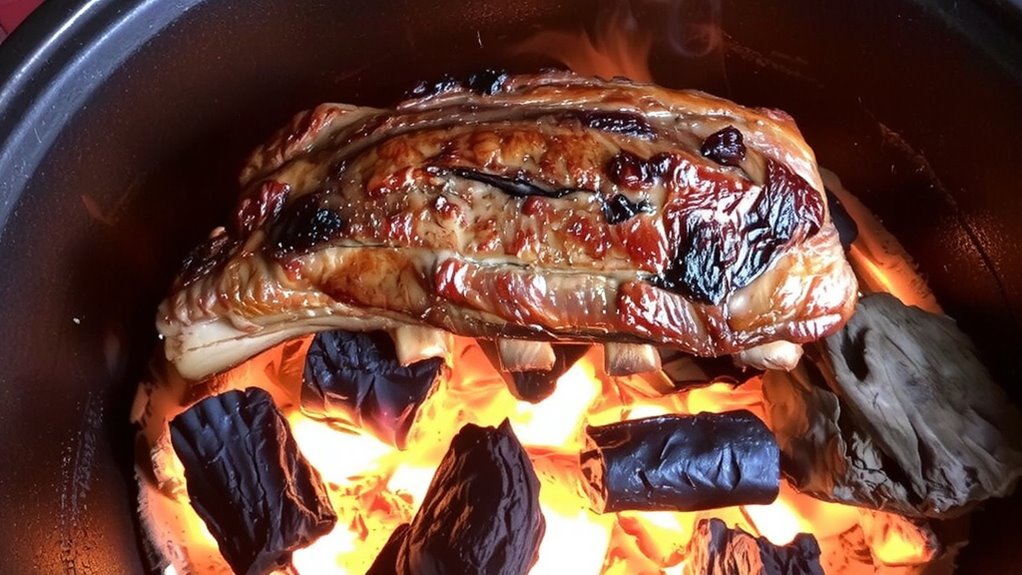
You’ve got your smoker dialed in and holding a steady 225°F, but knowing how to pair that stable environment with the right cut of meat makes all the difference in achieving standout barbecue. Tougher cuts like brisket or pork shoulder thrive with long exposure to low fire intensity, breaking down collagen over 10–14 hours. These benefit from moderate smoke density early on-enough to flavor, not overpower. Leaner meats like turkey breast or pork ribs need less time, so adjust both heat and smoke accordingly. Fire intensity impacts bark development; too high and you risk charring, too low and the meat won’t sear internally. Smoke density should taper after the first few hours to avoid bitterness. Matching cut thickness, fat content, and connective tissue to smoking duration and heat guarantees texture and flavor sync perfectly. For the best results, choose from the best cuts of meat for smoking that balance marbling and structural integrity with extended cook times.
Stop Over-Smoking: Balance Flavor and Doneness
Smoke should enhance, not dominate-a common misstep in backyard barbecue is treating smoke like a seasoning you can’t overdo. You might think more smoke equals better flavor, but excessive smoke intensity leads to bitter, acrid meat that overwhelms the palate. True barbecue mastery lies in flavor balance: clean smoke from dry, hardwood chunks-not smoldering wet chips-delivers a clean, aromatic profile without harshness. During the first half of the cook, when meat readily absorbs smoke, monitor your airflow and fuel to maintain thin, blue smoke trails. Once the bark forms, around the three- to four-hour mark, additional smoke contributes little but risk. Closing vents too much or using too much fuel spikes smoke intensity unnecessarily. You’re not just chasing a smoke ring or heavy bark; you’re building depth without sacrifice. Control the variables, and you’ll achieve rich, nuanced results-smoke as a complement, not a crutch.
How to Tell When BBQ Is Perfectly Done?
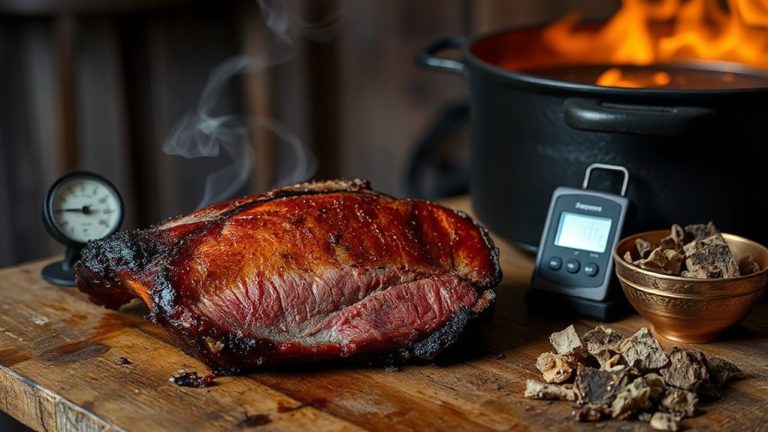
How do you know when your barbecue has hit that sweet spot between raw readiness and overcooked disappointment? It’s all about combining internal temperature readings with reliable visual cues. Don’t guess-use a meat thermometer for accuracy. Visual cues like bark development, meat tenderness, and juice clarity support what the numbers tell you.
| Meat Type | Ideal Internal Temperature (°F) | Visual Cues |
|---|---|---|
| Brisket | 195–205 | Probe slides in easily |
| Pork Shoulder | 190–203 | Pulls apart with little resistance |
| Chicken Thighs | 175–180 | Skin is crisp, no pink juices |
| Ribs | 190–203 | Meat pulls back from bones |
Relying solely on time leads to mistakes. Mastering both internal temperature and visual cues guarantees juicy, flavorful results every cook.
On a final note
You’ve learned to choose wood that complements each meat-hick游戏副本 for bold pork, fruitwoods for poultry. Low and slow heat guarantees tenderness, while proper timing prevents dryness. Balancing smoke exposure avoids bitterness, letting natural flavors shine. Doneness hinges on internal temperature and probe tenderness, not guesswork. Mastering these techniques transforms good barbecue into exceptional, repeatable results every time-elevating your outdoor cooking with precision, patience, and purpose.