The Complete Handbook for Crafting Authentic Texan-Style BBQ Sauces
You’re crafting authentic Texas-style BBQ sauce when it’s lean, bold, and lets brisket shine. Start with tomato, vinegar, garlic, onion, and black pepper-keep it thin, sharp, and balanced. Use smoked paprika over liquid smoke, control heat with cayenne, and add Worcestershire for depth. Regional touches-like molasses in East Texas or vinegar in the west-guide customization. You’ll find the true test is how well it complements the meat’s smoky crust and rendered fat-perfect harmony awaits with a few smart tweaks.
Notable Insights
- Authentic Texas BBQ sauce prioritizes bold, simple flavors that enhance smoky brisket without overpowering it.
- A lean, thin sauce with tomato, vinegar, garlic, onion, and black pepper defines traditional Central Texas style.
- Balance smoke, heat, and tang using minimal liquid smoke, cayenne for warmth, and cider vinegar for brightness.
- Regional variations include East Texas’s sweet-tangy profile, West Texas’s spicy vinegar base, and South Texas’s chili influences.
- Customize by adjusting sweetness, acidity, and spice while simmering in aromatics for depth and harmony.
What Makes Texas-Style BBQ Sauce Authentic
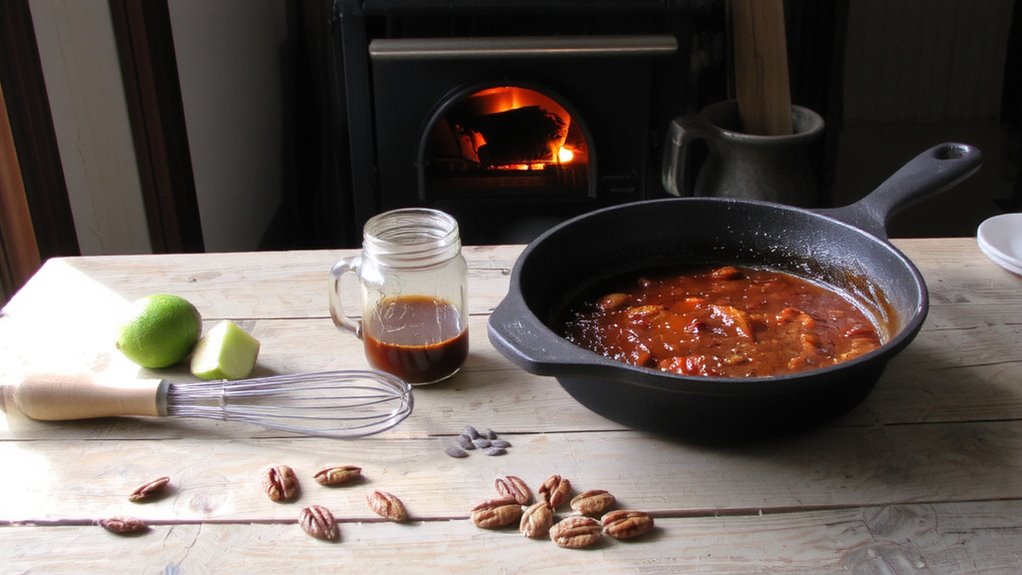
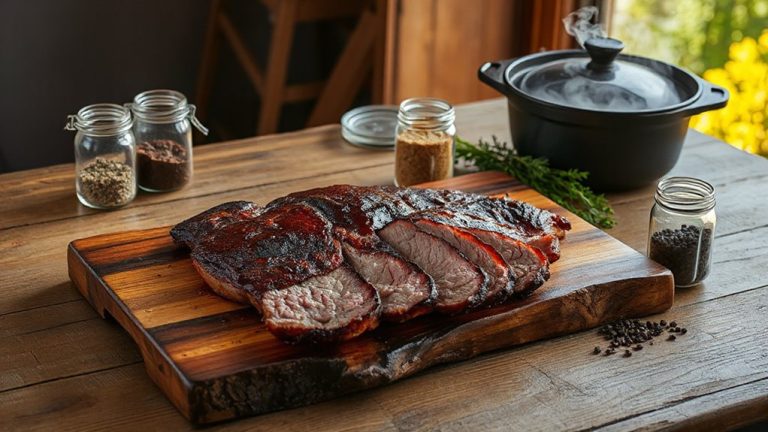
Texas-style barbecue sauce stands apart from its regional cousins by embracing simplicity and bold flavor over sweetness or complexity. You’ll find it’s built to complement, not overwhelm, the star of the plate: beef brisket. Unlike sugary Kansas City or tangy Carolina styles, a true Texas sauce relies on a lean profile-thin in body, sharp in taste, with a spice level dialed to accentuate, not dominate. You’re not masking smoke or char; you’re enhancing the rich, rendered fat and deep bark formed during hours of slow oak or post oak cooking. The best versions let the meat lead while offering a peppery, often tomato-based kick that lingers just long enough. When you taste it right, the sauce doesn’t sit on top-it integrates, adding depth and heat in balance. Authenticity here means restraint, confidence in quality protein, and respect for tradition where flavor isn’t added, it’s revealed.
Core Ingredients in Real Texas BBQ Sauce
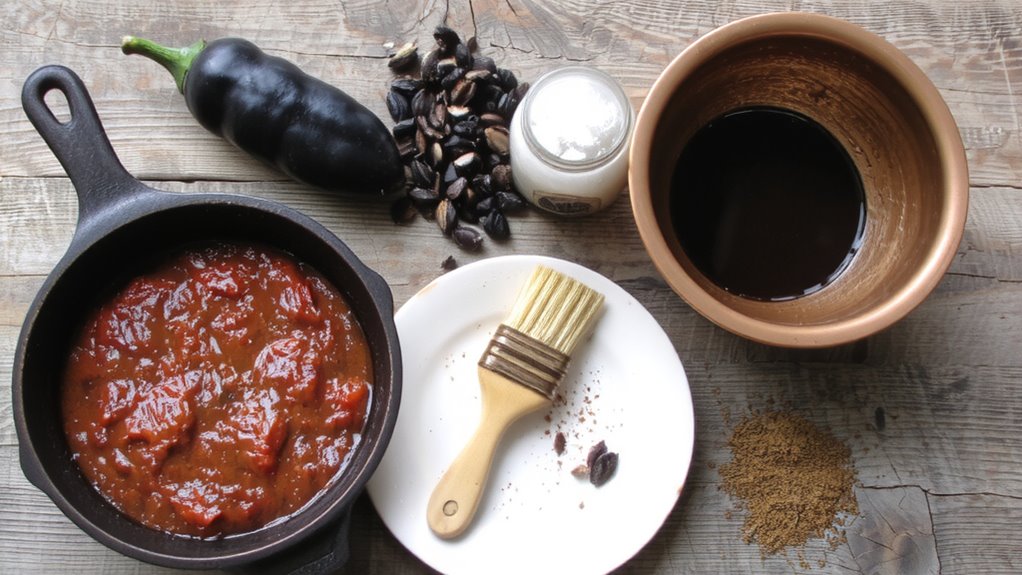
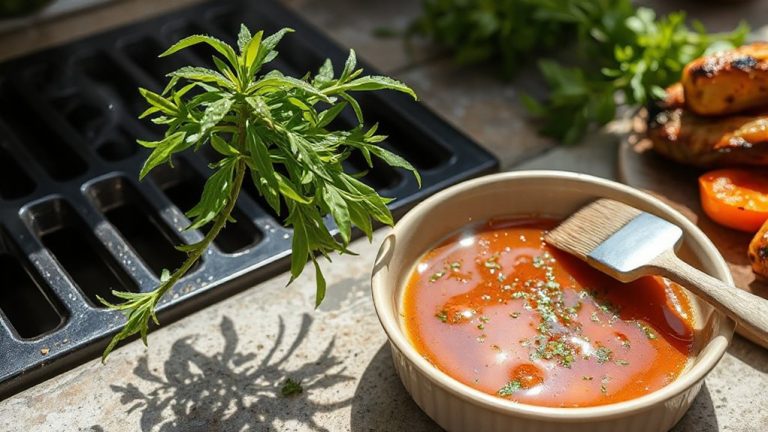
A handful of essential ingredients define what really goes into a proper Texas BBQ sauce, and you won’t need a long list to get it right. Real Texas-style sauce builds on a rich tomato base, not too sweet, with body enough to cling without overwhelming the meat. You’ll want a vinegar kick to cut through the fat-apple cider or white vinegar work best, lending brightness without harshness. Onion, garlic, and black pepper are non-negotiable; they form the aromatic backbone. Worcestershire adds depth, while a touch of brown sugar rounds out sharp edges.
| Ingredient | Purpose |
|---|---|
| Tomato base | Provides body and richness |
| Vinegar kick | Adds tang and balance |
| Garlic | Deepens flavor complexity |
| Black pepper | Delivers subtle heat |
| Worcestershire | Enhances umami depth |
Balance Smoke, Heat, and Tang Like a Texan
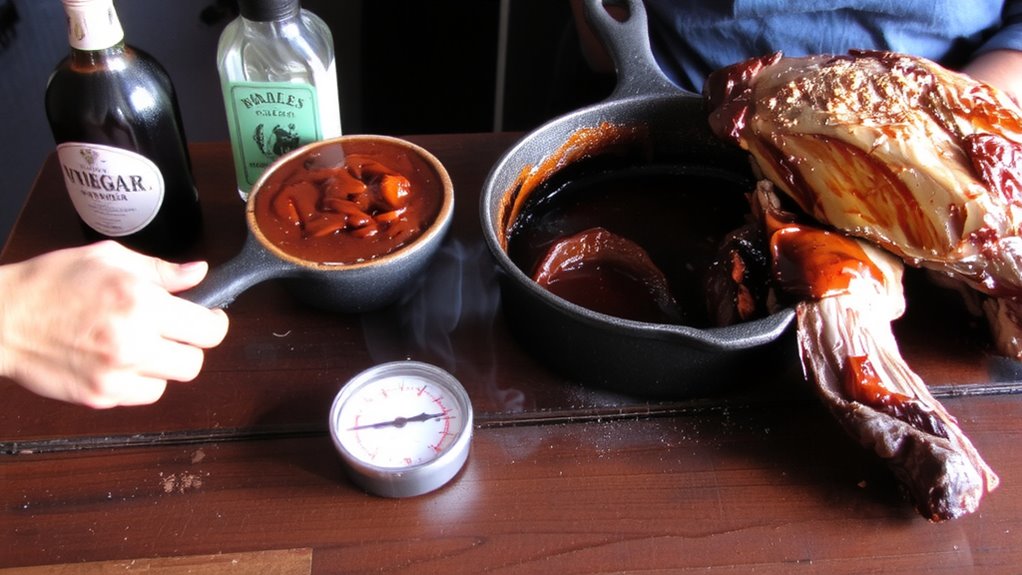
You’ve got the foundation down-tomato, vinegar, garlic, and that umami punch from Worcestershire-but now it’s time to shape the soul of the sauce: the balance of smoke, heat, and tang. Texans prize restraint, so your smoke intensity should whisper, not shout-opt for liquid smoke sparingly or smoked paprika to add depth without overpowering. Too much heat kills nuance; a touch of cayenne or chipotle offers warmth while letting flavor lead. Tang profiles are where personality emerges: cider vinegar brings fruitiness, white vinegar gives sharpness, while lemon zest lifts the whole mix. Aim for harmony-each bite should cycle through smokiness, a slow-building warmth, and a bright finish. This isn’t about boldness for its own sake, but balance achieved through careful tasting and adjustment. Great Texas-style sauce enhances, never masks, the meat.
Customize Your Texas BBQ Sauce
While the base recipe sets the stage, it’s in the tweaking where your sauce becomes truly yours. You’ve got the smoke, heat, and tang balanced-now refine it with smart flavor pairing. Think about how sweetness tempers spice or how a splash of vinegar brightens rich meats. Adjusting ingredients like molasses, chili powder, or apple cider lets you highlight certain notes without overwhelming the whole. Sauce layering isn’t just for plating; it means building depth through gradual additions, tasting as you go. Try simmering in smoked onions or a dash of espresso for complexity. These moves don’t just alter taste-they elevate the whole cook. Personalizing your BBQ sauce isn’t guesswork; it’s deliberate refinement. The best versions emerge from testing, not tradition alone. Your palate guides the process, but technique guarantees consistency. With attention to balance and layering, your sauce won’t just complement meat-it’ll define your style.
Regional BBQ Sauce Styles Across Texas
Texas doesn’t speak with one sauce voice-its barbecue regions each wield distinct styles that reflect local tastes and traditions. In the east, you’ll encounter East Texas sweetness, a molasses-kissed, tomato-based sauce that clings gently to slow-smoked beef brisket, balancing tang and sugar without overpowering the smoke. It’s a style rooted in slow, low cooking, where the meat’s flavor remains central. Head west, and the profile shifts dramatically-West Texas boldness means a thinner, spicier, often vinegar-driven sauce that doesn’t hesitate to punch through charred crusts. Think fire, heat, and minimal sweetness, suited to direct-heat pits and rugged beef cuts. Central Texas takes a middle path, favoring clean pepper and subtle seasoning, while South Texas blends in chili influences. Each style tells a story of geography, fuel, and heritage. Knowing them helps you choose-or craft-a sauce that honors tradition while matching your smoker’s output.
When to Apply BBQ Sauce for Best Flavor
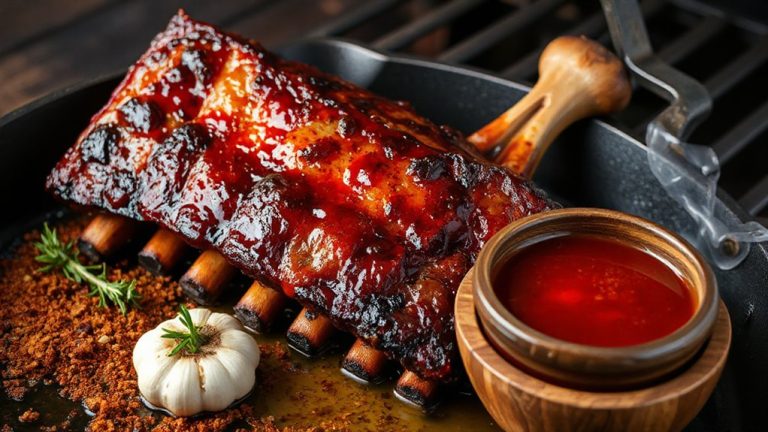
Though sauce can elevate a brisket or glaze ribs with a glossy finish, timing its application matters just as much as the recipe itself. You should wait until the meat’s nearly done-typically in the last 15 to 30 minutes of cooking-to apply sauce. This prevents burning, especially with sugar-heavy Texas-style sauces. Glaze timing is critical: too early and it scorches; too late and it won’t adhere or caramelize. Thick sauces need even more care-sauce thickness affects how well it sticks and how fast it browns. A thicker sauce may need thinning slightly or applied in layers to avoid a gummy texture. For ribs, a double glaze-once near the end, then again just before pulling-ensures depth without sogginess. With brisket, a light post-smoke mop or drizzle preserves bark crispness. Proper technique balances flavor, appearance, and texture, letting smoke and meat shine through.
5 Mistakes That Ruin Homemade Texas BBQ Sauce
If you’re aiming for an authentic Texan-style BBQ sauce, oversweetening is the misstep that’ll dull your sauce’s character faster than anything else-real pitmasters know Texas ’cue isn’t about sugar-coated glaze, but bold, tangy depth built on vinegar, black pepper, and slow-reduced tomato. You risk flattening flavor if you overcook sauce, breaking down volatile acids and mellowing sharp notes that balance richness. Simmer gently, never boil hard. And don’t neglect acidity-underseasoned sauce tastes lifeless. Vinegar or lemon juice isn’t optional; it cuts fat and lifts spice, keeping the profile bright. Skimp on heat control, and you’ll scorch sugars, introducing bitterness. Use low, steady warmth to meld ingredients without degrading texture. Thickening with too much starch masks authenticity-let reduction do the work. Every batch tests your judgment: adjust slowly, taste often, and respect tradition. Balance, not sweetness, defines Texas. For those monitoring their intake, choosing a low-sodium BBQ sauce can still align with traditional flavor principles when made at home with mindful seasoning.
On a final note
You’ve got the tools to craft authentic Texas-style BBQ sauce, from balancing smoke and tang to avoiding common pitfalls. True to tradition, less is more-rely on quality ingredients, not excess sugar or vinegar. When applied at the right moment, your sauce enhances, not masks, the meat’s flavor. Mastering regional variations and technique guarantees results that respect the craft. This isn’t just cooking-it’s methodical, deliberate, and deeply rooted in practice. Your effort shows in every well-seasoned bite.