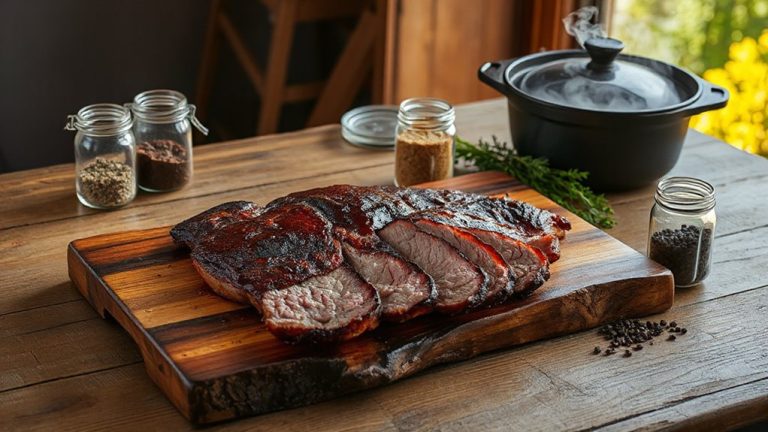
Unleashing the Power of Essential Oils in Enhancing Flavor Profiles for Wood-Fired Grills and Smokers
You boost wood-fired flavor by pairing essential oils with complementary smoking woods, adding aromatic layers that go beyond smoke alone. Just a few drops, diluted in a carrier oil or marinade, can intensify taste without risking flare-ups or moisture buildup. Match robust oils like rosemary with hickory for beef, or citrus notes with cherry for poultry. Avoid overheating delicate oils-apply late in cooking. Get it right, and your grill’s complexity rises to a whole new level.
Notable Insights
- Essential oils enhance wood-fired flavor complexity by adding aromatic depth without introducing moisture.
- Always dilute essential oils in carrier oils or marinades to prevent flare-ups and ensure even flavor distribution.
- Pair specific oils with complementary woods, like rosemary with hickory for beef or lemon with cherry for poultry.
- Apply essential oils during the last 10–15 minutes of cooking to preserve delicate flavor compounds.
- Avoid overheating low smoke point oils like citrus or lavender to prevent bitterness and maintain aroma integrity.
Why Essential Oils Boost Wood-Fired Flavor
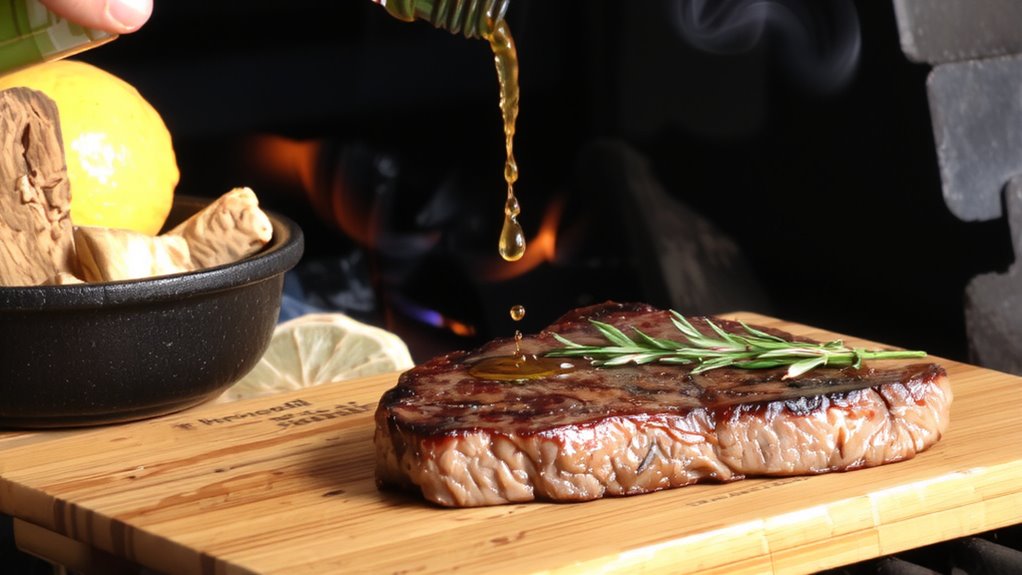
While you might think the smoky depth of a wood-fired grill comes solely from the type of wood you burn, introducing essential oils can actually enhance and refine those flavors in surprising ways. You’re not just adding smoke-you’re layering complexity. A few drops of high-quality essential oil, like rosemary or citrus, impart distinct aroma enhancement that intensifies the sensory experience long before the first bite. These concentrated plant extracts interact with heat and smoke to deepen the profile, amplifying the natural character of your meat or vegetables. Unlike liquid marinades or dry rubs, essential oils deliver precise flavor depth without moisture, ensuring searing stays effective and textures remain intact. When used thoughtfully, they complement the wood’s natural notes rather than overpower them. This isn’t about masking flavor-it’s about elevating the essence of fire-cooked food through controlled, aromatic precision. The result? A richer, more nuanced taste that defines exceptional outdoor cooking.
Use Essential Oils Safely on the Grill
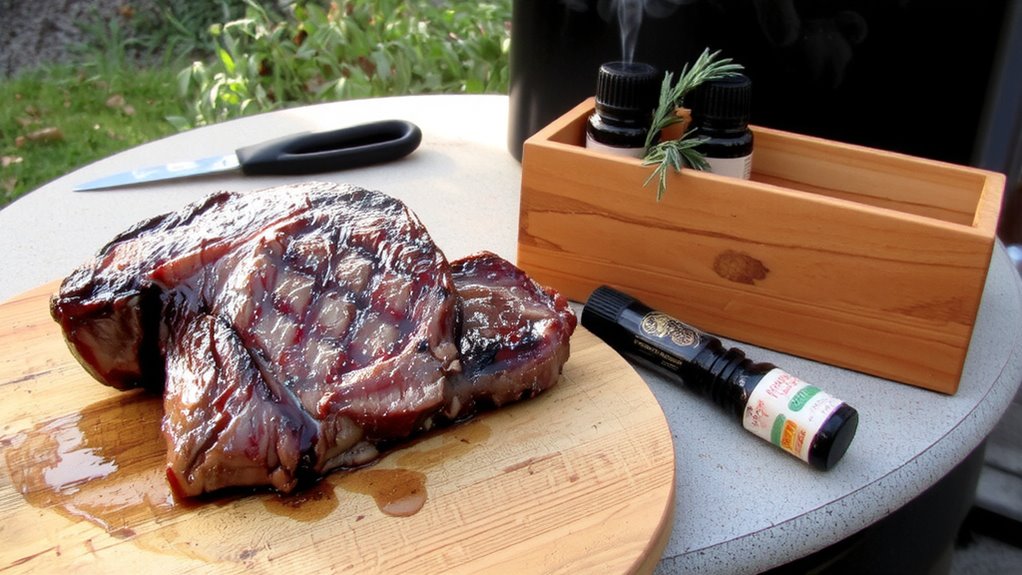
You can access bold new flavors by using essential oils on your grill, but doing it safely is critical. Essential oils are highly concentrated and flammable, so grill safety must be a top priority. Never apply them directly to open flames or hot grates-this can cause flare-ups and compromise control. Instead, dilute a few drops in a carrier oil or incorporate them into marinades and mists. Pay close attention to oil temperature; most essential oils have low smoke points, and excessive heat degrades their flavor compounds while increasing fire risk. Use them during the final 10–15 minutes of cooking when temperatures are more moderate. Always keep a spray bottle or fire extinguisher nearby. When applied thoughtfully, essential oils enhance aroma and taste without endangering your cookout. Smart use guarantees performance, flavor, and safety go hand in hand every time you fire up the grill.
Match Oils to Meats and Wood Types
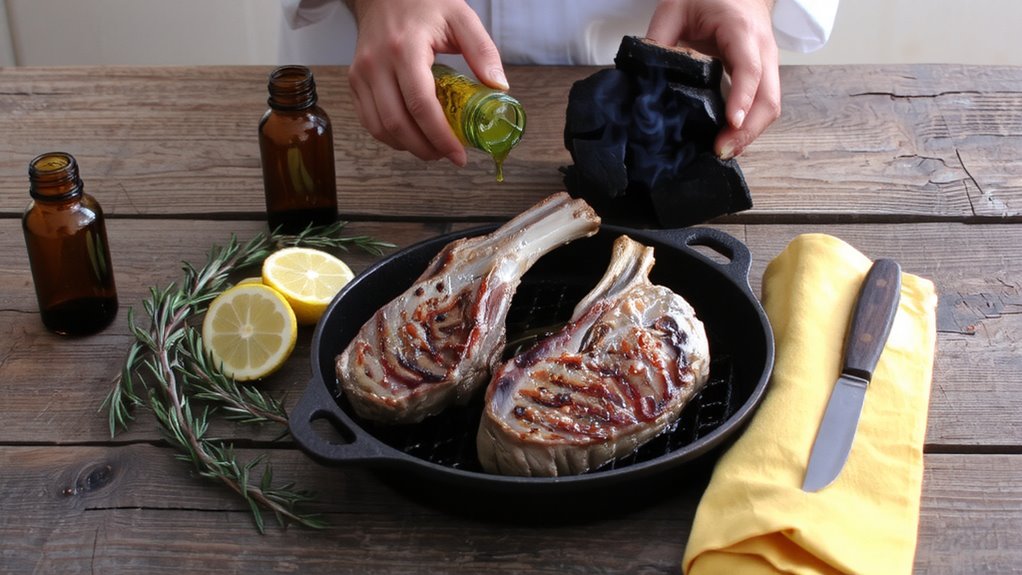
Now that you’re using essential oils safely on the grill, it’s time to refine your approach by pairing them with the right meats and wood types. Successful flavor pairing hinges on matching the oil’s profile and heat tolerance with the cooking method and ingredients. Stronger oils like rosemary or thyme withstand high heat from wood such as hickory or oak, making them ideal for beef or game. Delicate oils like citrus or lavender lose potency under prolonged heat, so pair them with lighter woods like apple or cherry and use with poultry or fish. Below is a guide to optimize your results:
| Meat Type | Essential Oil + Wood Pairing |
|---|---|
| Beef | Rosemary + Hickory |
| Pork | Thyme + Apple |
| Chicken | Lemon + Cherry |
| Lamb | Peppermint + Mesquite |
| Fish | Dill + Alder |
Choose wisely to balance flavor pairing and heat tolerance.
Top 5 Essential Oil Combos for BBQ
Five standout essential oil and wood pairings consistently deliver bold, layered flavors on the grill, turning ordinary barbecues into aromatic experiences. You’ll love pairing citrus basil with fruitwoods like apple or cherry-it brightens poultry and veggies with a zesty, herbal lift that’s never overpowering. For red meats, rosemary garlic melds perfectly with hickory or oak, adding a savory depth that enhances smokiness without masking natural juices. Another winner is combining lemon eucalyptus with mesquite, offering a crisp, clean finish on steaks. Peppermint thyme works surprisingly well with pecan wood, lending a subtle coolness to pork shoulders. Finally, blend lavender pepper with cedar for a floral-heat balance ideal for salmon. These combos aren’t just creative-they’re proven to intensify aroma and taste when used sparingly on meat or in rubs. You’re not just grilling; you’re layering nuanced profiles with every sear.
Avoid These Essential Oil Grilling Mistakes
A common misstep when using essential oils on the grill is applying them too liberally, since their concentrated nature means a little goes a long way-overuse can quickly overpower food and even create bitter or medicinal notes when exposed to high heat. You’re likely making things worse if you skip proper dilution, as incorrect dilution ratios lead to uneven flavor and potential waste. Always mix with a carrier oil or incorporate into marinades to disperse evenly. Also, you risk degrading delicate flavor compounds by overheating sensitive oils like citrus or lavender-add them toward the end of cooking or during resting. High smoke points matter: avoid using low-thermal-stability oils directly over flames. Choose hardier options like rosemary or thyme for searing temperatures. With mindful application and informed technique, essential oils can elevate your grilling without compromising taste or safety.
On a final note
You’ve seen how essential oils can elevate wood-fired cooking when used properly. They intensify aroma and taste, complementing smoke rather than overpowering it. Always use food-grade oils sparingly, pairing them thoughtfully with meat and wood types. Avoid synthetic oils or overuse-they’ll ruin flavor and may pose health risks. With careful application, essential oils become a precision tool in your grilling arsenal, enhancing complexity without compromising authenticity. Safety and balance are key.