How to Control Heat Zones in an Open Pit Fire for Even Cooking
You can control heat zones in an open pit fire by setting up two or three distinct areas-hot, medium, and cool-using a log layout that creates natural radiant heat gradients. Keep your pit 6 to 8 inches deep and use a crescent stack for better airflow. Adjust heat by raking coals for even distribution or adding fresh fuel to dying zones. Open vents or lift grates slightly to boost airflow. Move food between zones to sear, cook, and rest it without flare-ups. With steady coal rotation and smart positioning, you maintain consistent control-and fine-tune results through small, deliberate shifts over time.
Notable Insights
- Create two or three heat zones by stacking coals on one side, leaving space for indirect cooking.
- Use a 6- to 8-inch deep pit with a rectangular or oval shape for better heat control and airflow.
- Adjust airflow with vents and coal density-tight clusters for high heat, sparse layers for low heat.
- Move food between zones to sear, cook, and rest evenly without burning or undercooking.
- Replenish and reposition coals during cooking to maintain consistent heat as flames diminish.
Set Up a Two-Zone or Three-Zone Fire for Control
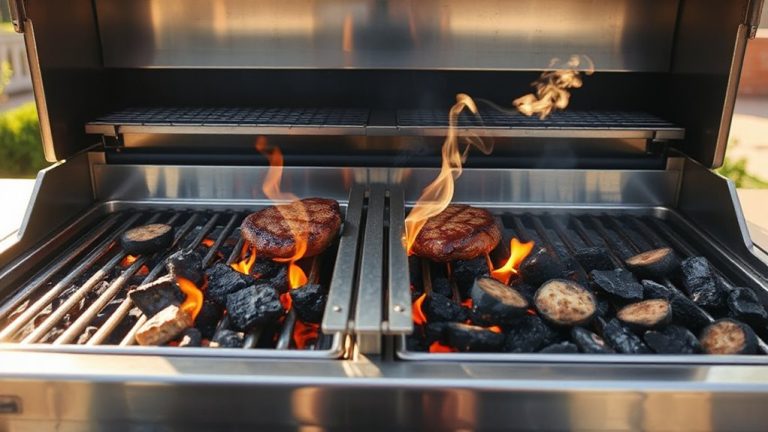
Control starts with structure, and when you’re cooking over an open pit, that means dividing your fire into distinct heat zones. You’ll want either a two-zone or three-zone setup-this gives you control for both searing and slow cooking. For a two-zone fire, pile coals on one side; the other remains clear for indirect heat. Three zones add a middle ground: hot, medium, and cool areas, letting you adjust on the fly. Fire placement is critical-shifting fuel even six inches can alter cooking dynamics. You’ll rely on steady fuel rotation, adding fresh logs or coals to the hot end while spent ones migrate outward. This maintains consistent temperatures without flare-ups. Skilled cooks use this balance to manage doneness, avoiding charred outsides and raw insides. It’s not just about heat-it’s about strategy, timing, and understanding how airflow and placement shape results. Master this, and you master open-pit cooking.
Pick a Pit Layout That Maximizes Heat Zones
Efficiency begins with design, and your pit’s layout makes all the difference when it comes to exploiting heat zones effectively. A thoughtful fire shape-like a crescent or offset stack-creates distinct hot and warm areas, letting you shift food as needed without fuss. You’re not just building a fire; you’re engineering cooking real estate. Pit depth matters too: 6 to 8 inches is ideal, containing heat while allowing proper airflow. Too shallow, and heat escapes; too deep, and control thins. Rectangular or oval pits offer more zone flexibility than round ones, especially when searing edges contrast with gentle center warmth. Your pit isn’t just a hole-it’s a precision tool. Choose a layout that lets you leverage gravity, radiant heat, and proximity, pairing fire shape with measured pit depth to create zones that respond predictably during long cooks. For even greater versatility, consider incorporating a bushcraft campfire style that naturally enhances heat zoning through log arrangement and airflow management.
Control Fire Heat With Airflow and Coal Placement
While you can’t change the weather, you *can* fine-tune your fire’s behavior by managing airflow and where you place your coals-two levers that transform unpredictable flames into steady, usable A well-designed open fire grill enhances heat control by featuring adjustable vents and sturdy grates that make airflow and coal placement easier to manage. Position coals in dense clusters for high-heat zones or spread them thin for gentler warmth. Uneven coal distribution creates hot spots, so rake them carefully. Lift grates slightly to increase airflow or close vents if heat builds too fast. Mastering these small adjustments means you’re not just reacting to the fire-you’re directing it, shaping both temperature and taste with precision that raw flame alone could never offer.
Move Food Between Zones for Perfect Doneness
You already know how to shape your fire’s behavior by adjusting airflow and coal placement, but the real payoff comes when you start moving food across the different heat zones you’ve created. Mastering food rotation lets you achieve ideal doneness without guesswork. Temperature balancing isn’t just about control-it’s about timing and awareness. Move steaks from searing hot to warm zones to rest and finish gently. Shift veggies to the edges to char slowly without burning.
| Sensation | Result |
|---|---|
| Sear marks, juicy center | Perfect medium-rare |
| Charred edges, tender core | Ideal roasted pepper |
| Crisp skin, fully cooked | Flawless chicken thigh |
| Smoky aroma, even color | Well-balanced flavor |
| No flare-ups, steady cook | Confident control |
This method turns raw ingredients into intentional meals.
Adjust Coals as You Cook for Consistent Results
As the fire burns, its intensity shifts, so leaving the coals exactly where they started will likely lead to uneven cooking or unexpected hot spots. You’ll need to actively manage coal distribution to maintain control. Push coals closer together for higher heat under searing zones, or spread them apart to cool things down-this is key for temperature balancing. As flames die down, rake fresher coals into weaker areas to revive heat without restarting the fire. Watch for dimming glow or sluggish cooking; these are signs it’s time to adjust. Proper coal movement guarantees consistent results, especially during long cooks like roasting or indirect grilling. Unlike static setups, dynamic coal management responds to real-time changes in airflow and fuel burn. It’s not just about starting strong-it’s about sustaining precision. With practice, you’ll intuitively shift coals to match each dish’s needs, making temperature balancing second nature.
Use Long Tongs and Grates for Safe Fire Cooking
Because open pit fires demand constant attention and adjustment, having the right tools is nonnegotiable-especially when it comes to maintaining safety without sacrificing control. You need long-handled tongs and sturdy grates to manage food safely over fluctuating heat zones. Long tongs give you precision when flipping or relocating items, keeping your hands well away from flames-this is foundational fire safety. Grates should be made of durable, high-heat materials like seasoned steel or cast iron, spaced to allow airflow while preventing food from falling through. Regular tool maintenance guarantees reliability: inspect for warping, clean off grease buildup, and store in dry conditions to prevent rust. A warped grate or weak tong joint can fail under pressure, risking burns or uneven cooking. Quality tools, properly maintained, don’t just last longer-they perform better, giving you consistent results and greater confidence with every cook.
On a final note
You’ve set your zones, managed airflow, and shifted food for even doneness-now you’re cooking with control. A well-structured pit, whether two or three-zone, gives you precise heat management, essential for searing, roasting, or slow-smoking. Adjusting coal placement and using proper tools guarantees consistency and safety. Mastering these techniques transforms open-pit cooking from guesswork into a reliable, repeatable process that delivers better flavor and texture every time.