How to Grill Burgers to Your Exact Preference Using Temperature Zones
Set up a two-zone grill with direct and indirect heat zones for precise control. Use 80/20 beef for juiciness and sear burgers over 450°F to build a flavorful crust without pressing. Move them to indirect heat to finish evenly, reducing flare-ups while enhancing smoke flavor. Check doneness with a fast thermometer and rest before serving-this method consistently delivers your preferred level of cook, and there’s more to mastering it with the right techniques.
Notable Insights
- Set up a two-zone grill with direct heat for searing and indirect heat for controlled finishing.
- Use 80/20 beef with good marbling to retain juiciness when transitioning between heat zones.
- Sear burgers over 450°F for 2–3 minutes per side without pressing to build a flavorful crust.
- Move burgers to indirect heat to reach desired doneness without burning the exterior.
- Check internal temperature with a fast-reading thermometer and rest for 5–10 minutes before serving.
Set Up a Two-Zone Grill
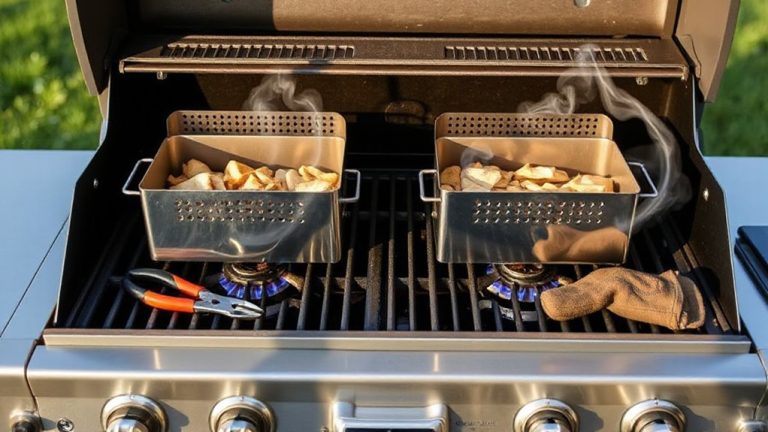
While you can technically cook burgers over a single fire, setting up a two-zone grill gives you far more control and considerably better results. You’ll sear patties over direct heat, then move them to the indirect side to finish cooking without burning. This method improves temperature precision, especially with thicker burgers. For consistent performance, proper grill maintenance matters-clean grates prevent sticking and flare-ups, while checking burners or airflow keeps heat stable. Weather considerations also play a role; wind can disrupt airflow on gas grills, and cold temperatures may require longer preheating. A well-maintained two-zone setup adapts better under these conditions. You’re not just managing fire-you’re managing cook quality. Plus, having a cooler zone lets you pause cooking if guests aren’t ready. It’s a practical system backed by performance, not just preference, making it a reliable standard in serious outdoor cooking.
Pick the Best Beef for Your Burger Doneness
You’ve got your two-zone fire dialed in-now it’s time to match that precision with the right beef. The cut and composition of your meat directly affect doneness control and final texture. For consistent results across heat zones, choose ground beef with a balanced fat ratio-80/20 is ideal. That 20% fat content preserves moisture during indirect cooking, preventing dryness even when aiming for medium or medium-well. Marbling content matters too; finely dispersed fat within the grind safeguards flavor and juiciness throughout, especially when shifting from sear to finish. Lean blends might seem healthier, but they lack the richness and thermal resilience needed for zone grilling. Opt for freshly ground chuck or a mix with brisket or short rib-these cuts naturally offer high marbling content and the fat ratio that supports both structure and taste. Your grill setup demands beef that can keep up.
Sear for a Juicy, Crispy Crust
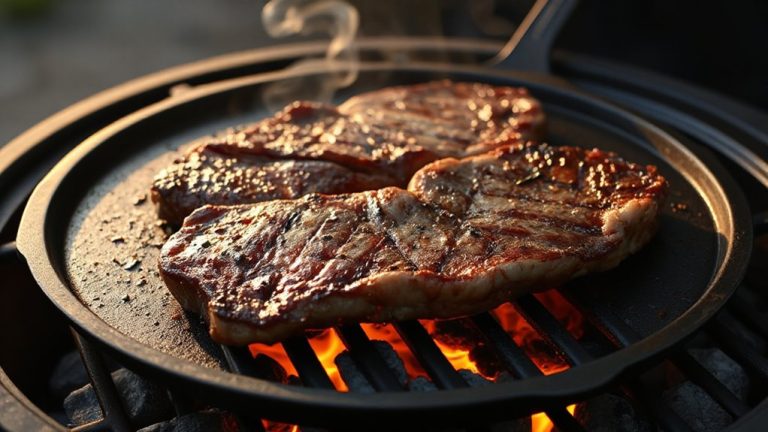
A perfect sear starts with a hot griddle or grill grate-around 450°F is ideal-where the surface delivers immediate browning without scorching. You want direct contact and high heat to kickstart the Maillard reaction, that chemical process where amino acids and sugars transform, giving burgers their rich, savory depth. This isn’t just color-it’s flavor foundation. Pressing down wastes juices and hampers crust formation, so resist the urge. Let the meat sit, undisturbed, for 2–3 minutes per side. A well-developed crust should feel firm and release easily when ready to flip. Cast iron and thick grates retain heat better, promoting consistent searing. Success hinges on temperature control: too low and you’ll steam the patty; too high and you’ll char before flavor develops. Proper searing locks in taste while setting the stage for even interior cooking-just don’t mistake char for doneness.
Finish Over Indirect Heat
Once the sear is locked in, moving your burger to a zone with no direct flame lets it cook through without burning the exterior, giving you precise control over doneness. This indirect zone promotes even heat circulation and encourages smoke infusion, enhancing flavor development with every minute. Unlike direct grilling, where flare-ups risk charring, indirect heat gently brings the burger to your preferred internal state while preserving juiciness and building complexity.
| Heat Zone | Purpose |
|---|---|
| Direct (sear) | Crust formation, color |
| Indirect (finish) | Even cook, smoke infusion |
| Buffer (rest) | Carryover heat stabilization |
Using indirect heat isn’t just practical-it’s essential for layered flavor development. You’ll notice deeper nuances, especially when hardwood pellets or chunks are used, allowing smoke infusion to complement the Maillard reaction from your initial sear. This balance defines well-executed barbecue.
Check Temp for Perfect Doneness
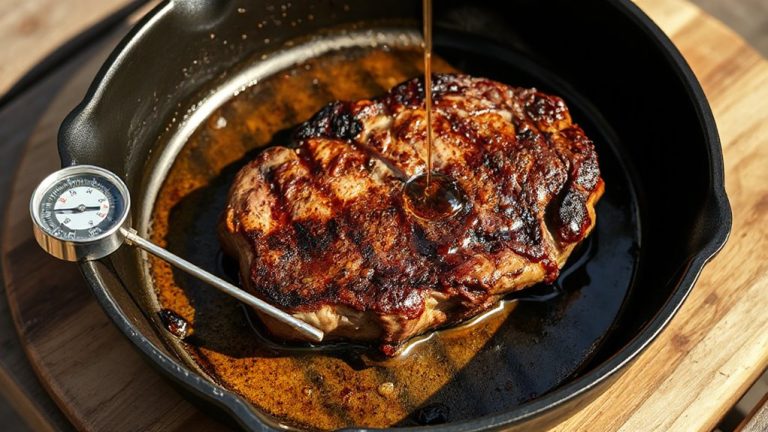
Temperature is the most reliable indicator of doneness, and using a fast-reading meat thermometer takes the guesswork out of grilling burgers to perfection. You’ll want to check the internal temperature at the thickest part of the patty, avoiding the bone or grill grate, to get an accurate reading. For rare, aim for 120–125°F; medium-rare hits 130–135°F; medium stays around 135–145°F; and well-done reaches 160°F or higher. Knowing your desired doneness level helps you deliver consistent results every time. Unlike color or touch, which can be misleading, internal temperature gives you objective, safe data. A good thermometer pays for itself in precision, preventing undercooking or drying out your burgers. With temperature zones and accurate readings, you’re not just grilling-you’re engineering each burger to meet your exact standard. It’s practical mastery over heat, one perfect patty at a time. For best results, choose a fast-reading meat thermometer that delivers accurate readings in under 10 seconds.
Let Burgers Rest Before Serving
Now that you’ve nailed the internal temperature and pulled your burgers off the grill at just the right moment, don’t rush to serve them straight away-let them rest. Cover them loosely with foil and wait five to ten minutes. This pause allows the juices, which have been driven to the center by intense heat, to redistribute evenly. If you slice or bite too soon, those flavorful juices spill out, hurting flavor retention and leaving the burger dry. Letting them rest also stabilizes the burger texture, making each bite more consistent-tender, juicy, and evenly warm throughout. Even with perfect temperature zones and a great sear, skipping this step undermines your work. Think of resting not as downtime, but as an essential part of the cooking process. It’s a simple move, but it elevates both taste and quality, delivering results that reflect your effort and precision.
Serve With Your Favorite Toppings
A well-grilled burger, cooked to precision using temperature zones and allowed to rest, deserves more than just a haphazard stack of toppings-it calls for thoughtful pairing that enhances both flavor and texture. Your serving suggestions should reflect balance: creamy, crunchy, tangy, and fresh elements all have a role. Consider these topping combinations to match your burger’s doneness and char profile.
| Doneness | Topping Combination | Serving Suggestion |
|---|---|---|
| Rare | Blue cheese, arugula, honey | Use sweet contrast to offset richness |
| Medium | Cheddar, pickles, onion | Classic pairing for balanced bite |
| Medium-well | Pepper jack, roasted pepper, spinach | Add moisture and spice |
| Well-done | BBQ sauce, crispy onion, bacon | Compensate for dryness with bold flavors |
Choose wisely-each layer should complement, not overwhelm, the smoky depth earned through proper grilling technique.
On a final note
You’ve mastered the two-zone setup and picked quality beef, so now you’re set. Searing over direct heat locks in juices, while indirect heat guarantees even cooking without drying out the meat. Using a thermometer takes the guesswork out-medium-rare at 130–135°F, well-done at 160°F. Letting burgers rest preserves moisture. With this method, outdoor grilling becomes precise, reliable, and consistently delicious, turning simple patties into expert-level results every time.