Matching Strong Mesquite Smoke With Robust Cuts Like Tri-Tip and Short Ribs
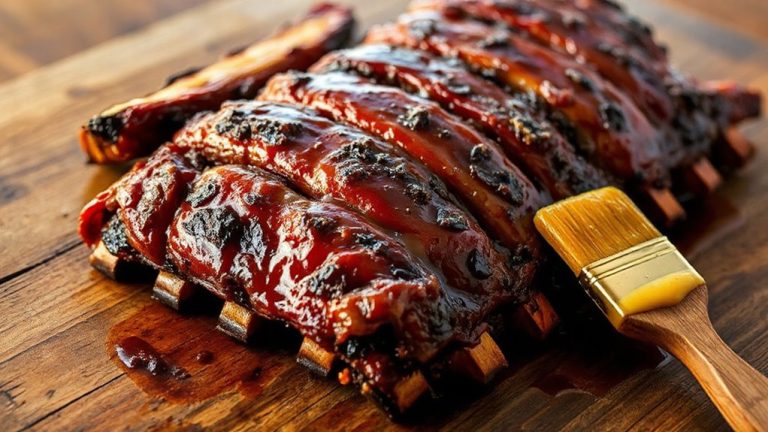
You’ll want to pick robust cuts like tri-tip and short ribs when using strong mesquite smoke-they handle the intense heat and bold flavor better than leaner meats. Their marbling and connective tissue soften over low, slow cooking, balancing mesquite’s aggressive burn. Trim excess fat and silver skin for even cooking, then season simply with salt and coarse pepper to let the meat shine. Limit smoke time to 30–45 minutes with thin, blue smoke to avoid bitterness. Rest the meat briefly, then slice against the grain for the most tender results-there’s more to get right with timing and wood blend.
Notable Insights
- Choose robust, well-marbled cuts like tri-tip and short ribs to withstand intense mesquite smoke.
- Trim silver skin and excess hard fat while leaving a thin fat layer for moisture and flavor.
- Use simple seasoning of kosher salt and coarse pepper to avoid masking mesquite’s bold character.
- Limit smoke exposure to 30–45 minutes with thin blue smoke to prevent bitterness.
- Rest meat before slicing against the grain to maximize juiciness and tenderness.
Pick Beef Cuts That Handle Mesquite Smoke
Toughness isn’t a flaw-it’s a cue. It tells you the cut can stand up to mesquite’s aggressive burn. When it comes to beef selection, lean isn’t always better. Tri-tip and short ribs thrive under heavy smoke because their connective tissue softens with slow heat, absorbing flavor without turning harsh. Mesquite burns hot and fast, so pairing it with dense, well-marbled beef guarantees a proper smoke balance. You’ll want cuts with enough fat and structure to filter the intensity, not fight it. Flank or sirloin wouldn’t last-they’re too lean, too delicate. But tri-tip’s grain and short ribs’ collagen? They welcome the punch. Your goal isn’t to mask the meat but to deepen it. Choose wisely: robust cuts let mesquite enhance rather than overpower. That’s how you get flavor with backbone-beef selection shaping the outcome, smoke balance making it sing. For best results, consider the best BBQ beef cuts based on marbling, texture, and smoke compatibility.
Trim and Season Tri-Tip and Short Ribs Right
While mesquite smoke brings bold flavor, how you trim and season your tri-tip and short ribs determines whether that flavor lands with precision or overwhelm. You’ve got to respect the marbling distribution-those thin streaks of fat running through tri-tip help retain moisture and carry smoke. Leave a thin layer on; over-trimming kills juiciness. For short ribs, the fat cap matters more: a quarter-inch thickness guarantees steady fat rendering without drowning the meat in grease. Trim hard nodules though-they won’t break down and ruin texture. Shape matters, too. Square off ribs for even cook, and slice silver skin from tri-tip so it doesn’t curl. Proper prep lets heat and smoke move uniformly, improving bark development. You’re not just cleaning meat-you’re engineering it for performance. Get it right, and every bite delivers rich, smoky depth balanced by tender, well-rendered fat. A sharp brisket knife ensures clean cuts without tearing the meat during trimming.
Use Salt and Pepper to Complement Strong Smoke
You don’t need a cabinet full of spices to let mesquite smoke shine-just salt and pepper, used right. These two basics anchor the flavor balance when dealing with bold mesquite smoke and rich meats like tri-tip or short ribs. Proper seasoning enhances, not masks, the natural taste of the meat and the smoky depth. Avoid smoked spices here-they compete and muddy the profile. Instead, use coarse black pepper for bite and kosher salt for even distribution and better control. Selecting the best roast beef rubs can make a significant difference when preparing robust cuts like tri-tip and short ribs.
| Seasoning | Application | Effect |
|---|---|---|
| Coarse Pepper | Generous crust | Adds warmth, not heat |
| Kosher Salt | Even coat | Enhances meat’s natural flavor |
| Smoked Spices | Avoid | Overpowers mesquite nuance |
| Salt-Pepper Ratio | 1:1 to 2:1 | Maintains ideal flavor balance |
This simplicity highlights quality meat and clean smoke.
Control Smoke Time to Avoid Bitterness
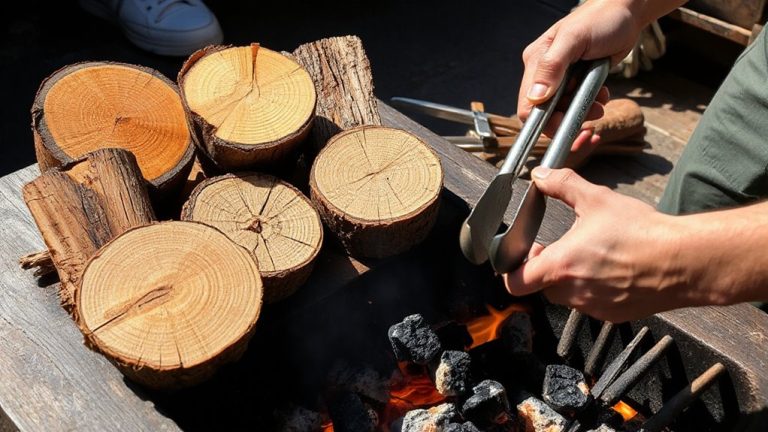
Because mesquite burns hot and fast, you’ll need to monitor smoke exposure closely to prevent a bitter edge from taking over your meat. Your wood selection plays a critical role-pure mesquite delivers bold flavor but can easily overwhelm if used too long. Many pitmasters blend it with milder woods like oak to balance smoke intensity and avoid harshness. For tri-tip and short ribs, aim for 30–45 minutes of clean, thin blue smoke; beyond that, the flavor risk outweighs the reward. Thick, white smoke increases bitterness fast, so keep airflow steady and avoid smothering the fire. You’ll notice bitter notes start creeping in when smoke time exceeds the meat’s ability to absorb flavor constructively. Controlling duration isn’t just about timing-it’s about watching smoke quality, managing burn rate, and adjusting based on how the wood behaves. Smart management means bold flavor without the bite.
Rest Meat to Lock in Juicy Flavor
Once the tri-tip comes off the grate or the short ribs lift from the smoker, letting them rest isn’t just a suggestion-it’s the final, essential phase in locking in juiciness and ensuring each slice or pull delivers maximum flavor. Resting allows the meat texture to stabilize and juices to redistribute, vastly improving flavor retention. Cutting too soon releases those precious liquids, leaving you with drier, less satisfying results. Cover loosely with foil and let it sit-this brief pause makes all the difference.
| Cut | Rest Time | Internal Temp Drop |
|---|---|---|
| Tri-Tip | 10–15 min | 5–10°F |
| Short Ribs | 15–20 min | 10–15°F |
| Brisket | 30–45 min | 15–20°F |
| Pork Shoulder | 20–30 min | 10–15°F |
| Ribeye | 5–10 min | 5°F |
Patience here refines both meat texture and flavor retention-skip it at your meal’s peril.
Slice Against the Grain for Tenderness
After the meat’s had its rest and the internal temperature has settled, attention shifts to how you cut it-because even perfectly smoked tri-tip or fall-off-the-bone short ribs can turn tough with a wrong slicing angle. You’ve got to identify the grain direction first; it’s the visible line pattern formed by muscle fibers. For tri-tip, the grain typically runs radially from the point to the base, so adjust your slicing technique accordingly. Cutting across it, not with it, shortens those tough fibers, making each bite noticeably more tender. With short ribs, where connective tissue breaks down during slow cooking, slicing against the grain still enhances texture, especially on the edges. This small step has a big payoff-your slicing technique can elevate or undermine hours of careful smoking. Master it, and you’ll serve meat that’s as tender as it is flavorful.
On a final note
You’ve picked robust cuts like tri-tip and short ribs because they stand up to mesquite’s bold smoke. You trimmed excess fat, applied a simple salt-and-pepper rub, and smoked them carefully to avoid bitterness. By controlling heat and smoke time, you preserved flavor without overpowering the meat. Resting and slicing against the grain maximized tenderness. These steps deliver juicy, flavorful barbecue that showcases mesquite’s strength without sacrificing balance-a reliable method for serious outdoor cooks.