How to Smoke Vegetables for Bold, Earthy Flavors
You can smoke vegetables for bold, earthy flavors using just a stovetop setup with a pot and tight lid. Choose firm veggies like eggplant, peppers, or carrots, and use fruitwood chips for a sweet, clean smoke. Keep temps between 225°F and 250°F, oil the vegetables, and avoid over-smoking to prevent bitterness. This method delivers consistent, restaurant-quality results at home-there’s more to mastering the technique than just heat and time.
Notable Insights
- Use fruitwoods like apple or cherry for a mild, sweet smoke that enhances vegetables without overpowering.
- Smoke firm vegetables such as eggplant, bell peppers, and portobello mushrooms for best texture and flavor absorption.
- Prep vegetables with an oil and acid marinade to retain moisture and add depth during smoking.
- Maintain a low, steady temperature between 225°F and 250°F to develop bold, earthy flavors without drying.
- Avoid over-smoking by using small amounts of pre-soaked wood chips to prevent bitterness.
How to Smoke Vegetables: No Smoker Needed
Ever wonder how to achieve that rich, smoky flavor in vegetables without a dedicated smoker? You can actually pull it off indoors using reliable indoor smoking methods. A stovetop smoke setup is one of the most accessible and effective options, especially when outdoor space or equipment is limited. All you need is a large pot with a tight-fitting lid, wood chips, and a rack to elevate the vegetables above the heat source. Heat the wood chips until they smolder, then trap the smoke under the lid to infuse the veggies. This method delivers surprisingly deep flavor, though temperature control demands attention. Compared to traditional BBQ, it lacks the slow-cook depth but excels in convenience and consistency. With practice, your stovetop smoke setup becomes a dependable tool-compact, efficient, and perfect for smaller batches where precision matters more than scale. For best results, consider using a dedicated best stovetop smoker that enhances smoke circulation and temperature stability.
Best Vegetables for Smoking (And Which to Avoid)
You’ll get the best results when you choose vegetables that can hold their structure and absorb smoke without turning to mush. Firm options like eggplant, zucchini, bell peppers, and portobello mushrooms excel, developing rich, savory notes with a moderate smoking duration of 30 to 60 minutes. Root vegetables-carrots, beets, and potatoes-also handle smoke well, their natural sweetness deepening beautifully. For ideal flavor pairing, try smoking onions to add depth to salsas or sauces. Avoid high-moisture veggies like cucumbers or lettuce; they’ll wilt quickly and don’t benefit from long exposure. Delicate greens and sprouts lack the density needed to withstand even short smoking durations. Stick with dense, robust produce to maximize smoky impact. Proper preparation, consistent temperature, and attentive timing guarantee your vegetables gain complexity without losing integrity. With mindful selection, smoking elevates vegetables into standout components of any meal.
Best Woods for Smoking Vegetables
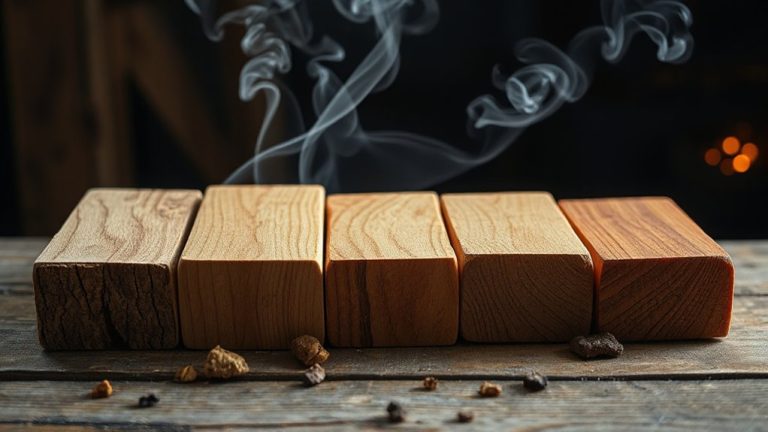
After selecting the right vegetables-those dense, low-moisture types that hold up under heat and smoke-the next decision shapes the character of the final dish just as much: choosing the right wood. You’ll want woods that deliver a balanced smoke intensity, not so strong that they overwhelm delicate vegetable flavors. Fruitwoods like apple, cherry, and peach are ideal-they burn cleanly and offer a mild, slightly sweet smoke that complements without dominating. These woods excel in fruitwood pairings, especially with root vegetables, mushrooms, or squash, enhancing natural sugars and adding subtle depth. Avoid heavy hardwoods like hickory or mesquite unless used sparingly; their intense smoke can easily turn bitter. Alder is another solid option, especially for lighter veggies, providing a clean, nuanced profile. The goal is harmony-matching smoke intensity to vegetable density for a finish that’s flavorful, not ashy or acrid. For best results, consider using pre-soaked wood chips to ensure a steady, controlled smoke.
How to Avoid Dry or Bitter Smoked Vegetables
A well-executed smoked vegetable dish relies as much on moisture control and smoke management as it does on ingredient selection. Dry or bitter results usually stem from poor marinade selection or incorrect cooking temperature. To prevent this, always use oil-based marinades with acid-like olive oil and balsamic vinegar-as they lock in moisture and enhance smoke absorption. Avoid oversmoking by limiting wood chunks to small amounts and choosing milder woods like apple or cherry. Maintain a steady cooking temperature between 225°F and 250°F; going hotter risks drying, while lower temps prolong exposure and can intensify bitterness.
| Vegetable | Ideal Temp (°F) | Recommended Marinade |
|---|---|---|
| Eggplant | 225 | Olive oil, lemon, herbs |
| Zucchini | 225 | Garlic, oil, vinegar |
| Carrots | 250 | Honey, soy, ginger |
| Bell Peppers | 235 | Oil, balsamic, thyme |
| Mushrooms | 225 | Soy sauce, sesame oil |
Easy Smoked Vegetable Recipes to Try First
Now that you’ve mastered moisture retention and smoke balance, it’s time to put those skills into practice with approachable recipes that deliver flavor without complication. Start with smoked eggplant-halve it, brush with oil, and smoke at 225°F for 45 minutes. The result? Silky flesh perfect for smoked dips like baba ganoush, where charred sweetness deepens the profile. Smoked bell peppers are another win: roast first, then smoke lightly to intensify flavor while maintaining structure. They blend smoothly into creamy spreads or brighten grilled sides. Mushrooms, especially cremini, absorb smoke well and retain moisture when brushed with olive oil. Toss them into grain bowls or serve alongside smoked meats. These recipes require minimal prep, use common equipment, and consistently yield rich, earthy results. They also build confidence-each success reinforces technique while delivering dishes that impress without excess effort. Perfect for beginners learning the rhythm of outdoor cooking.
On a final note
You’ve now got the basics to smoke vegetables successfully, even without a dedicated smoker. Using the right wood-like hickory or apple-brings out rich, earthy notes without overpowering. Dense vegetables such as carrots, potatoes, and onions hold up best, while high-moisture types risk drying out. With proper prep and controlled heat, smoked veggies gain depth and complexity perfect for salads, dips, or sides. It’s a reliable technique worth mastering.