How to Select and Utilize Acid-Based Ingredients to Elevate Your Outdoor Cooking Game
You’re smart to use acids-they tenderize tougher cuts and brighten grilled dishes when paired right. Match citrus with delicate seafood, balsamic or red wine vinegar with beef, and milder acids like rice vinegar with veggies. Apply acid early for marinating, but not too long, or proteins turn mealy. Balance it with oil to smooth harshness and boost flavor penetration. Finish with a splash to lift the smoky depth. Smart acid use sharpens every layer of your cookout, and there’s more to mastering it just ahead.
Notable Insights
- Choose citrus for delicate proteins and vinegars for robust meats to match acid intensity with ingredient richness.
- Marinate meats 30 minutes to 12 hours depending on cut, avoiding overexposure to prevent mushy textures.
- Baste with mild acids like rice vinegar during grilling to add moisture and enhance flavor without breaking down proteins.
- Balance acid with oil and salt to mellow sharpness and improve flavor penetration in marinades and glazes.
- Finish dishes with a splash of fresh citrus or vinegar to brighten flavors and accentuate smoky grilled notes.
Why Acid Transforms Grilling
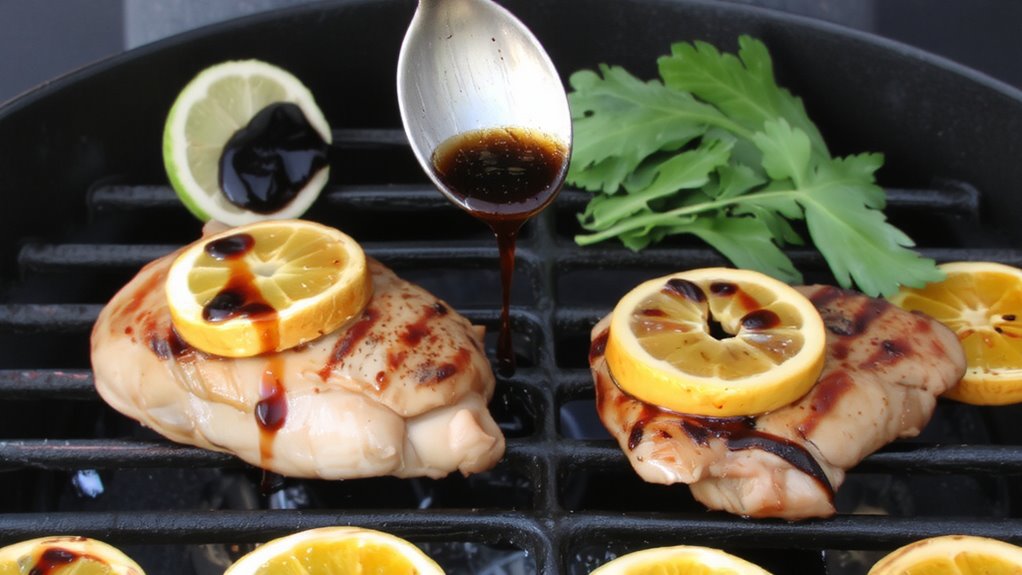
When you’re grilling meats or vegetables, adding acid at the right stage doesn’t just brighten flavor-it fundamentally changes the cooking process. You’ll notice faster, more effective tenderization through marination, especially with tougher cuts like flank steak or pork shoulder; the acid gently breaks down proteins, yielding a more succulent result. But timing matters-too long in a highly acidic marinade can turn texture mealy. Acidity and smoke interaction also play a subtle but critical role: when acid-coated foods hit the grill, volatile compounds react with smoke, enhancing complexity without overwhelming the palate. This balance elevates your outdoor cooking from mere searing to layered, intentional flavor-building. While some pitmasters underestimate acid’s structural impact, its ability to prepare food both chemically and sensorially proves indispensable. Used wisely, it doesn’t compete with smoke-it complements it, deepening the entire grilling experience.
How to Match Acids to Protein and Veggies
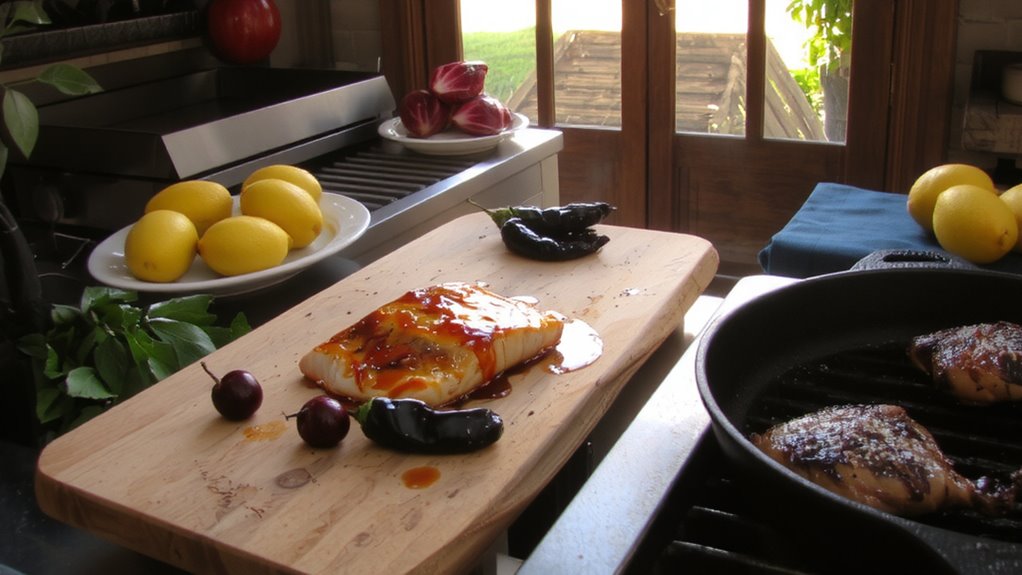
Why do certain acids elevate specific proteins and vegetables while overwhelming others? It comes down to balance. Delicate fish or shrimp thrive with bright citrus pairings-think lime or lemon-whose acidity cuts richness without overpowering. Heavier meats like beef or lamb respond better to bold vinegar selection, such as robust red wine or aged balsamic, which penetrate dense fibers and deepen flavor. For vegetables, lighter options like zucchini or bell peppers welcome mild acids, including rice vinegar or lemon juice, preserving their texture and sweetness. Heartier veggies-say, grilled eggplant or charred onions-can handle assertive apple cider or sherry vinegar. Matching acid to ingredient isn’t just preference; it’s chemistry. The right citrus pairings highlight natural flavors instead of masking them, while thoughtful vinegar selection enhances complexity without tipping into sourness. Choose wisely, and your grill work gains dimension and finesse.
When to Add Acid: Before, During, or After?
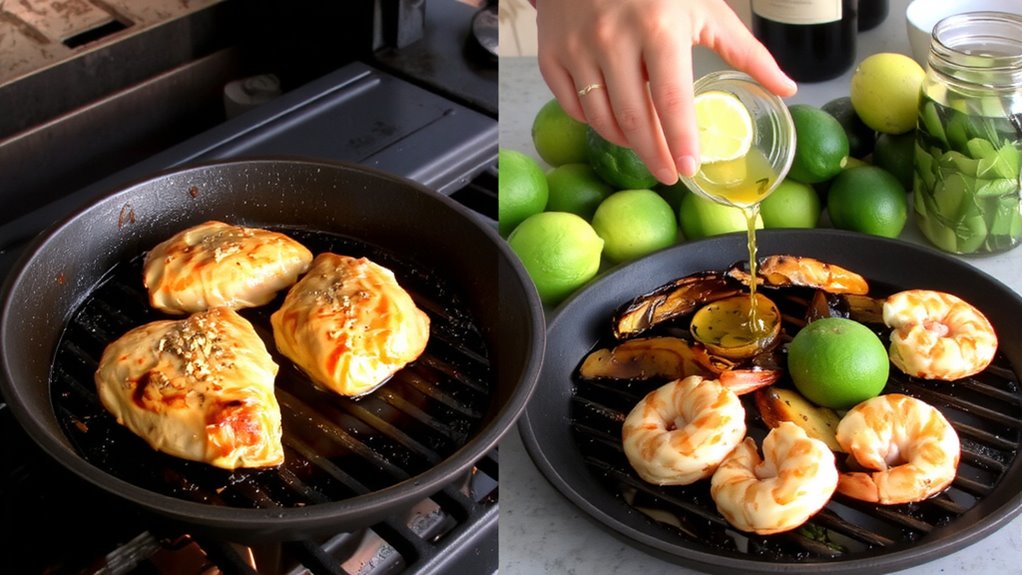
Matching the right acid to your protein or vegetable sets the foundation, but timing shapes the outcome just as much. Getting your marinade timing right guarantees tenderness without mushiness, especially with delicate items like fish or chicken. Strong acids early can break down proteins too much, while a splash at the end delivers bright finishing touches that elevate flavor without altering texture. For vegetables, a mid-grill spritz keeps them vibrant. Below is a guide:
| Stage | Use Case | Example |
|---|---|---|
| Before | Tenderizing, flavor infusion | Citrus juice in meat marinade (4–12 hrs) |
| During | Moisture, controlled breakdown | Basting tofu with rice vinegar while grilling |
| After | Brightening, finishing touches | Drizzling olive oil and lemon over warm vegetables |
Apply acid with purpose-each stage changes your dish’s character.
How to Balance Acid With Fat, Salt, and Heat
How do you keep your grilled dishes from tipping into sharpness or dullness? You balance acid with fat, salt, and heat. Acid marination tenderizes and brightens, but too much overwhelms-especially under high heat. Pair citrus or vinegar with oils to temper intensity and carry flavor deep into proteins. Fat mellows acidity while amplifying mouthfeel, creating a rich base for flavor layering. Salt enhances both, drawing out natural juices and enabling better acid absorption. Apply salt early, acid just before or during grilling, so it doesn’t break down textures too much. On the grill, high heat caramelizes acid sugars, but flare-ups can amplify bitterness. Monitor closely. A well-layered dish uses acid not as a spotlight, but as one player in a balanced ensemble-complementing fat, supported by salt, and shaped by heat for consistent depth and complexity.
5 Grilled Recipes That Showcase Acid for Maximum Flavor
When you’re aiming to elevate your outdoor cooking with bold, vibrant flavors, few techniques deliver like using acid effectively in grilled recipes. You’ll find that smart marinade techniques-especially those balancing vinegar, wine, or citrus juice with oil and herbs-tenderize proteins while adding depth. Acid breaks down muscle fibers, but over-marinating can make textures mushy, so timing matters: 30 minutes to 2 hours works best for most meats. For maximum impact, finish your dishes with citrus glazes, which caramelize beautifully on the grill without burning if applied late in cooking. Think orange-glazed salmon or lemon-thyme chicken-bright, aromatic, and perfectly balanced. These glazes add complexity, enhancing natural smokiness. Used correctly, acid doesn’t just cut richness; it unifies flavors. Whether through brines or finishing touches, incorporating acid consistently improves results, making your grilled recipes more dynamic and layered.
On a final note
You’ve seen how acid sharpens flavors and tenderizes proteins without overpowering. When matched correctly-citrus with seafood, vinegar with hearty vegetables-it enhances, not dominates. Applied at the right moment, acid balances fat and salt, cutting through richness for a cleaner finish. Your grilling improves because acid doesn’t just add brightness; it harmonizes. Use it deliberately, and your results will reflect both control and depth-essential traits of skilled outdoor cooking.